
The market for AI skills is real. What a company needs most from it is a way to capture what its own people already know.
Recently a colleague from marketing called me with a question. We have a growing library of AI skills inside the company, she said. Could we sell them?
I said no.
The skills are fine. But selling them, or buying someone else’s, is not where the value is. The value is in a company capturing what its own people know and giving it to everyone who works there. That is the thing we have learned how to do, and it took me the rest of the call to explain it.
Why the question made sense
It was a fair question. On 22 October Anthropic handed Agent Skills, the open format for packaging what an AI agent can do, to the Linux Foundation’s Agentic AI Foundation. By Anthropic’s own count, 1 million skills have been published and installed nearly 280 million times, and more than 70 platforms read the format. A format became a standard, and a market usually follows.
A skill itself is modest: a folder with a SKILL.md file that describes a workflow, plus any scripts it needs. So why are there a million of them?
Because every business does the same job differently. One sends invoices from one system, another from three, and the approvals and exceptions are all local. The skills that move easily between companies are mostly about software development, where a framework’s best practices look the same everywhere. Public registries also have a trust problem: researchers who scanned about 150,000 skills across seven of them flagged 620 and confirmed 400 as malicious.
Our own library shows the same thing. Among our company skills is one as unglamorous as it gets: how to log time in Redmine correctly. It assumes our Redmine and our rules. Nobody outside Azati needs it. Everyone inside does.
Where the value is
When I explain this, I use an accountant as the example. She has the ERP, spreadsheets, email and chat open at once and carries the statutory payment dates in her head. “Pay the quarterly tax” is five or six steps across four systems, and nobody has written it down the way she actually does it.
She is typical. Interloom, a Munich startup that raised $16.5 million this year to capture expert knowledge for AI agents, estimates that 70% of operational decisions are never recorded.
Panopto’s workplace research puts the share of knowledge unique to a single employee at 42%.
Now multiply her by every role in the company. The best practices are already there, at the bottom, in the daily work of individual people. Often management doesn’t know they exist. Sometimes the people themselves don’t think of what they do as a practice.
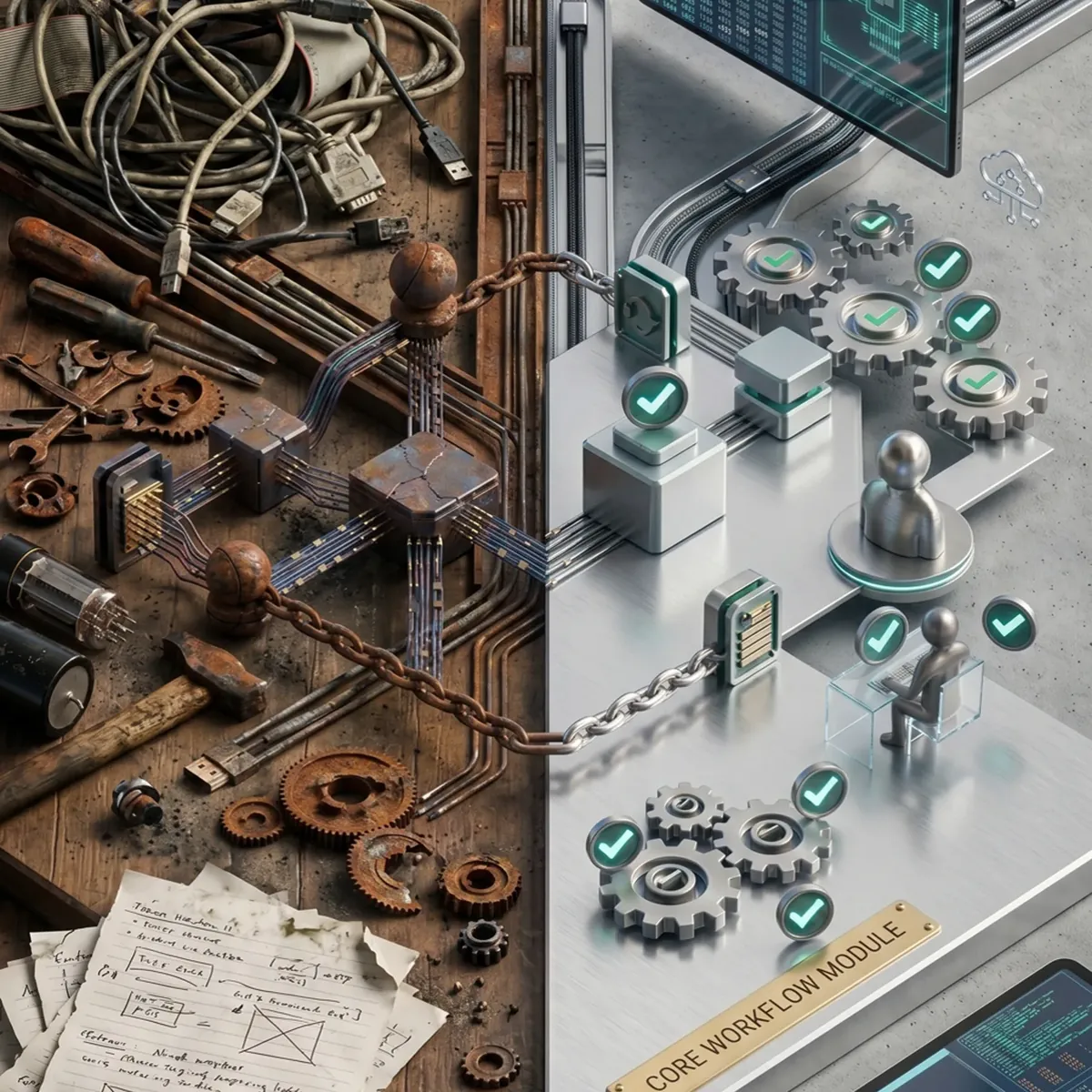
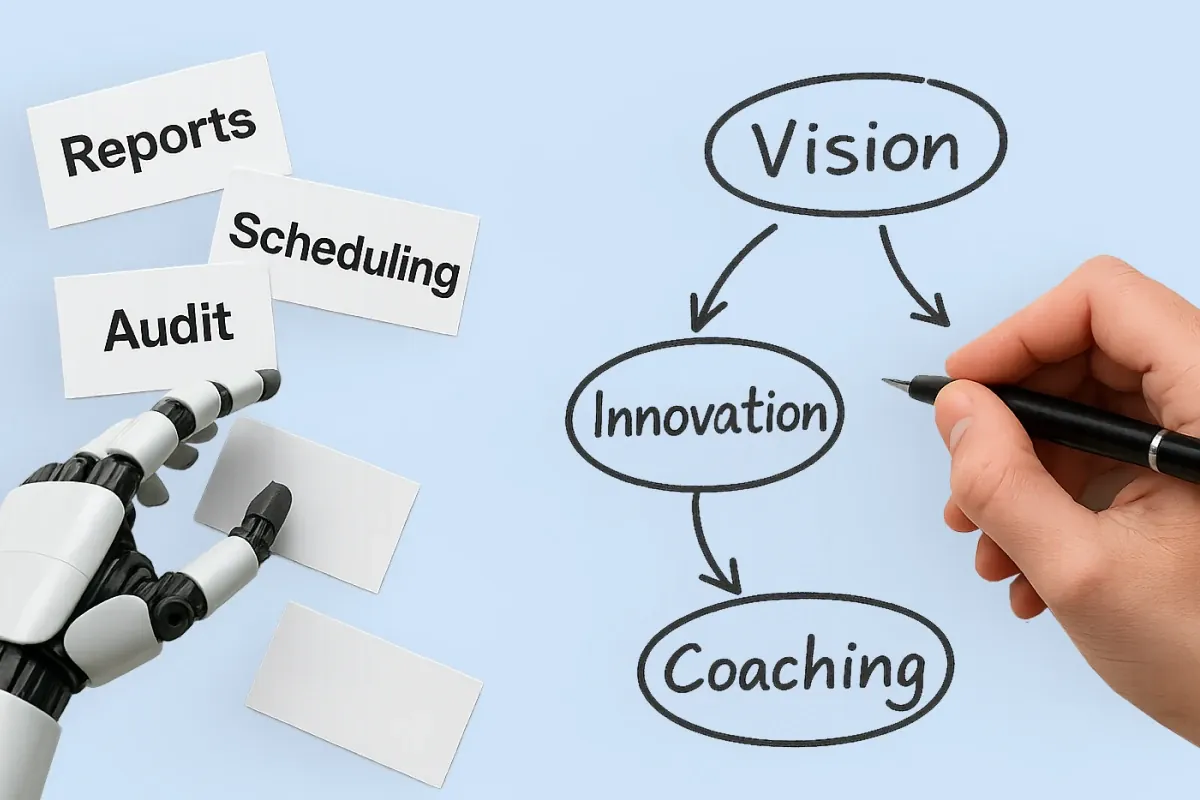
That is the knowledge worth digitizing: your own. Capture the best of it, keep it when people move on, and give it to everyone else in the company.
What we learned to do
At Azati we do this with ACOP, short for Advanced Company Operations Processor. It is our AI operating layer: it sits on top of the systems the company already runs on, such as the task tracker, the CRM, the code repository, mail and chats, and gives each of us a personal agent that can work across them. The agent has my permissions and nothing beyond them.
When I finish something repeatable, my agent notices and saves it as a skill. This part is not ours. The agents are built on the open-source Hermes agent, and it comes with it.
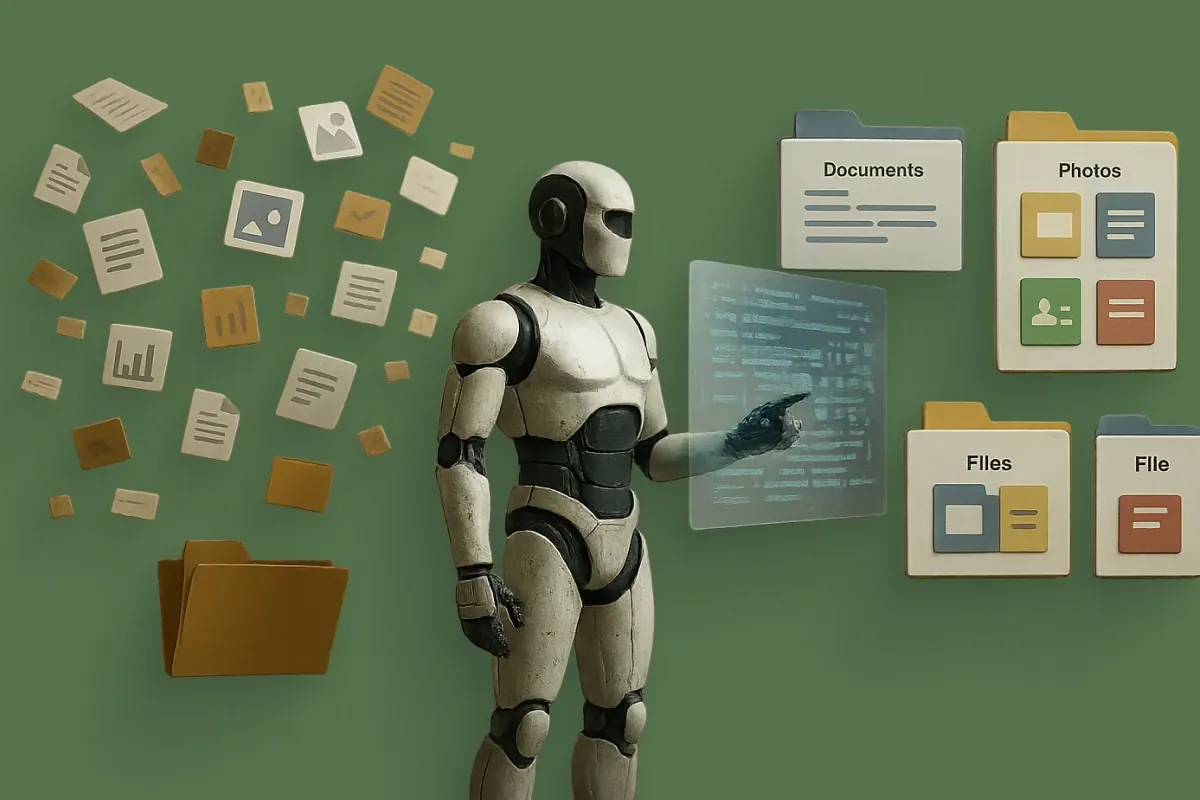
The company layer on top is not built from scratch either. We took SkillHub, an open-source project, and tuned it for exactly this way of working. One agent watches for new personal skills and compares them with the ones already in the hub. If someone found a better way to do a known task, the existing skill gets updated. If the task is new, a new skill is added. When a colleague starts similar work, their agent checks the hub first and offers what is already there.
So a good way of working, found by one person at the bottom of the company, moves up and then spreads across the whole organization.
I explained it to my colleague with her own work. Suppose you work out with your agent how you write a LinkedIn post: the length, the tone, the ending. That becomes a skill. Next week someone else on your team sits down to write a post, and their agent asks whether they want to try your way.
Getting here taught us things that have little to do with AI models. How to manage skills: compare them, keep the best version, decide who can see what. How to connect the systems a company already runs on, including old ones that were never designed for this. We started with engineers, and I don’t know yet what accounting or HR skills will look like. I expect they will look nothing like ours.
The hard part is people
Every team has someone who is very good at their job and keeps their methods to themselves. I understand why.
This spring an open-source project called colleague.skill went viral in China. It builds an agent from a worker’s digital footprint. Within a week there was an answer, anti-distillation.skill, which helps employees hand in a hollow version of what they know. That is what skill capture looks like when it is done to people.
I don’t think anyone has fully solved this, and we haven’t either. What we do is keep the author’s name on every skill in the hub and show how many colleagues use it, so that sharing makes your expertise visible. Whether that is enough, we will see.
Preserve the best, and share it
People leave, change roles, go on holiday. Most of us have seen the result: someone starts an important piece of work, moves on, and it is never finished, because nobody else knew how they were doing it.
If the way they worked stays in the hub, the next person has somewhere to start. A new hire begins from what the team already knows. A team can get better at something before it has to hire for it.
That is what I would call our know-how: preserving the best of what people in a company know how to do, and making it available to all of them.
So my answer to my colleague still stands, with one addition. If our way of working is useful to you somewhere, good. But what you need more are the best practices of your own company, including the ones you don’t know exist. Helping a company find and keep them is the most useful thing a company like ours can bring to an AI-first market.
How much of how your company works exists in one copy?