Replace SaaS with AI-Built Software You Own

SaaS replacement is the decision to retire a subscribed software product and run an owned, custom-built application in its place, typically for internal tools such as CRM, HR, helpdesk, approvals or operations portals.

AI coding tools made building cheap. Owning what you build is still hard. Azati prepares the architecture, data and guardrails for your team to build, or builds, integrates and runs the software for you.

Azati is an AI engineering company with 24 years in business and 50+ AI projects in production. Azati helps European and US enterprises decide which SaaS tools to replace, prepare the foundation for building them in-house, and build, integrate and operate the new software when needed.

35%
of teams have already replaced at least one SaaS tool with a custom build (Retool, 2026 Build vs. Buy Report)
40%
of new enterprise production software will be created with vibe coding techniques and tools by 2028 (Gartner, 2025)
2,500%
more software defects by 2028 from prompt-to-app development by citizen developers (Gartner, Predicts 2026)
50+
AI projects Azati has shipped into production

Should you build or buy software in 2026?

For twenty years the default answer was "buy". Building meant scarce engineers, long timelines and a maintenance bill nobody wanted. SaaS won by being cheaper than your own developers.

AI coding agents such as Cursor, Claude Code and GitHub Copilot removed most of the build cost. They did not remove the ownership cost. When you replace a SaaS product, you take over everything the vendor used to carry: identity and access, data model, audit trail, security patches, integrations, uptime, and the knowledge of why the system works the way it does.

So the real question is no longer "can we build it?" It’s "can we own it?"

Build usually wins when

  • the SaaS forces your process into its template, and the workaround costs more than the license;
  • you pay per seat for a tool most users touch once a month, which makes it the first place to look for SaaS cost reduction;
  • the data you need is locked behind paid API tiers or exports;
  • the workflow is your differentiator: how you hire, staff, price, plan or serve clients;
  • data sovereignty matters: you need the system on-premise or EU-hosted.

Buy usually still wins when

  • the logic is regulated and changes every year: payroll calculation, statutory tax, e-invoicing formats;
  • the category is a commodity where vendors invest more than you ever would: email, video calls, core accounting ledgers;
  • nobody inside will own the product after launch.

The most common right answer is hybrid: keep the system of record you trust, and build the layer your people actually work in on top of it.

Custom SaaS alternatives: what companies build instead of buy

With AI coding tools and governed in-house vibe coding, many internal tools reach a working first version in days, not quarters. These are the SaaS categories companies most often replace with AI-built software, and what to plan for in each.

Custom CRM and sales pipeline

Often replaces: Salesforce HubSpot Pipedrive

Why build: your sales process, pricing or partner model doesn’t fit a standard pipeline, and most seats only log activities.

What to plan for: keep email deliverability and marketing automation with a specialized tool, and sync contacts through one owner system.

Not every tool on this list should be replaced. The SaaS Cost & Build vs Buy Assessment decides per tool, based on TCO, risk and who will own the result.

Why many AI-built internal tools never reach production

A prototype built by a motivated team lead in a weekend looks finished. Then it meets the enterprise: access, data, audit and integrations it was never designed for.

None of these are coding problems. They are architecture, data and governance problems, and they are predictable, which means they can be designed out before the first prompt.

When the one person who built it leaves, the tool can become legacy on day one.

Read what happens when one person builds a production system with AI.

No single sign-on

Users get separate passwords, and the tool lives outside the company’s identity provider. When someone leaves, IT disables the main account, but the AI-built tool keeps working with the old login, often with access to sensitive records.

The fix is to connect every internal tool to the existing identity provider, such as Microsoft Entra ID or Okta, so access starts and ends in one place.

No role model

Prototypes usually have one level of access: everyone who can log in sees everything, including salaries, performance notes and contract terms. Adding permissions later means reworking queries, screens and APIs that were never designed for them.

Role-based access has to be part of the data model from the start, with clear rules for who can see, edit and approve each type of record.

Production data in prompts

To get a realistic result fast, people paste real employee or customer records into AI coding tools and chat assistants. Personal data pasted into AI tools can end up in vendor logs or model context without a lawful basis under GDPR.

A clear policy on what may enter a prompt, plus masked or synthetic datasets for development, removes the reason to take that risk.

No audit trail

Nobody can tell who changed a record, when and why. That gap rarely matters in a demo, but it matters the day HR handles a dispute, finance closes the quarter or an auditor asks for evidence.

Every change to business-critical data needs to be logged with the user, the time and the previous value, and stored where it cannot be edited.

Brittle integrations

The new tool gets its data from a nightly CSV export from the HRIS, ERP or CRM, set up once and never monitored. When a column is renamed or the export fails, the tool quietly shows stale or wrong data, and nobody notices until a decision has been made on it.

Integrations should run through documented APIs or events, with validation, error alerts and a named owner for each data flow.

One owner

The person who prompted the tool into existence is the only one who knows how it works, and there is no documentation, test suite or code review behind it.

When that person leaves or changes roles, nobody can safely change or fix the tool. Shared ownership means a repository with documentation, automated tests and at least a second engineer who can maintain the tool.

A typical scenario: custom HR software development for a game studio

A game development studio outgrows its HR SaaS. The license grows with every hire, performance reviews don’t fit milestone-based production cycles, and staffing artists, designers and engineers across projects lives in spreadsheets because the tool can’t model it. The studio’s teams already use AI coding tools every day, so the decision looks obvious: build our own HR management system.

Azati works through the questions that follow:

  • Which modules to build, and which to keep in the existing HRIS and payroll provider?
  • Where does employee data live, who can see what, and how is it synced?
  • How do engineers vibe-code features fast without exposing personal data or shipping unreviewed access logic?
  • Does AI-assisted performance evaluation trigger EU AI Act obligations, and does the works council need to be consulted?
  • How does the new system plug into SSO, Slack, project tools and finance reporting?

A typical answer

Payroll and statutory HR records stay with the existing providers, while performance reviews, project staffing and onboarding move into a custom system. Employee data syncs from the HRIS through a defined contract, access follows SSO roles, and AI-assisted evaluation runs with human oversight and logging prepared for EU AI Act requirements.

SaaS replacement services: three engagement models

Azati offers SaaS replacement in three engagement models: an assessment that decides which tools to replace, readiness work for teams that want to build in-house, and full-cycle delivery for teams that want the finished result. Each model works on its own or as the next step after the previous one.

01

SaaS Cost & Build vs Buy Assessment

For teams deciding what to replace.

  • SaaS cost audit and 3-year software TCO per tool
  • Process and data mapping
  • Build, buy or hybrid call per tool, with a roadmap
  • Compliance screen: GDPR, EU AI Act classification, works council

Deliverable

A decision document your CFO and CISO can both sign.

02

In-House AI Development Readiness

For teams that want to build it themselves.

Result

Your team builds fast, inside guardrails IT and security already approved.

What is AI-ready data for an internal build?

AI coding agents write code against whatever data and structure they are given. Give them messy inputs and they will faithfully automate the mess. Before a SaaS replacement starts, Azati checks that:

Master data

Every core entity has one owner system

Employee, project, cost center, client: one source of truth, others subscribe.
#1
Data contracts

Data flows are contracts, not exports

Schemas, validation and error handling between systems are explicit.
#2
PII classification

Personal and sensitive data is classified

What may enter a prompt, what may be stored, what must be masked.
#3
Synthetic data

Development uses safe data

Synthetic or anonymized datasets, so nobody tests on real salaries.
#4
Agent context

The domain is documented for humans and agents

Business rules, glossary and architecture decisions live in the repository, where both engineers and coding agents read them.
#5
Data quality

Quality is measurable

Data quality checks and test baselines exist before features are generated on top.
#6

Compliance by design for EU companies

Compliance by design means GDPR, EU AI Act and works council requirements are built into the architecture and data model of an internal tool from the first release, not added after launch. Azati screens every planned feature during the assessment, so legal review does not stop the project later.

GDPR

Lawful basis, data minimization, retention rules and access rights built into the data model, not added later.

EU AI Act

AI systems used for recruitment, task allocation, or monitoring and evaluating employees are listed as high-risk in Annex III. Under the AI Omnibus amendment, these obligations apply from 2 December 2027. If your custom HR tool does any of this, it needs risk management, logging, human oversight and documentation from the first release.

Works councils

In Germany and several other EU countries, systems that can monitor employee behavior or performance typically require co-determination. Azati plans for that conversation from the assessment stage.

Data sovereignty

EU-hosted or on-premise deployment, including on-premise LLMs where data may not leave your infrastructure.

SaaS vs DIY vibe coding vs governed build

A governed build combines the process fit of in-house AI development with the security, integration and ownership of a managed product.

Comparison of keeping SaaS, DIY in-house vibe coding and a governed build with Azati
Keep the SaaS DIY in-house vibe coding Governed build with Azati
Fit to your process Vendor’s template High High
Time to first version Immediate Days Weeks
Security and access control Vendor-managed Often missing Designed in: SSO, RBAC, audit
Integration with your stack Limited to vendor APIs Ad hoc scripts Contracted APIs and data flows
Cost over time Grows with seats Low at first, rising maintenance Build cost plus predictable run cost
Ownership and handover Vendor One person Documented, tested, transferable
EU AI Act / GDPR readiness Vendor-dependent Rarely considered Part of the architecture

Not sure which column fits your tools?

List the SaaS tools you pay for and the workflows they support. Azati reviews cost, data and compliance for each one and shows where to keep the SaaS, where to build your own, and where a hybrid layer works best.

Map my SaaS tools

How a SaaS replacement project runs

A SaaS replacement project moves from inventory to ownership in seven steps. The first two form the assessment, so every tool is decided on TCO and risk before any code is written, and the SaaS stays live until the new system has proven itself.

Plan my SaaS replacement
  1. Discover

    Assessment

    Azati inventories your SaaS tools, licenses and integrations, and maps the processes, data and users each one supports.

  2. Decide

    Assessment

    Each tool gets a build, buy or hybrid call, with TCO, risks, a compliance screen and a sequenced roadmap.

  3. Prepare

    Readiness

    Target architecture, AI-ready data, the golden path and the review model are set up before the first feature is generated.

  4. Build

    Delivery

    Your team, Azati engineers or both build with AI coding agents inside the agreed architecture, with human review of every change.

  5. Integrate

    Delivery

    The new tool connects to SSO, systems of record, reporting and collaboration tools through documented APIs and events.

  6. Switch

    Delivery

    Data is migrated and reconciled, both systems run in parallel, and users move in stages before SaaS decommissioning.

  7. Own

    Operation

    Azati runs the tool as a managed service, or hands over a documented, tested codebase to your team.

Case studies

Real Estate Catalog Built with AI-Accelerated Development
Construction & Real Estate

Real Estate Catalog Built with AI-Accelerated Development

3× faster delivery
40% less listing update time
60%+ shorter page load

Pain Points We Tackled

A mid-size property developer needed one catalog platform to present and manage its full inventory of apartments, houses, garages and storage units across multiple developments. Generic admin tooling slowed content managers down, and the platform had to serve administrators, content managers and end buyers at once.

Our Approach

Azati’s senior engineers defined the data model, permissions and caching strategy first. AI coding agents then accelerated implementation inside that structure, with every output reviewed before it reached the repository. The result is a purpose-built platform the client’s own team owns and extends.

Applied Methods and Practices

  • Architecture-first AI-accelerated delivery: Senior engineers set the structure, AI coding agents generated within it.
  • Human review of every output: 100% of the codebase is engineer-owned and reviewed.
  • Purpose-built admin interfaces: Screens designed around how content managers actually update listings.
  • CI/CD with automated tracking: Delivery pipelines with automatic JIRA ticket updates.

Solution Features

  • Unified property catalog: Apartments, houses, garages and storage units across developments in one platform.
  • Faster delivery: About 3× faster than traditional development.
  • Content team efficiency: 40% less time to update listings.
  • Performance: Average page load cut by more than 60%, plus NLP-enhanced search that reduces zero-result queries.
Enterprise Engineering Project Governance Platform Modernization
Energy, Oil & Gas

Enterprise Engineering Project Governance Platform Modernization

6 core platform domains enhanced
3 new export formats supported
Enterprise oil and gas security environment

Pain Points We Tackled

An oil and gas enterprise relied on an engineering project governance platform, but stakeholders lacked a reliable view of project status, documentation and maturity (PDRI). Engineering documents needed controlled storage, review, export and sharing across project lifecycles, review and approval workflows were limited, and legacy PDF generation caused operational difficulties.

Our Approach

Azati extended and stabilized the existing platform instead of replacing it, so engineering workflows continued without interruption. A team of 3 specialists delivered the work in 4 months inside an enterprise environment with information security requirements.

Applied Methods and Practices

  • Incremental modernization: Enhancements delivered on the live platform without disrupting project teams.
  • Approval and remark workflows: Structured review, comment and approval handling for engineering documentation.
  • Role-based access control: Permissions aligned with project roles and security requirements.
  • AI-assisted similarity analysis: Experts find related historical remarks faster.

Solution Features

  • Document governance: Controlled storage, review and sharing across project lifecycles.
  • Multi-format export: Excel, Word and PDF exports for engineering documentation.
  • Reliable PDF conversion: Legacy document generation issues addressed.
  • Broad platform coverage: 6 core platform domains enhanced.
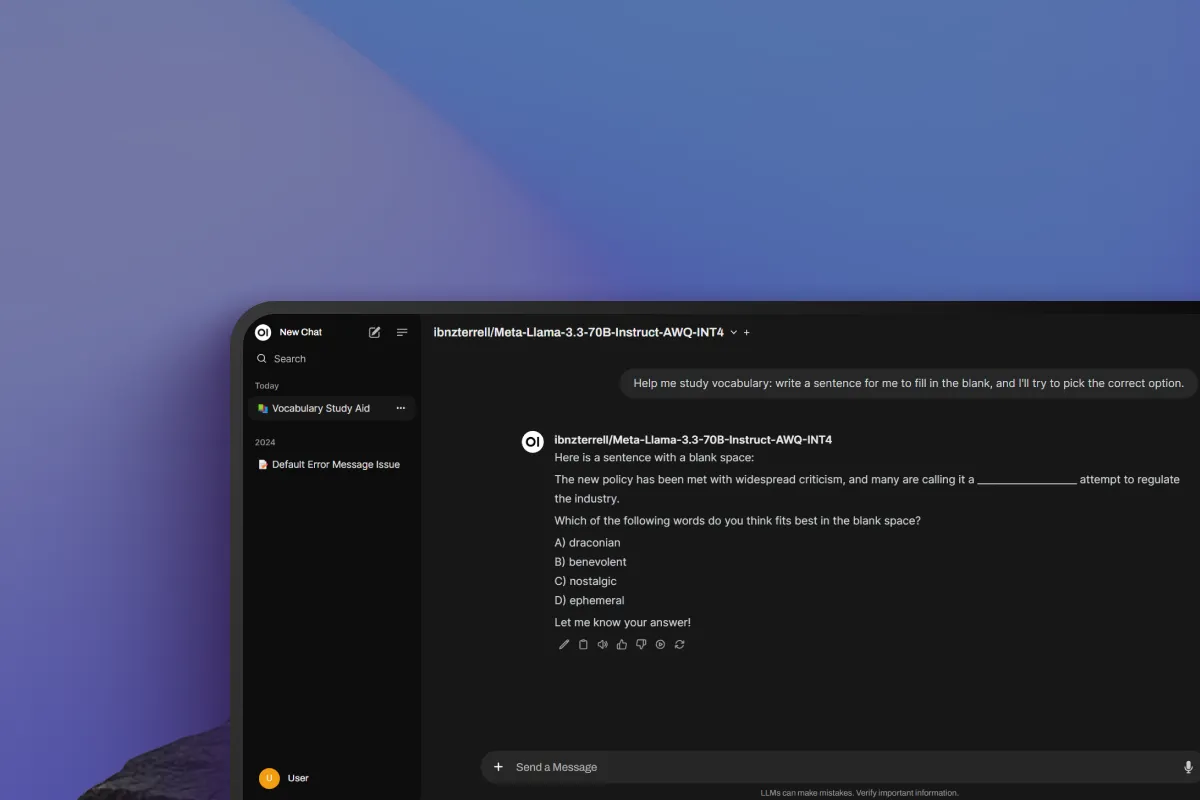
A Secure LLM for Enhanced Information Sharing
Professional Services

A Secure LLM for Enhanced Information Sharing

100% data privacy compliance
60% faster information retrieval
75% search-time reduction

Pain Points We Tackled

Employees spent too much time searching for internal information, while corporate data could not be sent to external cloud AI services. The company needed GPT-level answers on its own infrastructure, with strong encryption, strict access controls and integration with internal systems.

Our Approach

Azati installed and configured Mixtral 8x7B and Mistral 7B on the company’s internal servers, so data is processed without external cloud services. The models were connected to internal databases and workflows, adapted to company terminology, and rolled out with hands-on employee training.

Applied Methods and Practices

  • Independent local deployment: Open-source LLMs running fully on internal infrastructure.
  • Fine-tuning with LoRA: Models adapted to the company’s terminology, processes and communication patterns.
  • Model quantization: Lower memory use and fast responses on local hardware.
  • Enhanced RAG techniques: Multi-query handling, parent context retrieval, hypothetical question generation and HyDE.

Solution Features

  • Secure corporate AI search: Context-aware answers over internal knowledge with no data leaving the company.
  • Data privacy: 100% data privacy compliance.
  • Faster answers: 60% faster information retrieval.
  • Less time searching: 75% reduction in search time for employees.
Rescuing an AI-Powered Mobile App
Sports & Entertainment

Rescuing an AI-Powered Mobile App

Zero scheduling failures post-rebuild
3-4 mo saved vs. full rewrite
<15 min to diagnose issues, down from hours

Pain Points We Tackled

A non-technical founder built the backend of a smart home maintenance assistant with AI coding tools. It worked as a prototype, then failed under real use: business logic was scattered across handlers, scheduling broke on edge cases, and there was no error handling.

Our Approach

Azati audited every module in the first week, then refactored the backend incrementally without blocking the iOS team. Instead of a full rewrite, the existing code was stabilized step by step, and Azati took over engineering ownership of the production system.

Applied Methods and Practices

  • Module-by-module code audit: Every AI-generated component reviewed in the first week.
  • Incremental refactoring: Business logic consolidated while the mobile team kept shipping.
  • Robust scheduling logic: Edge cases covered and tested.
  • Error handling and observability: Production issues traced and diagnosed quickly.

Solution Features

  • Stable scheduling: Zero scheduling failures after the rebuild.
  • Saved redevelopment time: 3-4 months saved compared with a full rewrite.
  • Fast diagnostics: Under 15 minutes to diagnose production issues, down from hours.
  • Owned production backend: TypeScript, NestJS and AWS serverless stack under engineering ownership.
View all case studies

Planning to replace a SaaS tool?

Tell Azati which tool, what it costs you, and what it gets wrong. The reply comes with a first view on build, buy or hybrid, and what it would take to own the result.

Send a request

Frequently asked questions

Yes, many internal tools such as HR workflows, approvals, operations portals and dashboards can be replaced with AI-built software. AI coding tools make the first version fast. Production readiness depends on what surrounds the code: single sign-on, role-based access, a clean data model, audit logging, integrations and a named owner. Azati prepares that foundation, or builds the full solution.

Build where the workflow is specific to your business, licenses scale faster than value, or data access is restricted. Keep buying where logic is heavily regulated and changes often, such as payroll calculation or statutory reporting, or where the product is a commodity. Hybrid, a custom layer on top of a trusted system of record, is often the best option. Azati’s SaaS Cost & Build vs Buy Assessment gives this recommendation per tool, with TCO and risks.

The strongest candidates are internal tools with company-specific logic: CRM, HR and HRM systems, helpdesks, project tracking and approvals. Admin panels, operations portals, reporting dashboards and knowledge bases follow close behind. Azati sees the clearest business case where per-seat licenses are high and most users need only part of the product.

Custom software can be cheaper over three years when licenses scale per seat and the workflow is stable. The comparison has to include the full software TCO: build cost, hosting, security updates, support and continued development, not only the license. Azati calculates both sides per tool before recommending a replacement.

A first working version of a focused internal tool usually takes weeks with AI-accelerated delivery and a ready architecture. Full replacement, including data migration, parallel run and user rollout, depends on the number of integrations and users. Azati sets the timeline per tool during the assessment.

AI-ready data means one source of truth per core entity, explicit data contracts between systems and classified personal data. It also means safe datasets for development and documented business rules that both engineers and AI coding agents can read. Without it, AI-generated code automates inconsistent data. Azati prepares this foundation before any AI-generated code is written.

In-house vibe coding stays secure with a golden path: approved tools, repository templates and CI/CD with security gates. Add managed secrets, a policy on which data may enter prompts, mandatory senior review for authentication, permissions and personal data, and a registry of every internally built application. Azati designs this golden path and the review model for in-house teams.

A custom HR system falls under the EU AI Act only if it uses AI for decisions about people. Systems that use AI for recruitment, task allocation, or monitoring and evaluating employee performance are classified as high-risk in Annex III, with obligations applying from 2 December 2027 under the AI Omnibus amendment. A custom HR tool without such features is regular software, but GDPR and, in many countries, works council rules still apply. Azati screens every planned AI feature against Annex III during the assessment.

SaaS replacement starts with the business decision: which tools to replace, how to prepare data and how to own the result. Vibe Coding Engineering focuses on the code itself: AI-accelerated product development and vibe code audit and rescue. Many Azati clients use both services together.

Yes, Azati is moving CRM functionality from a third-party SaaS product into its own internal platform and building an in-house HR management system on it. This hands-on experience shapes the guidance Azati gives clients.

Yes, Azati connects custom software to identity providers, ERP, HRIS, payroll, CRM, BI and collaboration tools. Integrations run through APIs, events and governed connectors, with validation and error handling on every data flow, including single sign-on via Microsoft Entra ID or Okta.

Either Azati or your own team maintains the software, depending on the operating model agreed at the start. Azati can operate and develop it under a managed service, or hand over a documented, tested codebase your engineers can own.

No, Azati migrates data and runs both systems in parallel until the new application proves itself in production. Results are reconciled, users move in stages, and the subscription ends only after the new system has replaced the old one in daily work.

Most companies start with an Azati SaaS Cost & Build vs Buy Assessment of their SaaS portfolio, processes and data. It ends with a per-tool recommendation, a TCO comparison and a sequenced roadmap.

Last updated

Got a job for Azati? Let’s talk business!

This site is protected by reCAPTCHA and the Google Privacy Policy and Terms of Service apply.

What's next?

  • 1. Tell Us Your Story
    Describe your project. We come back within one business day with team availability and a rough plan. NDA on request before the first call.
  • 2. Get Your Roadmap
    Receive a detailed proposal with scope, team composition, timeline, and costs tailored to your goals.
  • 3. Start Building
    Azati aligns on details, finalize terms, and launch your project with full transparency.