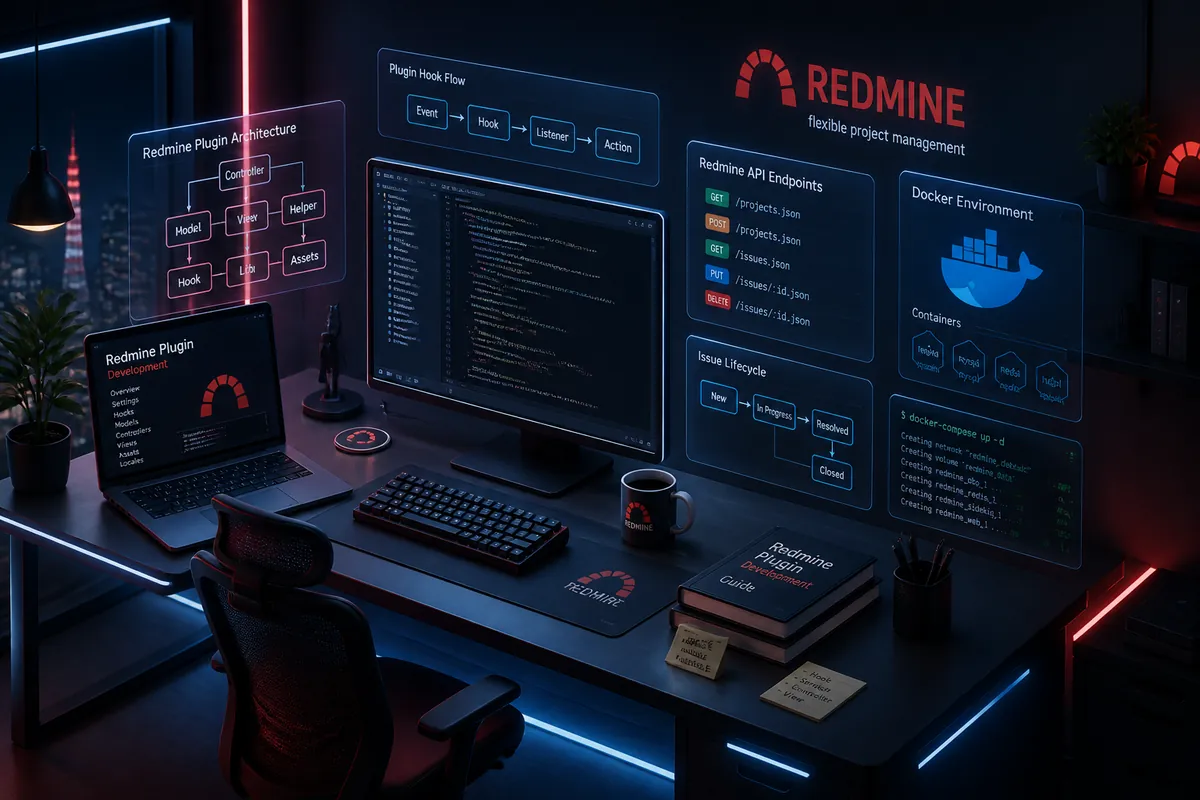

How do you get Redmine to do more than manage a single project board? Thanks to custom Redmine plugin development, extending Redmine beyond its defaults is straightforward once you understand its plugin architecture. This is exactly the expertise Azati has built extending Redmine for its own internal operations and for external engineering clients.
What Is a Custom Redmine Plugin?
Project management needs are rarely generic for long. A company running client engagements alongside internal development, or managing hundreds of employees across departments, quickly outgrows what a stock installation of any the open source tool provides out of the box. So it is logical to extend Redmine rather than replace it, since the platform and the team's familiarity with it are already there.
Under the hood, a Redmine plugin is a Ruby on Rails application hooking into Redmine's own models, views, and controllers. It shares Redmine's database and request lifecycle rather than running as a separate service, which is what allows it to feel native rather than bolted on, and also what makes every Redmine, Ruby, or Rails version upgrade something the plugin has to be validated against.
How Custom Plugins Change the Way Engineering Companies Run Redmine
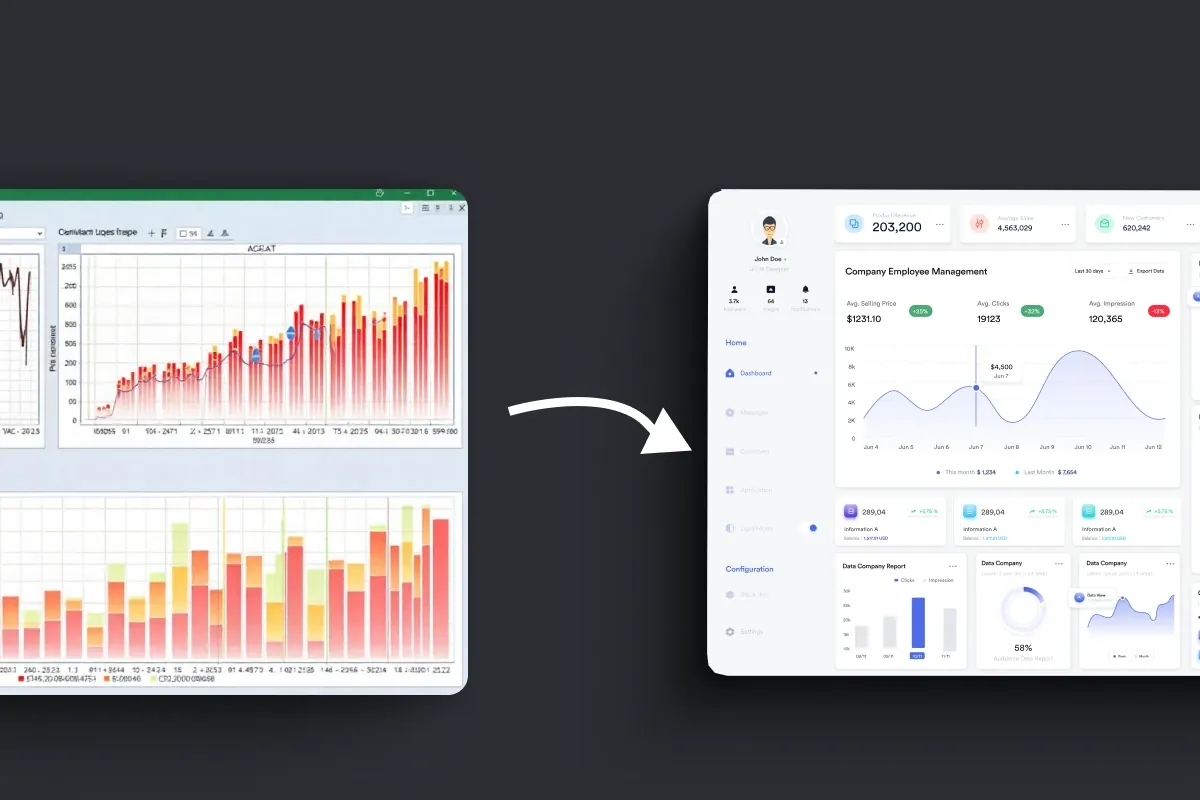
A custom plugin turns Redmine from a single project tracker into infrastructure the whole company relies on. Instead of project managers assembling capacity and time data manually across spreadsheets, that view lives inside Redmine itself, updated the same way the rest of the platform is.
Custom Redmine plugins commonly enable:
- Department and group level reporting instead of project only views;
- Automated reminders for employees with unlogged or missing time entries;
- Leave records connected directly to project capacity views;
- Integration with tools already in use, such as Jira, GitLab, Mattermost, or Prometheus.
Why Businesses Need Custom Redmine Development
Imagine a growing engineering company where fifty people, then two hundred, then over three hundred, all need to log time, request leave, and give management something more useful than a project by project view. Standard Redmine reporting is project centric, so scaling past a handful of teams means either living with manual data aggregation or building the missing layer.
Custom development closes that gap directly inside the platform people already use, rather than asking the company to adopt a second tool just for reporting or time tracking.
| Area | Standard Redmine | Custom Azati Redmine |
|---|---|---|
| Reporting | Project level only | Department, group, and employee level views |
| Time logging | Manual, no reminders | Automated, leave aware reminders |
| Leave tracking | Not included | Integrated with capacity and time data |
| Interface | Generic open source UI | Branded, maintained through upgrades |
| External integrations | Limited | Jira, GitLab, Mattermost, Prometheus, Telegram |
| Version upgrades | Manual, high risk without tests | Planned, tested, executed without downtime |
Custom Redmine development helps to:
- Give management department and group level visibility without manual spreadsheet work;
- Reduce time spent chasing employees for unlogged hours;
- Keep leave data and project capacity views consistent with each other;
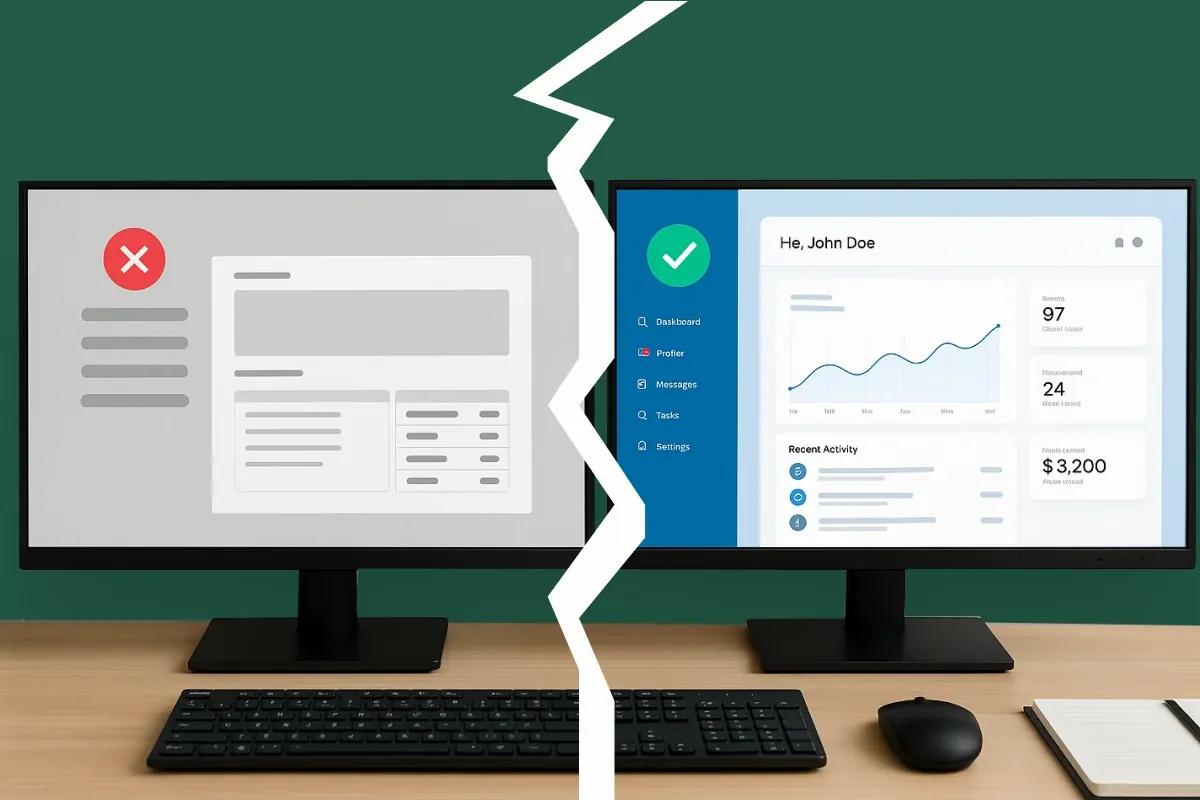
- Replace the generic Redmine interface with a branded, company specific one;
- Consolidate ticket sources from Jira, GitLab, Mattermost, and monitoring tools like Prometheus into one system;
- Add authentication and notification workflows through channels like Telegram;
- Keep the platform on current, supported Redmine, Ruby, and Rails versions;
- Build test coverage around the plugin logic that upgrades depend on.
It's All About Azati's Redmine Plugin Architecture
Azati's approach to Redmine plugin development treats the platform as a Rails application first and a project management tool second, which is what makes deep customization possible rather than superficial.
Let us briefly explain how a custom Redmine plugin comes together.
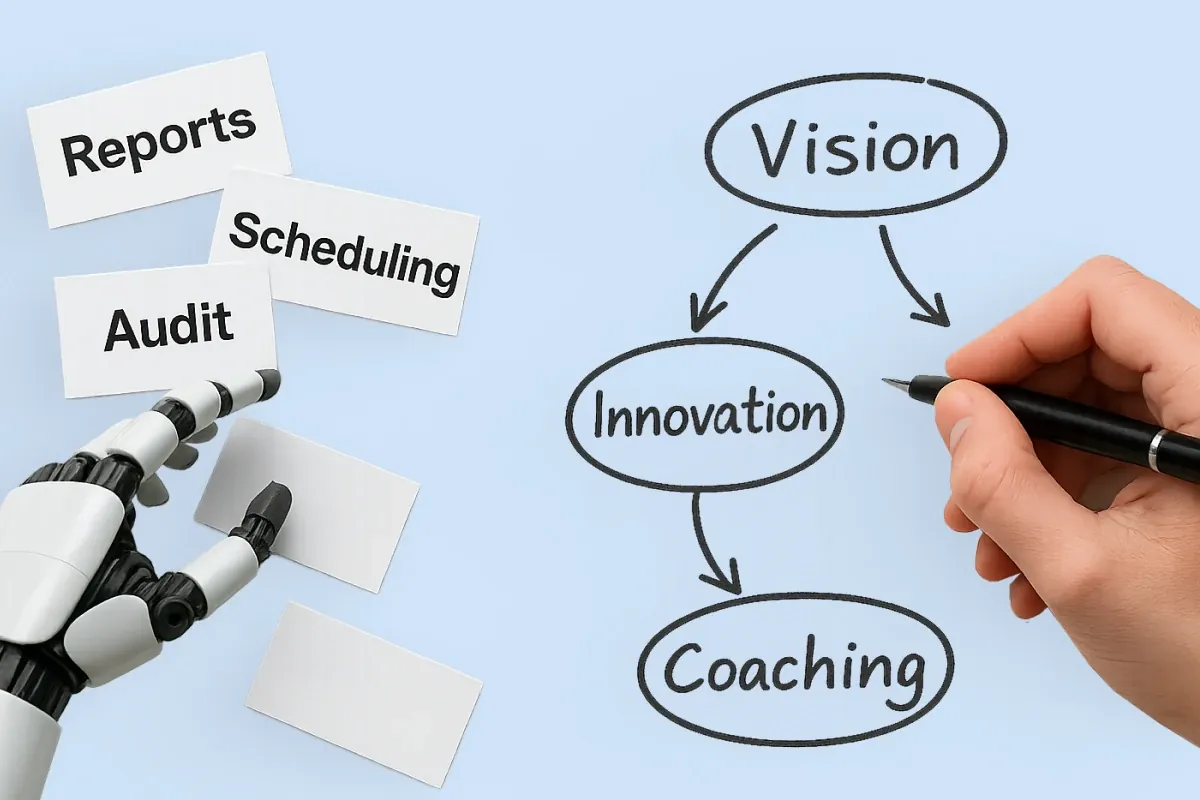
Step #1: Audit the Existing Instance. Azati engineers review the current Redmine version, installed plugins, gem dependencies, and whatever test coverage already exists. On systems that have run for years without much investment in testing, this step also maps out which areas carry the most risk during future changes.
Step #2: Build Against Redmine's Hooks and Rails Conventions. New functionality, whether reporting views, reminder logic, or leave management, is built using Redmine's own hooks into its models, views, and controllers, following standard Rails patterns throughout so the plugin stays maintainable rather than becoming a workaround on top of a workaround.
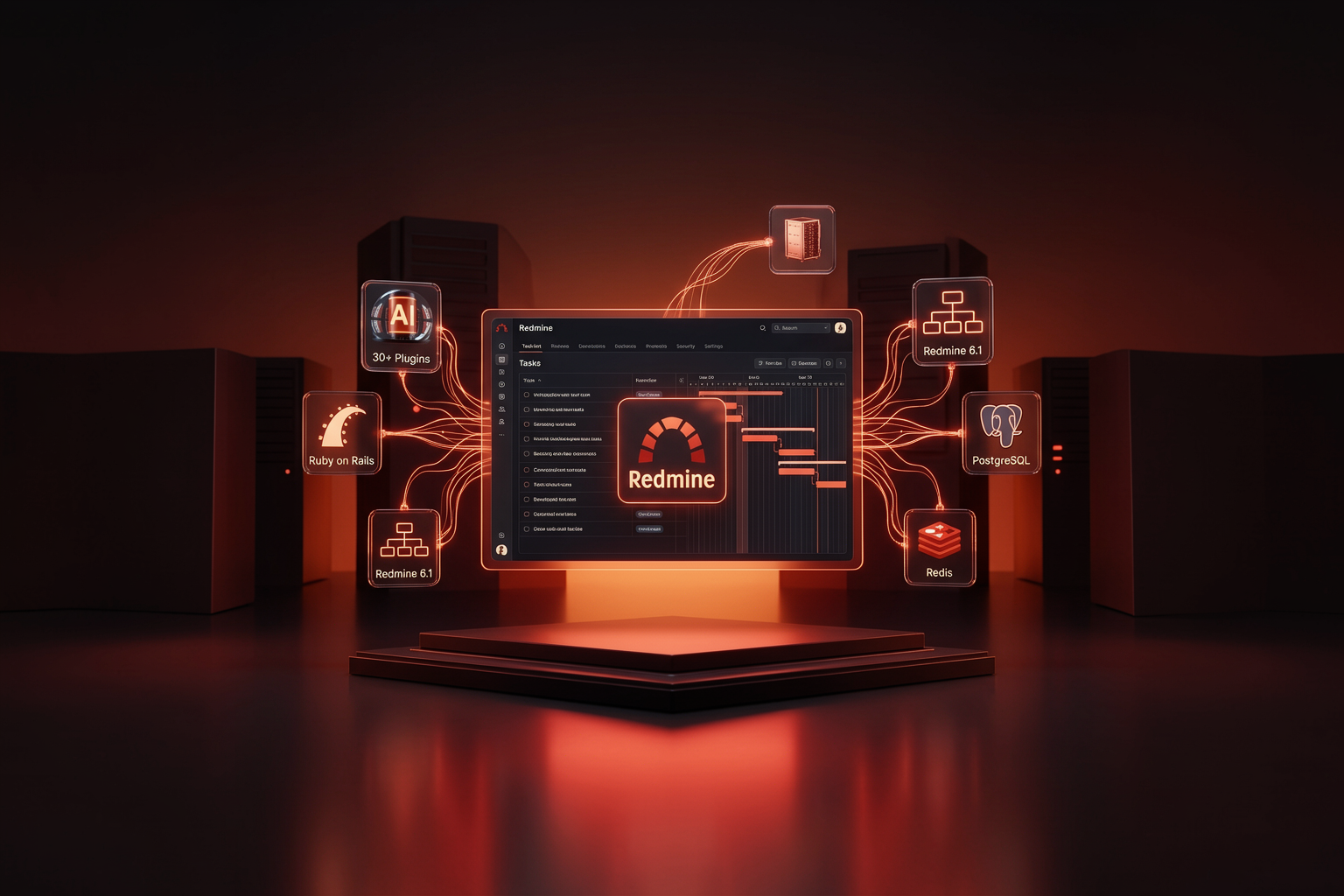
Step #3: Validate and Deploy Without Breaking What Already Works. Azati validates the plugin against a staging environment, including compatibility checks whenever Redmine, Ruby, or Rails versions change, then deploys through Docker with PostgreSQL and Redis, keeping production and staging data separated where needed.
Azati deploys Redmine either on client owned infrastructure or on providers like Hetzner, with SSL and SSH secured throughout, so the platform can run wherever the client's data policies require.
Azati Redmine Development Benefits: Why Work With Our Team
Plenty of teams can add a custom field to Redmine. Far fewer can take an instance that is several major versions behind, carrying dozens of interdependent plugins and little test coverage, and move it forward safely. That gap between surface level customization and real platform ownership is where Azati's Redmine work sits.
Let's have a look at the main benefits of working with Azati on Redmine.
#1 Rails Expertise and Redmine Plugin API Knowledge Together
Building a Redmine plugin correctly requires understanding both the Redmine plugin API and standard Ruby on Rails conventions underneath it. Teams that know Rails but not Redmine's specific hooks, or know Redmine as a user but not Rails as a framework, tend to hit walls once requirements go beyond a custom field. Azati's engineers work across both layers at once.
#2 Long Term Maintenance, Not a One Time Build
Azati maintains what it builds. That means:
- Keeping plugins compatible across Redmine, Ruby, and Rails version upgrades;
- Extending functionality as internal processes change, without breaking what already works;
- Replacing deprecated dependencies, such as moving a rate limiting gem to a maintained throttling library;
- Improving test coverage incrementally on systems where it was thin to begin with.
#3 Two Ways to Work With Azati on Redmine
Not every company needs the same kind of engagement. Some need a focused project to close a specific gap, others need a Redmine instance looked after continuously alongside everything else running in the business.
Azati supports Redmine work in two ways:
- Time and materials engagement: Azati scopes and delivers a specific plugin feature, integration, or version upgrade, billed for the work actually done, suited to a defined project such as a major version upgrade.
- Ongoing maintenance: Azati engineers contribute features, fixes, and upgrades as capacity allows over time, suited to internal tooling that needs to stay current without a dedicated full time team.
How Azati Approaches a Redmine Plugin Upgrade
Redmine plugins age the moment Redmine, Ruby, or Rails ships a new version. A plugin that hooks into internal APIs can break silently if those APIs shift, which is why upgrades are treated as engineering work rather than routine maintenance.
This matters most on instances carrying many plugins at once, some custom and some commercial, where a single dependency conflict can block an entire upgrade if it is not caught early.
Azati has handled this directly: migrating a client's infrastructure to new servers while upgrading Ruby, Rails, Redmine, Sidekiq, and Redis together, adapting roughly 30 plugins to the new environment, and separating production and staging databases across servers, all without interrupting the client's day to day operations.
Common Plugin Areas We Work On:
A typical custom Redmine engagement touches:
- Reporting engine, for department, group, and employee level views;
- Time tracking reminder logic, including leave aware scheduling;
- Leave management, connected to capacity and time data;
- Interface theming, to replace the default Redmine look;
- Third party integrations, such as Jira, GitLab, Mattermost, and Prometheus;
- Background job processing, typically through Sidekiq and Redis;
- DevOps and infrastructure, including Docker deployment and database separation;
- Test coverage, added specifically around the logic future upgrades depend on.
Not every engagement touches all of these areas at once, but each one is a known quantity, not a discovery made mid project.
When Deeper Manual Rework Is Needed
Sometimes a Redmine upgrade cannot simply run through an automated dependency update.
There are two common scenarios:
- Manual plugin review is needed when an instance carries many interdependent custom or commercial plugins with little or no automated test coverage, so each one has to be checked by hand against the new Redmine and Rails APIs before it can be trusted in production.
- Guided automated update applies when dependencies are current enough that most of the upgrade can proceed with standard tooling, with engineers spot checking the areas most likely to be affected rather than reviewing everything from scratch.
How to Use Custom Redmine Development for Your Company
Redmine already sits at the center of how many engineering companies track work. The question is usually not whether to keep using it, but which specific gap to close first.
Custom Redmine development is not one project, it is a set of stages a company can adopt in whichever order matches its own priorities.
There are several stages where Azati's Redmine expertise is helpful:
Extending Reporting and Visibility
Leadership needs to see workload and project coverage across departments and teams, not just within a single project. Custom reporting views make that data visible directly inside Redmine instead of requiring exports and manual spreadsheet work.
This is usually the first gap companies notice once they pass a certain size, because project level reports simply stop answering the questions management is asking.
Automating Time and Leave Tracking
Getting a large team to consistently log time without manual chasing is an operational problem, not just a technical one. Automated reminders that respect leave days and non working periods close that gap without generating noise on days when logging is not expected.
Connecting leave records to the same platform means capacity views stay accurate: someone on leave should not show up as available in a project's resourcing view.
Consolidating Tooling Through Integrations
Engineering teams rarely live in Redmine alone. Ticket import from Jira, GitLab, Mattermost, or monitoring systems like Prometheus reduces the number of places a task can hide, and notification channels like Telegram keep people informed without adding another dashboard to check.
Keeping the Platform Current Through Safe Upgrades
An unmaintained Redmine instance is a slow moving risk: every skipped version makes the eventual upgrade larger and riskier. Treating upgrades as a recurring part of the work, backed by test coverage on the riskiest logic, keeps the platform dependable instead of turning it into technical debt nobody wants to touch.
Why Invest in Custom Redmine Development Now?
What companies typically gain:
- Less manual chasing: automated, leave aware reminders reduce the time project managers spend following up on missing time entries.
- Less manual aggregation: department and group level reports remove the need to export and combine data by hand.
- Lower upgrade risk: test coverage around the riskiest plugin logic turns version upgrades into planned work instead of a gamble.
- Longer platform life: a Redmine instance that is upgraded regularly stays supported and secure instead of accumulating unpatched versions.
Conclusion
Standard Redmine is a solid starting point, but it stays generic unless someone extends it. Custom plugin development is what turns it into a system that matches how a specific company actually manages projects, time, and people.
The work does not stop at the first release. Reporting needs change, leave policies change, and every new Redmine, Ruby, or Rails version is a reason to revisit what is already built. Azati treats that ongoing maintenance as part of the job, not an afterthought.
Whether the need is a single missing report, automated tracking for a growing team, or an instance that has fallen several versions behind, custom development closes the gap without asking the company to leave the platform it already knows.
Get a free assessment of your current Redmine instance, including version risk, plugin dependencies, and the fastest path to the reporting or tracking capability your team needs most.