Data engineering for AI, analytics and business systems in production

The model is rarely the hard part. The data behind it is. Azati builds, modernizes, and maintains the pipelines, warehouses, and data quality controls that make enterprise data reliable and usable across analytics, AI, and operational systems. Our Europe-based engineering teams work in Central European business hours.

300+
interdependent ETL processes kept reliable for 8+ years on one US media data platform
30+ min to under 5
load time on an insurance and healthcare warehouse after a survivorship-rule rebuild
24+ months
embedded in a chemical manufacturer’s data team, across hundreds of flows and thousands of tables
5M+
athlete and event records normalized across fragmented sources with missing identifiers

Key takeaways

  • AI pilots usually stall on late, duplicated, or inconsistently defined data, not on model quality.
  • On one US media platform, 300+ interdependent ETL processes ran for 8+ years, which is why Azati treats data platforms as production systems, not warehouse projects.
  • One insurance warehouse load fell from 30+ minutes to under 5 once a rule defined which source wins.
  • Most organizations need the smallest practical fix, not a platform rebuild.
  • Under the EU AI Act, Article 10 data governance for stand-alone high-risk systems applies from 2 December 2027.

What is data engineering?

Data engineering involves collecting data from business systems, cleaning and modeling it, and reliably delivering it to the reports, applications, ML models, and AI agents that depend on it. It includes data pipelines (ETL and ELT), storage platforms such as warehouses, data lakes, and lakehouses, data quality controls, and the orchestration that keeps data workflows running.

Data engineering vs data science

Data engineering builds and operates the data infrastructure: where data comes from, how it is cleaned and transformed, where it is stored, and whether it is available when needed. Data science uses that foundation to apply statistics and machine learning, identify patterns, and make predictions.

Both disciplines are connected, but they solve different problems. Azati brings them together when a project requires both reliable data foundations and analytical capabilities. For the data science side, see Analytics, BI & Predictive Models.

Why do AI projects stall at the data layer?

Most AI pilots don't stall because the model is weak. They stall because the data the model reads is late, duplicated, or defined three different ways in three systems. A model can't fix that. It repeats the problem, with confidence. Our experience comes from engineering and supporting data platforms over time, where changes to sources, schemas, and business requirements have to be handled without disrupting downstream systems.

US media data platform

On a US media data platform we have supported for more than eight years, the hard part was never the 90 TB of storage. It was 300+ ETL processes that depended on each other while sources, schemas, and business questions kept changing. That changed how we scope data work: a data platform is a production system with dependencies, not a warehouse project with an end date.

Insurance and healthcare warehouse

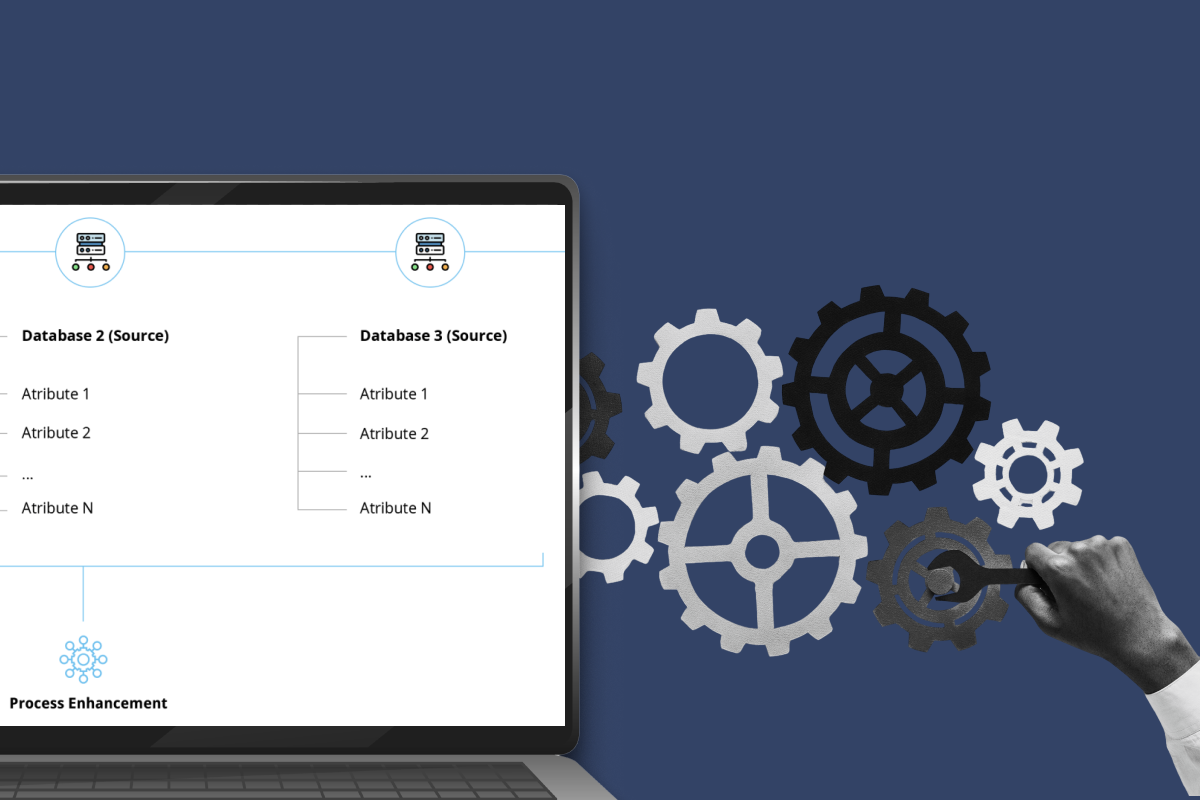
In an insurance and healthcare reporting warehouse, less reliable sources silently overwrote verified attribute values with blanks. The fix wasn't a bigger server. It was a rule, attribute by attribute, about which source wins. Load time dropped from 30+ minutes to under 5 as a side effect.

When should a business invest in data engineering?

Data engineering becomes a priority when the data behind reporting, operations, or AI initiatives is no longer reliable, timely, or accessible enough to support the work.

Common signs include:

  • AI initiatives are blocked by data problems. Sources are fragmented, access is inconsistent, or the data lacks the quality and context a use case requires.
  • Business teams work with conflicting numbers. Different systems, reports, or departments use inconsistent definitions and transformations.
  • Data pipelines are becoming difficult to maintain. Dependencies have grown, failures are hard to trace, and changes to one source disrupt downstream reporting.
  • The existing platform limits growth. Legacy warehouses, ETL tools, or custom integrations are becoming costly to maintain or difficult to extend.
  • Data governance cannot keep pace. Ownership, lineage, access rights, and quality controls are incomplete or difficult to evidence.
  • Operational decisions depend on delayed data. Teams cannot access the information they need when planning, forecasting, or responding to changing conditions.

The right starting point depends on the problem. It may be one critical pipeline, a data quality issue, a warehouse migration, or an assessment of the data behind a planned AI use case. Azati helps identify the smallest practical intervention before recommending a wider rebuild.

What Azati builds

AI data readiness assessment

Evaluate whether the data behind a planned AI use case is fit for purpose. Azati offers a fixed 3-week assessment of the data behind one planned AI use case: quality, freshness, lineage, access rights, and gaps, scored against what that specific use case needs. You get a ranked fix list and a roadmap your team can run with or without us.

How do the pieces fit together?

Data engineering initiatives often involve four connected phases. You may need one or several, depending on the state of your platform and the outcome you need.

Most organizations do not need a full platform rebuild. We identify the changes that can address the most important data constraints, whether that means a pipeline, a quality rule, a governance gap, or a targeted modernization.

  1. Assess

    Find out where your data supports your AI plans and where it blocks them.

  2. Modernize

    Replace the parts of the platform that can't carry the load, and keep the parts that can.

  3. Govern

    Make every number traceable to its source: lineage, ownership, access, quality rules.

How Azati approaches data engineering: what clients can expect

Engineering ownership beyond launch

We build and maintain pipelines, warehouses, and data marts, with ongoing involvement after deployment.

Incremental modernization

We migrate aging data platforms in phases, validating each step and preserving critical reporting and analytical workflows.

Data quality at the source

We address inconsistent, duplicated, and unreliable data in the underlying systems and pipelines rather than relying on downstream reporting fixes.

Integration with existing teams

Our engineers can work within your data organization, using your processes, tooling, and delivery practices.

Connected analytics capabilities

When required, we can extend the data foundation into BI, predictive analytics, and AI applications.

We do not assume that a platform replacement is necessary. We first assess the existing environment and recommend the changes justified by the technical and business requirements.

Europe-based data engineering for DACH and Benelux

Same working hours

Azati's engineering team is based in Europe and works Central European hours, the same as Germany, Austria, Switzerland, the Netherlands, Belgium, and Luxembourg. Collaboration during Central European business hours, without routine overnight handoffs.

Your data stays where you decide

Azati builds for public cloud, EU private cloud, or fully on-premises. One research platform we architected runs the same codebase in the cloud or entirely inside a client's data center. An analytics copilot we built runs inside a client's closed network with no external cloud dependency.

Data governance for regulated environments

Data platforms in regulated industries need more than reliable pipelines. They also need appropriate controls over data access, quality, lineage, and processing records.

The requirements depend on the organization, the data being processed, and the systems involved:

GDPR

Governs the processing of personal data, including the purpose of processing, lawful basis, data minimization, retention, and security.

DORA

Establishes digital operational resilience requirements for financial entities, including the management and oversight of ICT-related risks.

EU AI Act, Article 10

Sets data governance and management requirements for training, validation, and testing datasets used by certain high-risk AI systems.

Azati engineers data platforms with lineage, access controls, quality rules, and relevant processing records so that technical teams can trace how data moves through the environment and support the organization's governance processes.

Regulatory applicability depends on the specific organization and use case. This is engineering guidance, not legal advice.

What does this look like in production?

Media Data Platform for Streaming, Advertising & Broadcast Analytics
Sports & Entertainment

How to turn high-volume streaming and broadcast data into better content and advertising decisions?

100 months Long-term media data engineering partnership
300+ ETL processes supporting media data workflows
90 TB Data lake across a hybrid analytical environment
  • IBM DB2 Warehouse
  • Netezza
  • Microsoft SQL Server
  • SQL
  • PL/SQL
  • Python
  • Node.js

Business challenge

A large US media company needed to connect streaming, broadcast, advertising, promotion, and audience data to operational decisions. Its hybrid environment included 300+ ETL processes, approximately 90 TB of data lake storage, and 30 TB of application data, making reliable data processing, historical modeling, and infrastructure evolution increasingly complex.

Solution at a glance

Azati provided long-term media data engineering support across the client's data platform and analytical applications. The work covered ETL orchestration, data quality, historical modeling, database performance, analytics, and DB2 Warehouse migration while keeping interconnected media workflows operational as requirements and infrastructure evolved.

How Azati solved the challenge

  • Streaming analytics and content performance: Built and maintained analytical capabilities that helped teams evaluate streaming performance, audience behavior, content placement, and premiere timing.
  • Advertising analytics and optimization: Engineered data and application capabilities for targeted advertising, campaign planning, audience analysis, and performance optimization. The client reported a 17% increase in advertising revenue during the relevant period at comparable advertising-time volume.
  • Broadcast scheduling and content placement: Developed data-driven capabilities for schedule construction, content placement, potential-viewership forecasting, and comparison of planned versus expected results.
  • Targeted promotion: Supported targeted promotional campaigns across the client's television channels by applying audience and performance data to campaign planning and optimization.
  • Cross-platform campaign analytics: Built analytical capabilities for evaluating digital advertising campaigns across television and streaming properties, supporting cross-platform performance measurement and reporting.
  • Media data warehousing and ETL: Engineered and maintained more than 300 ETL processes across a hybrid environment containing approximately 90 TB of data lake storage and 30 TB of application data. The work included data transformation, analytical data marts, historical processing, SCD Type 1–3 modeling, and data-quality controls.
  • Data infrastructure migration: Supported the migration of IBM DB2 Warehouse from Gen2 to Gen3, developing custom data-transfer and validation mechanisms with Prefect and SSIS. The team also performed database and PL/SQL optimization for high-volume analytical workloads.

Business outcomes

  • One data foundation for multiple media decisions: The broader data environment supported streaming analytics, broadcast scheduling, content placement, audience targeting, promotional planning, and digital campaign analysis.
  • 300+ ETL processes maintained across evolving requirements: Long-term engineering support kept interconnected data workflows operational as data sources, schemas, applications, and analytical requirements changed.
  • Historical context preserved for media analytics: SCD strategies, historical models, and analytical data marts helped preserve the context required to compare audience, content, and campaign states over time.
  • 17% client-reported advertising revenue increase: The targeted advertising application supported campaign planning, audience analysis, and performance optimization. The client reported a 17% increase in advertising revenue during the relevant period, while advertising-time volume remained comparable. The available information does not isolate Azati's contribution from other commercial factors.
  • Analytical infrastructure evolved without starting over: Custom migration and validation mechanisms supported the DB2 Warehouse Gen2-to-Gen3 transition while existing analytical dependencies remained part of the modernization effort.
ETL Process Enhancement for Insurance and Healthcare
Insurance & Healthcare

How do you stop bad data from silently overwriting good data?

80% reduction in ETL runtime
3-5x increase in data processing capacity
95% reduction in duplicate/conflicting entries
  • Oracle
  • Oracle SQL
  • Survivorship Matrix
  • ETL

Business challenge

A national leader in customized insurance, claims, and patient safety & risk solutions was losing trust in its own reporting. Reference data arrived from multiple operational systems of inconsistent reliability, and the ETL process had no way to distinguish a complete, trustworthy record from a thin one – so a detailed, verified attribute could be silently overwritten by a blank or low-confidence value from a weaker source. Duplicate and conflicting entries piled up in the warehouse, reporting errors followed downstream, and the nightly ETL run stretched past 30 minutes, delaying same-day analytics.

Solution at a glance

Azati designed a rules-based Survivorship Matrix, built directly into the Oracle SQL ETL logic, that decides – attribute by attribute – whether an incoming value should overwrite the existing record or be discarded in favor of the higher-priority source already in the warehouse. The decision logic runs inline as data loads, with no separate reconciliation stage.

How Azati solved the challenge

  • Source Reliability Scoring: auditing every attribute from every upstream system and scoring it for reliability and completeness.
  • Survivorship Matrix Design: rules-based logic embedded directly in the ETL layer to resolve conflicts at load time.
  • Configurable Priority Weighting: rules that can be re-ranked as new sources come online, without touching the surrounding workflow.
  • Pipeline Consolidation: removing redundant comparison and cleansing steps that had bloated the original ETL job.

Business outcomes

  • Inline Conflict Resolution: no manual reconciliation queue or nightly cleanup script – the warehouse never holds a degraded value even transiently.
  • Configurable Rules Engine: priority logic adjustable as source reliability changes, without a re-engineering cycle.
  • Faster, Leaner ETL: runtime cut from 30+ minutes to under 5, within the same infrastructure footprint.
  • Audit-Ready Data Trail: a single, consistent view of policy and reference data defensible to auditors and regulators.
Enterprise Data Platform Pipeline Development
Chemical & Industrial Manufacturing

How do you keep 1,000+ tables trustworthy through 24+ months of nonstop growth?

24+ months of continuous, embedded delivery
100s of data flows across 1,000s of analytical tables
Dozens of data marts and pipelines developed
  • SQL
  • Python
  • dbt
  • Greenplum
  • PostgreSQL
  • ClickHouse
  • Apache NiFi
  • Apache Airflow

Business challenge

A large chemical enterprise operated dozens of interconnected business systems feeding a central analytical platform – hundreds of data flows and thousands of analytical tables, all continuously expanding as new business initiatives and systems came online. Business teams depended on this platform for reporting and operational decisions, but growing volumes and increasingly complex transformations meant existing pipelines and loading logic constantly needed rework just to keep performance and consistency from degrading.

Solution at a glance

Azati joined as an embedded extension of the client's data engineering organization – not a bolt-on vendor – developing analytical pipelines, data marts, and orchestration workflows using SQL, Python, dbt, Apache Airflow, and Apache NiFi, on top of Greenplum, PostgreSQL, and ClickHouse. The engagement ran continuously for 24+ months under a Scrumban delivery model built for constantly evolving requirements.

How Azati solved the challenge

  • Analytical Pipeline & Data Mart Development: building and maintaining the ETL/ELT logic and reporting-oriented data marts consumed by BI teams.
  • Workflow Orchestration & Automation: Apache Airflow and Apache NiFi scheduling, monitoring, and automating processing across the full data ecosystem.
  • SQL & Transformation Optimization: query tuning, join improvements, and transformation refinement to sustain performance as volume grew.
  • Embedded, Continuous Delivery: a dedicated data engineering specialist integrated into the client's own architecture and Scrumban process.

Business outcomes

  • Business-Ready Data Marts: curated analytical structures so BI teams consume trusted datasets without touching complex source systems.
  • Automated Orchestration & Monitoring: Airflow- and NiFi-driven pipelines replacing manual, ad hoc data movement.
  • Optimized, Maintainable Pipelines: ongoing SQL and transformation tuning keeping the platform performant as it scales.
  • Scalable Analytical Architecture: a foundation designed to keep absorbing new systems and reporting requirements without re-architecture.
AI Sports Data Management Platform
Sports & Entertainment

How do you unify 5 million records that have no shared identifiers?

5M+ athlete & event records ingested and normalized
70% reduction in manual data oversight
92% accuracy in semantic search & AI summarization
  • Apache Spark
  • Elasticsearch
  • AWS
  • Kubernetes
  • React
  • .NET Core
  • Java Spring Boot

Business challenge

An international sport organization needed to centralize athlete and event data streaming in from live feeds, official results APIs, media outlets, CSVs, XML, HTML pages, and historical archives – with inconsistent naming conventions and no consistent identifiers linking the same athlete or event across sources. Every update, correction, and conflict was reviewed manually, a process that couldn't scale as feed volume grew, leaving administrators no automated way to catch anomalies before they reached a report or partner feed.

Solution at a glance

Azati built a four-layer platform: distributed ETL pipelines on Apache Spark for batch and streaming ingestion, a containerized microservices layer for entity linking and deduplication, an AI-assisted enrichment stage using NLP and embeddings for semantic search, and a governance hub with full versioning, conflict comparison, and audit trails.

How Azati solved the challenge

  • Distributed ETL at Scale: batch and streaming pipelines normalizing multi-format data (JSON, CSV, XML, HTML) at terabyte scale.
  • Entity Resolution & Deduplication: modular microservices (Docker/Kubernetes on AWS) linking records to a single athlete or event identity.
  • NLP & Embedding-Based Enrichment: resolving naming ambiguities and powering natural-language semantic search via Elasticsearch.
  • Governance & Versioning: full audit trails, approval workflows, and side-by-side conflict comparison for every profile change.

Business outcomes

  • Unified Athlete & Event Identity: 5M+ records normalized and cross-linked across every source system feeding the platform.
  • Automated Anomaly Detection: event-driven alerts replace manual, periodic data-quality checks.
  • Natural-Language Semantic Search: analysts query historical results conversationally instead of hand-building filters.
  • Elastic, Event-Ready Infrastructure: dynamic cloud scaling absorbs traffic spikes around major competitions.

Which industries does Azati build data platforms for?

Banking & Finance

Financial reporting data that arrives on time: one general-ledger extraction went from 3 hours to 10–15 minutes after we fixed Oracle statistics and query plans.

Who is this for?

  • Chief Data & Analytics Officers

    Lineage, ownership, and quality you can defend to the board and the regulator.

  • CTOs and CIOs

    A data platform every team can build on, instead of one pipeline per pilot.

  • Chief AI Officers

    Retrieval quality and governance in place before an agent goes live.

  • Heads of BI

    One governed source of truth instead of competing versions of business performance.

  • Heads of Data Engineering and platform leads

    Extra engineers who join your sprints and tooling, not a parallel team.

Which technologies does Azati work with?

Technologies Azati has used in delivered data engineering projects, by layer
Layer Technologies used in delivered projects
Warehouses & databases IBM Db2 Warehouse, Netezza, Oracle, Microsoft SQL Server, PostgreSQL, Greenplum, ClickHouse, MongoDB
Pipelines & orchestration dbt, Apache Airflow, Apache NiFi, Prefect, Microsoft SSIS, Apache Spark
Data quality & schema change Great Expectations, Flyway
Search & retrieval Elasticsearch, hybrid BM25 + vector search
Cloud & runtime AWS (S3, EC2, Athena, SageMaker), Oracle Cloud Infrastructure, Docker, Kubernetes
BI & analytics IBM Cognos, custom web dashboards, Python (pandas, scikit-learn, XGBoost, LightGBM)

How does Azati work with your team?

  • Fixed 3-week assessment

    A fixed-scope review of one defined AI use case: the relevant data sources, data quality, freshness, lineage, access and availability, plus a prioritized gap analysis and remediation roadmap.

  • Project delivery

    A scoped build or data migration with a team that owns the result.

  • Embedded data engineers

    Specialists who join your data team, your sprints, and your tooling. That's how our longest data engagements run.

  • Build and run

    We keep pipelines and models monitored and maintained after launch.

Executive insight

Data Engineering Team Lead
“The biggest misconception about AI is that companies think they're buying a model. They're actually buying data maturity. By the time a model or an agent does something impressive, the real work was done months earlier, in the pipelines nobody demos.”
Alexander
Data Engineering Team Lead

Which data challenge is slowing your next initiative?

Tell us what systems hold your data, what needs to use it, and where the current setup falls short. Whether you need to assess AI data readiness, modernize a warehouse, stabilize pipelines, or improve data quality, we'll help identify a practical starting point. We'll review your description and respond within one business day.

Talk to a data engineering expert

What data and AI leaders ask us most

Data engineering makes data reliable and available. Data science uses that data to explain and predict. A data scientist working on an unreliable pipeline spends most of the time cleaning data instead of modeling it, which is why we run both in one practice.

Usually yes, but rarely all of it. AI systems repeat whatever is wrong in the data they read. The useful question is which data a specific use case needs and whether that data is fit for it, which is what Azati’s 3-week assessment answers.

An AI data readiness assessment checks whether the data behind one planned AI use case is fit for it. Azati’s version is a fixed three-week review of quality, freshness, lineage, access rights, and gaps, scored against what that specific use case needs. The output is a ranked fix list and a roadmap your team can run with or without Azati.

Three weeks for one AI use case, with a fixed scope and duration. Each additional use case adds about a week, because quality thresholds for a customer-facing assistant differ from those for an internal forecasting model.

No, in most cases. Targeted fixes to integration, quality rules, and governance usually unblock more AI work than a replacement. When data migration is needed, we do it in phases. Azati’s IBM Db2 Warehouse migration for a media client was planned around the analytical applications that kept depending on it throughout.

Azati’s recent projects ran on IBM Db2 Warehouse, Netezza, Oracle, SQL Server, PostgreSQL, Greenplum, and ClickHouse, with dbt, Airflow, NiFi, Prefect, SSIS, and Spark for pipelines. We work with the platform you have before suggesting a new one.

Yes. In our longest data engagements, Azati engineers worked inside the client's data organization, in their sprints and tooling: 24+ months for a chemical manufacturer and more than eight years for a US media company.

Azati’s engineering team is based in Europe and works Central European hours, the same time zone as DACH and the Benelux. Our EU headquarters is in Warsaw.

Yes. Azati builds data and AI platforms for public cloud, EU private cloud, or fully on-premises deployment. That includes systems that run with no external cloud dependency at all.

Azati works inside client-controlled environments: access, credentials, and infrastructure are provisioned by you, and data stays where you decide, whether public cloud, EU private cloud, or on-premises. For regulated clients, we document lineage, access controls, and processing records, and support the third-party risk questionnaires you require under frameworks such as DORA and GDPR.

For high-risk AI systems, Article 10 requires documented data governance for training, validation, and test data, covering origin, preparation, quality, and bias checks. For stand-alone high-risk systems, this applies from 2 December 2027. Pipelines with lineage and audit trails make that documentation something you generate, not something you reconstruct. This is engineering guidance, not legal advice.

Most of Azati’s clients start with the 3-week assessment, or with one pipeline or data migration that is already causing pain. Send us a short description through the form below, and we'll reply within one business day.

There’s no single figure, because cost depends on the number of sources, the state of the existing platform, and how much needs rebuilding versus fixing. Azati’s AI data readiness assessment has a fixed scope and duration, and later builds or data migrations are scoped from its findings. Embedded engineers are scoped by team size and duration.

Last updated

Tell us about your data challenge

This site is protected by reCAPTCHA and the Google Privacy Policy and Terms of Service apply.

What's next?

  • 1. Tell Us Your Story
    Describe your project. We come back within one business day with team availability and a rough plan. NDA on request before the first call.
  • 2. Get Your Roadmap
    Receive a detailed proposal with scope, team composition, timeline, and costs tailored to your goals.
  • 3. Start Building
    Azati aligns on details, finalize terms, and launch your project with full transparency.