The system is operationally critical
It supports regulated workflows, production processes, enterprise commerce, clinical operations, or financial transactions. Downtime or incorrect outputs create real business consequences, not just inconvenience.
Azati engineers custom software for enterprises whose workflows, integrations, or operational requirements don't fit off-the-shelf products. We build and evolve business-critical applications under real production constraints: regulated data, legacy dependencies, complex business logic, and no room for downtime. This is engineering where technical decisions can affect financial outcomes, physical operations, clinical workflows, or regulatory obligations.
Schedule a technical discovery callBuilding and modernizing business-critical software
Across complex enterprise workflows
With regulatory and operational complexity


This page is for CIOs, CTOs, VPs of Engineering, and product leaders responsible for software that is already part of the business. You're in the right place if you're evaluating a custom software partner for work that's more complex than a typical product build. The projects we describe here share a few characteristics:
It supports regulated workflows, production processes, enterprise commerce, clinical operations, or financial transactions. Downtime or incorrect outputs create real business consequences, not just inconvenience.
You're not starting from zero. There's a legacy platform, an existing data architecture, in-house teams, regulatory constraints, or an enterprise ecosystem that the new software has to fit into.
This isn't a 6-week prototype. You need engineers who accumulate domain context over months or years, understand why the system works the way it does, and can evolve it without introducing instability.
Formulas get revised mid-sprint. Regulatory frameworks shift. Acquisitions introduce new platforms. The engineering team has to absorb these changes and keep delivering.
Custom software makes sense when the software itself becomes part of the company's competitive advantage or operating model, and packaged products force the business to compromise.
Custom development isn't automatically better than buying or configuring an existing product. If a standard platform already handles the workflow well, customization can create unnecessary ownership and maintenance costs.
Custom engineering becomes compelling when the business process, integration landscape, data requirements, or product roadmap creates constraints that packaged software cannot reasonably accommodate.
Custom engineering often becomes necessary when the cost of working around the existing system starts exceeding the cost of changing it. That may show up as slower releases, duplicated workflows, growing integration debt, expensive infrastructure, declining maintainability, or an inability to support a new business requirement without touching fragile legacy components.
The answer doesn't always require replacement. In many enterprise environments, the better path is to identify the constraint with the highest business impact and change the system incrementally.
Most custom software providers start with a technology stack or delivery model. Azati starts with the problem environment. The system may already be carrying transactions, clinical workflows, industrial calculations, customer data, or regulatory obligations. The engineering approach has to account for that reality before technology choices are made.
Azati deploys changes into systems that are already running. That means no "big-bang" rewrites, no extended platform freezes, and no parallel development streams that diverge from the production codebase.
The Azati teams can stay on engagements for years, allowing domain context to compound over time. A developer who understands why a petroleum formula was revised in Sprint 14 can spot the downstream effects in Sprint 40. This accumulated context is what separates embedded engineering from staff rotation.
Several of Azati's engagements require high-order numerical calculations, iterative equation systems, floating-point stability, and physical-constraint validation. We hire and retain engineers with the mathematical depth these systems demand.
In systems where outputs influence physical assets, clinical workflows, or financial transactions, QA has to be part of the engineering architecture rather than a final release gate. Azati applies domain-specific validation, production-scale regression testing, and targeted testing techniques where the failure modes of the system require more than conventional functional testing.


Tell us what you're trying to build, extend, integrate, or modernize. We'll help you assess the technical constraints, define the right engineering approach, and determine whether custom development, modernization, or a hybrid path makes the most sense.
Discuss your software challengeBusiness-critical applications spanning multiple services, databases, workflows, and user roles.
Incremental modernization of production systems, including databases, application architecture, and frontend technologies.
Calculation engines, engineering platforms, analytics, and simulation software requiring numerical and domain-specific rigor.
Patient and clinician applications, clinical workflows, cross-platform experiences, and healthcare product engineering.
Data integration, migration, search, reporting, and multi-system synchronization.
Testing and validation for software where conventional test coverage is not enough.
Reservoir analytics, production forecasting, well interaction modeling, hydrodynamic simulation, and enterprise calculation platforms for regulated extraction operations.
Patient and clinician applications, clinical workflow systems, telemedicine platforms, healthcare data migration, and embedded product engineering for healthcare organizations.
Regulated financial platforms, transaction processing systems, compliance-aware application development, and enterprise data integration for banking and insurance.
Enterprise marketplace engineering, digital rights management, identity and access management, enterprise procurement workflows, and acquisition platform integration.
Many enterprise software initiatives start with an existing system rather than a blank page. Azati can extend, refactor, integrate, or incrementally modernize it while production operations continue, giving the business a path forward without forcing a full replacement upfront.
Request legacy-to-AI modernizationThe architecture follows the workflow, integration landscape, data requirements, security model, and operational constraints. Technology choices come after we understand those constraints.
Custom software rarely starts from an empty repository. Azati works across modern and legacy applications, databases, APIs, cloud infrastructure, and third-party systems, including environments that cannot simply be replaced.
Architecture, testing, integration, observability, security, deployment, and maintainability are part of the engineering problem, not post-launch additions.
The architecture is shaped by what the system already has to connect to, what cannot be switched off, and what is expected to change next.
Modular architectures designed around business domains and expected change.
APIs, event-driven integration, and orchestration across enterprise systems.
Structured data flows, persistence, search, reporting, and migration paths.
Deployment and infrastructure patterns designed for reliability, scalability, security, and operational control.
Azati engineers integrate into your existing product organization: shared backlog, shared ceremonies, shared codebase. You keep product ownership. We add engineers who become part of the existing delivery system and accumulate product context over time.
Best for: Organizations with established product teams that need more engineering depth without building another team.
Defined scope, milestones, and outcomes delivered under a Fixed Price or T&M model. Azati owns the delivery process while collaborating closely with your domain and technical stakeholders.
Best for: Specific platform builds, migrations, or modernization initiatives with defined boundaries.
Some engagements start with a defined project scope and evolve into embedded partnerships as the product expands. The Azati team adapts the working model to match how the engagement actually develops.
Best for: Organizations that want to start with a bounded initiative and expand based on demonstrated value.
From enterprise platforms and regulated workflows to data-intensive SaaS products, Azati builds and evolves software when off-the-shelf products can't meet the business, integration, or operational requirements.
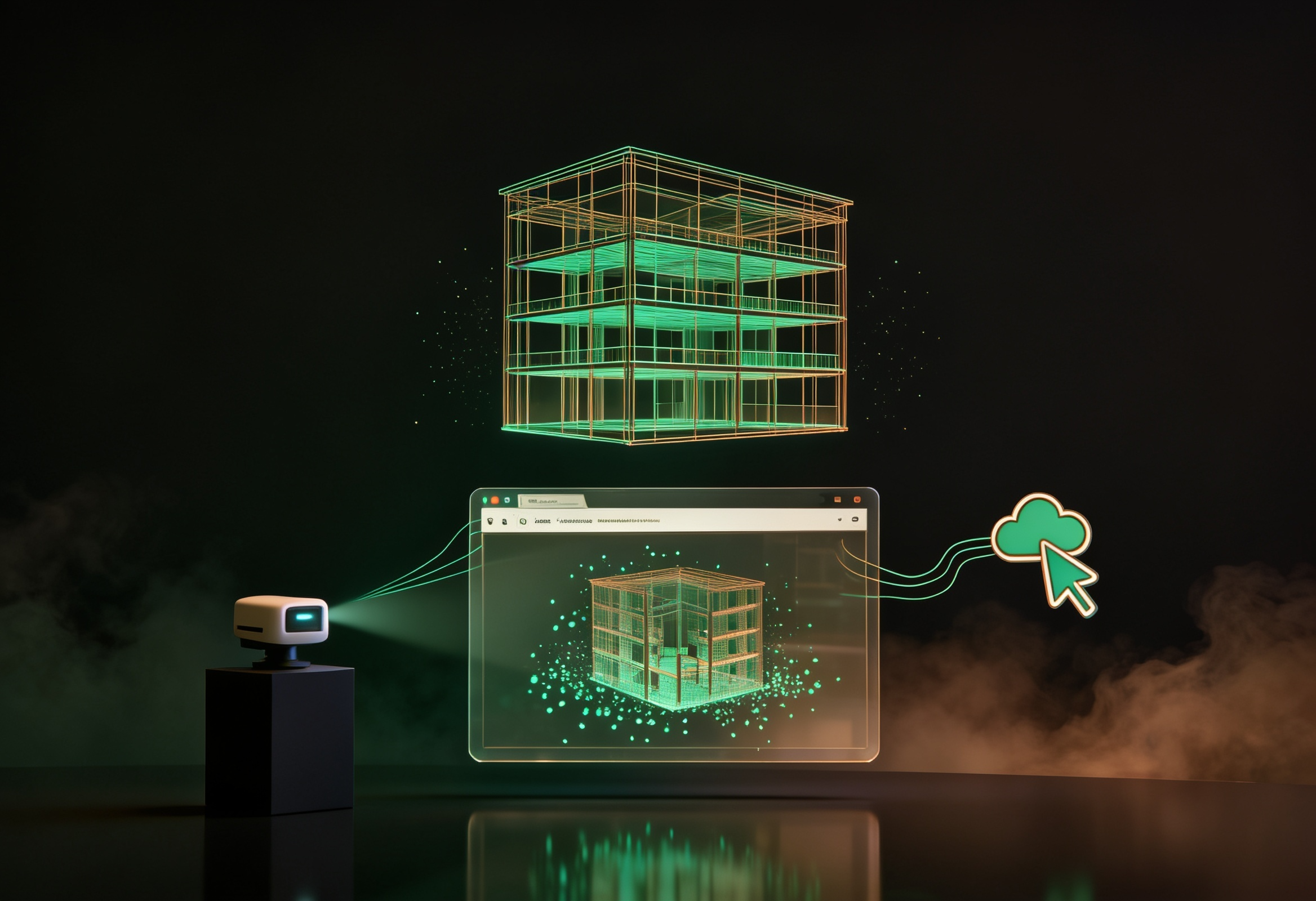
A US construction tech startup needed a SaaS platform to convert physical buildings into interactive digital twins. The solution required an end-to-end workflow, from IoT scanning and cloud processing to browser-based 3D visualization and real-time collaboration, that could scale efficiently and reliably.
Azati provided full-cycle engineering over a 24-month engagement, developing core components across the frontend, backend, cloud infrastructure, and 3D visualization stack. The resulting platform automated the complete journey from building scan upload through cloud processing to browser-based analysis and collaboration, creating a scalable digital twin solution for construction and property stakeholders.

A Latin American FinTech needed to scale its financial automation platform—which handles banking connections, transaction synchronization, and reconciliation—while ensuring continuous delivery of new features without compromising financial accuracy. They required expertise to expand banking integrations, improve testing, and modernize the platform while maintaining operational stability.
Azati embedded senior Ruby on Rails engineers into the client's product team to enhance core financial workflows, improve banking integrations, strengthen security, modernize parts of the platform, and expand automated quality assurance. The engagement combined feature development with stabilization of existing functionality, enabling continuous product evolution while preserving the integrity of financial operations.
A financial institution needed to continuously evolve its digital banking platform while ensuring service reliability, high transaction performance, and ongoing regulatory compliance.
As an embedded engineering partner, Azati enhanced and stabilized the client's digital banking platform. Through ongoing maintenance, feature development, and performance optimization, the team enabled continuous product evolution and improved reliability, supporting growing user activity and regulatory compliance without the need for large-scale replacement.
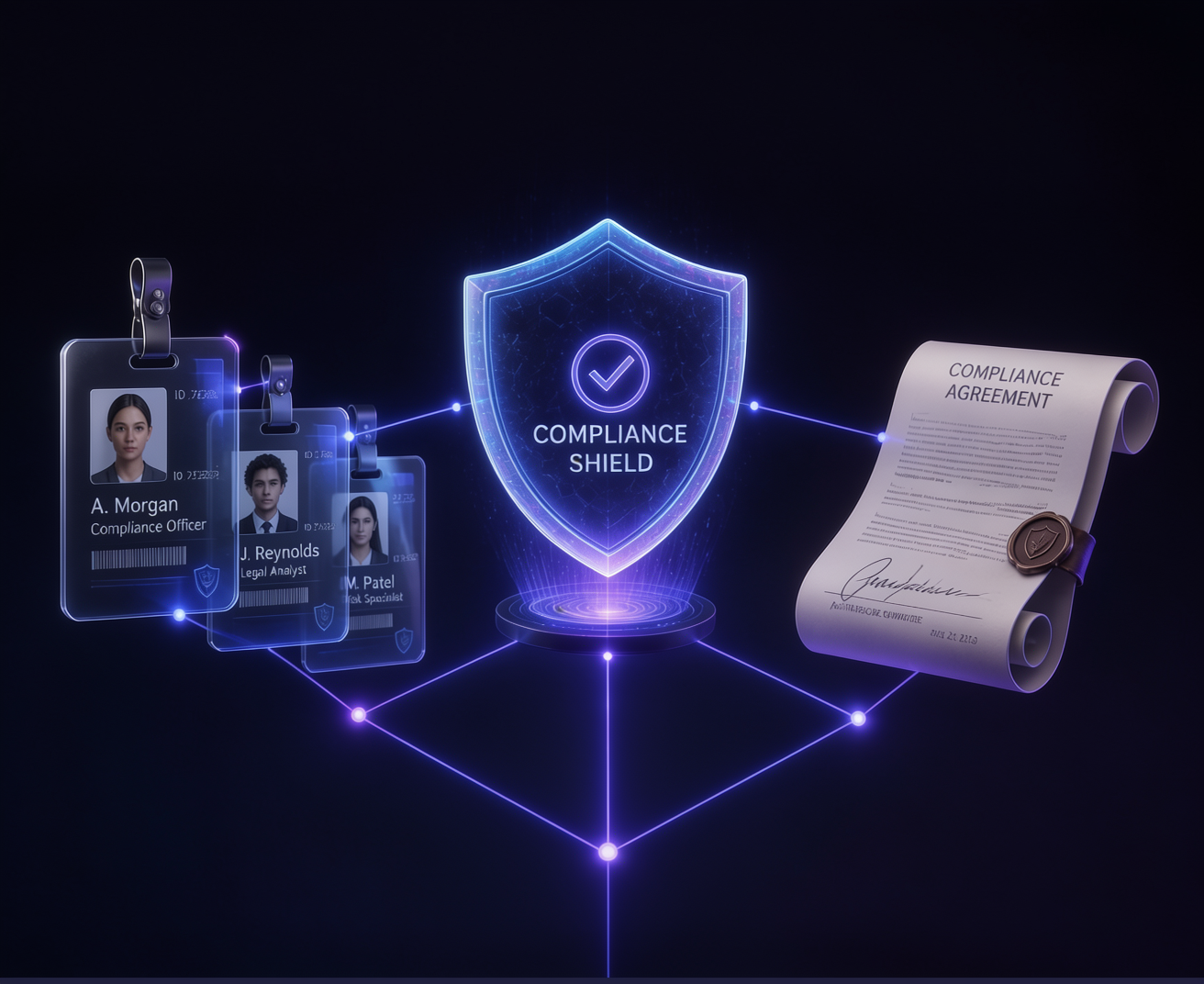
A European equipment leasing provider needed to scale its digital platform into the Netherlands and Belgium while navigating complex, country-specific regulatory requirements. The company's original monolithic architecture hindered scalability and slowed the integration of essential processes, including identity verification, AML screening, credit scoring, and contract generation, which prevented the rapid development needed for market expansion.
Azati partnered to modernize the leasing platform (monolith to microservices) and automate the lifecycle, resulting in a scalable solution for European market expansion.
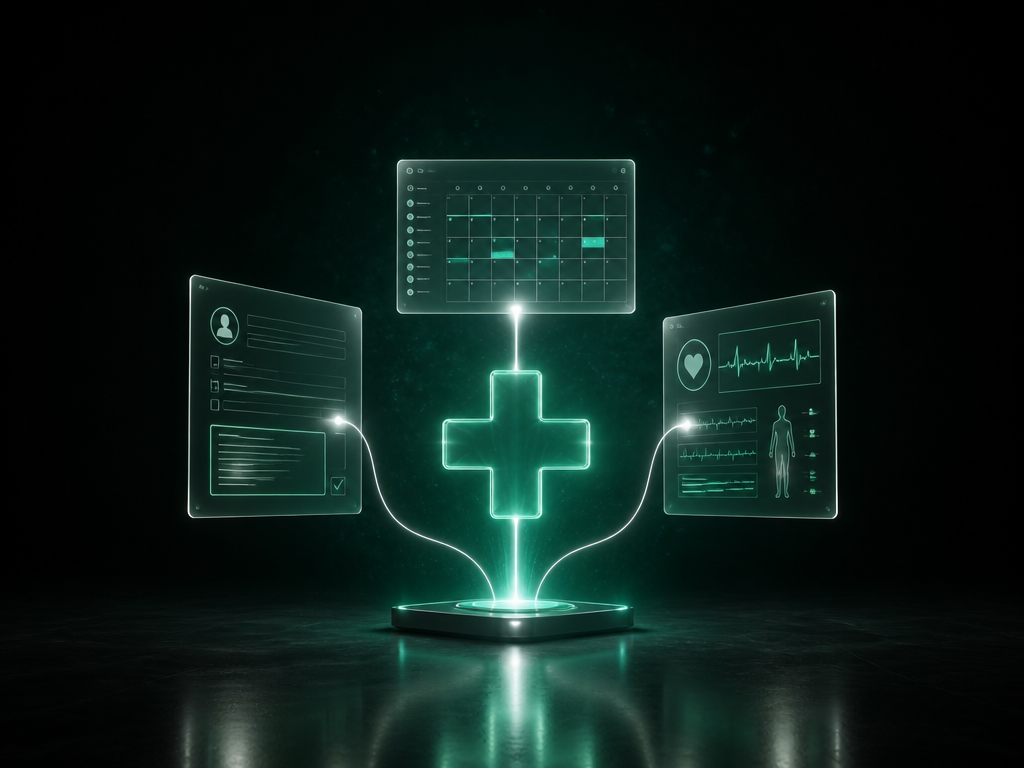
A US network of clinics needed additional engineering capacity to keep a live healthcare platform evolving across patient and clinician applications, mobile and web experiences, and TV applications used in clinics. The team had to deliver new functionality while maintaining existing workflows and improving frontend practices.
Azati embedded engineers directly into the client's product organization, contributing across React, React Native, and React Native Web. The team delivered patient and clinician workflows, maintained the existing platform, introduced frontend testing, and supported the migration from REST APIs to GraphQL without creating a separate delivery stream.
Custom software engineering must fit an existing operational environment rather than defining that environment from scratch. Enterprise systems often have established data models, integrations, compliance requirements, domain-specific logic, and production dependencies that constrain architectural choices.
That means engineering decisions have to account for the systems, workflows, and operational requirements already in place, not just the functionality being built.
Azati’s enterprise engagements typically involve these conditions, particularly in regulated, financial, healthcare, and industrial environments.
Custom software engineering is most relevant when off-the-shelf products cannot adequately accommodate the organization’s workflows, integrations, technical constraints, or business requirements.
Typical scenarios include:
Enterprises replacing fragmented business applications Multiple systems have accumulated around the same process, creating duplicated data, manual handoffs, and expensive maintenance.
Product organizations extending a business-critical platform The product already has users and revenue, but the roadmap is constrained by architecture, technical debt, or missing capabilities.
Operations leaders digitizing complex workflows The process works, but depends on spreadsheets, email, manual approvals, or disconnected applications.
Technology leaders integrating acquisitions or legacy estates The business needs systems to work together without forcing a disruptive platform replacement.
Azati has supported all four patterns across custom development, modernization, integration, and long-term engineering engagements.
Enterprise buyers typically evaluate a software engineering partner across four dimensions: domain expertise, engineering depth, delivery continuity, and risk management.
The practical question is not simply whether a vendor can build the required functionality, but whether its engineers can understand the operating environment, work within existing architecture, maintain production quality, and retain enough context to make sound decisions over time.
Azati’s engagements include multi-year engineering partnerships, domain-specialized QA, and engineers selected for analytical and mathematical capability alongside software engineering proficiency.
An embedded engineering model is generally appropriate when an organization already has product ownership, established engineering processes, and an ongoing roadmap but needs additional development capacity without creating a separate delivery stream.
Project-based delivery is better suited to bounded initiatives with clearer scope, such as a database migration, platform build, or specific modernization effort.
Azati uses both models. Several engagements begin with a defined technical initiative and evolve into longer-term engineering partnerships as the client's roadmap and product needs expand.
Specialized engineering is particularly important where software affects physical operations, regulated processes, financial transactions, clinical workflows, or other high-consequence decisions.
This includes oil & gas and petroleum, where calculation and data-processing errors can affect engineering decisions; healthcare, where software supports clinical and patient workflows; financial services, where transaction logic operates within regulatory and security constraints; and industrial and B2B commerce, where platform availability and workflow accuracy directly affect business operations.
Azati has delivered long-term software engineering engagements across these environments, including healthcare platforms, payment infrastructure, petroleum engineering systems, and enterprise commerce platforms.
Incremental modernization replaces or upgrades legacy components in stages while the production system continues operating. The approach typically starts with the components creating the greatest technical, operational, or cost constraints, while maintaining compatibility with systems that have not yet been modernized.
This allows organizations to spread modernization risk across controlled releases rather than making a single high-risk platform replacement.
Azati has applied this model across engagements lasting 32 to 64+ months, including an Oracle-to-PostgreSQL migration across 9 interconnected applications and frontend modernization spanning web, mobile, and TV platforms.
In systems where software outputs influence industrial operations, clinical workflows, or financial transactions, QA needs to validate more than whether the application behaves correctly under expected conditions. Testing should reflect the real-world data, domain constraints, and failure modes that matter operationally.
This can include testing against production-like datasets, validating domain-specific invariants, and using stress, mutation, or property-based testing where appropriate.
In one Azati petroleum engineering engagement, QA identified a critical stability failure in calculation logic two weeks before production launch, an issue that synthetic test data would not have exposed. Oilfield Reservoir Analytics Platform case study
Custom software is generally justified when the organization's requirements are a meaningful source of competitive advantage, operational differentiation, or regulatory necessity, and existing products cannot accommodate them without excessive customization or workflow compromise.
The decision should consider the total cost of ownership, integration requirements, process complexity, security and compliance constraints, and how much the organization expects the underlying process to change.
Azati's custom engineering engagements include specialized petroleum calculation platforms, healthcare applications, payment infrastructure, and enterprise commerce systems where the software had to accommodate domain-specific workflows and existing technology estates.
Enterprise software development costs depend on the scope of the system, integration complexity, required engineering disciplines, regulatory and security requirements, and whether the work involves building, modernizing, or integrating existing systems.
A reliable estimate therefore usually requires discovery or technical assessment rather than a generic per-feature or per-developer figure.
Azati structures engagements around the actual engineering context, from defined modernization initiatives and platform builds to long-term embedded teams. The company's portfolio includes both focused technical projects and engagements lasting several years.
The main consideration is usually not whether legacy technology can be removed, but how much of the existing system must continue operating while new capabilities are introduced.
Architecture, undocumented business logic, data dependencies, integrations, regulatory requirements, and production continuity all influence the modernization sequence. Treating the legacy system as a black box can create additional risk if critical dependencies are missed.
Azati's modernization engagements commonly begin with understanding existing applications and dependencies, then use incremental migration or replacement rather than requiring an immediate full-system rewrite. One engagement, for example, migrated 9 interconnected production applications from Oracle to PostgreSQL while marketplace operations continued.
Enterprise software typically integrates with ERP, CRM, identity, payment, data, and other business systems through APIs, event-driven interfaces, data pipelines, or shared integration layers. The appropriate approach depends on the systems involved, data ownership, synchronization requirements, and the need for real-time versus asynchronous processing.
Good integration architecture should reduce duplicate business logic and keep critical data consistent without forcing every system to be replaced simultaneously.
Azati has delivered integration work involving SAP, enterprise commerce platforms, identity systems, payment providers, and legacy applications, including data mapping, transformation, synchronization, and platform consolidation.
A dedicated or embedded team is usually a better fit when the client retains product ownership and needs engineers to work as an extension of its existing organization. A managed engagement is more appropriate when the client wants the engineering partner to own a defined scope, delivery outcome, or technical initiative.
The choice should therefore follow the client's desired level of product ownership, internal engineering capacity, scope definition, and responsibility for delivery, not simply team size.
Azati supports both models, including embedded engineers working inside established product organizations and managed modernization initiatives with defined technical objectives.
Enterprise custom software development can range from several months for a focused technical initiative to several years when the work involves a business-critical platform, multiple integrations, continuous modernization, or ongoing product development.
Timeline depends less on the number of features than on system complexity, dependencies, migration requirements, team structure, and the degree to which development must continue alongside production operations.
Azati's portfolio includes engagements ranging from focused modernization initiatives to 32+ month healthcare platform development and 64+ month enterprise marketplace modernization partnerships, demonstrating why enterprise timelines are best estimated against the specific operating context rather than a generic project duration.
Last updated
