Engineering Document Intelligence for Complex Industrial Drawings

Your engineering drawings contain more than text. They contain the logic of your plant.

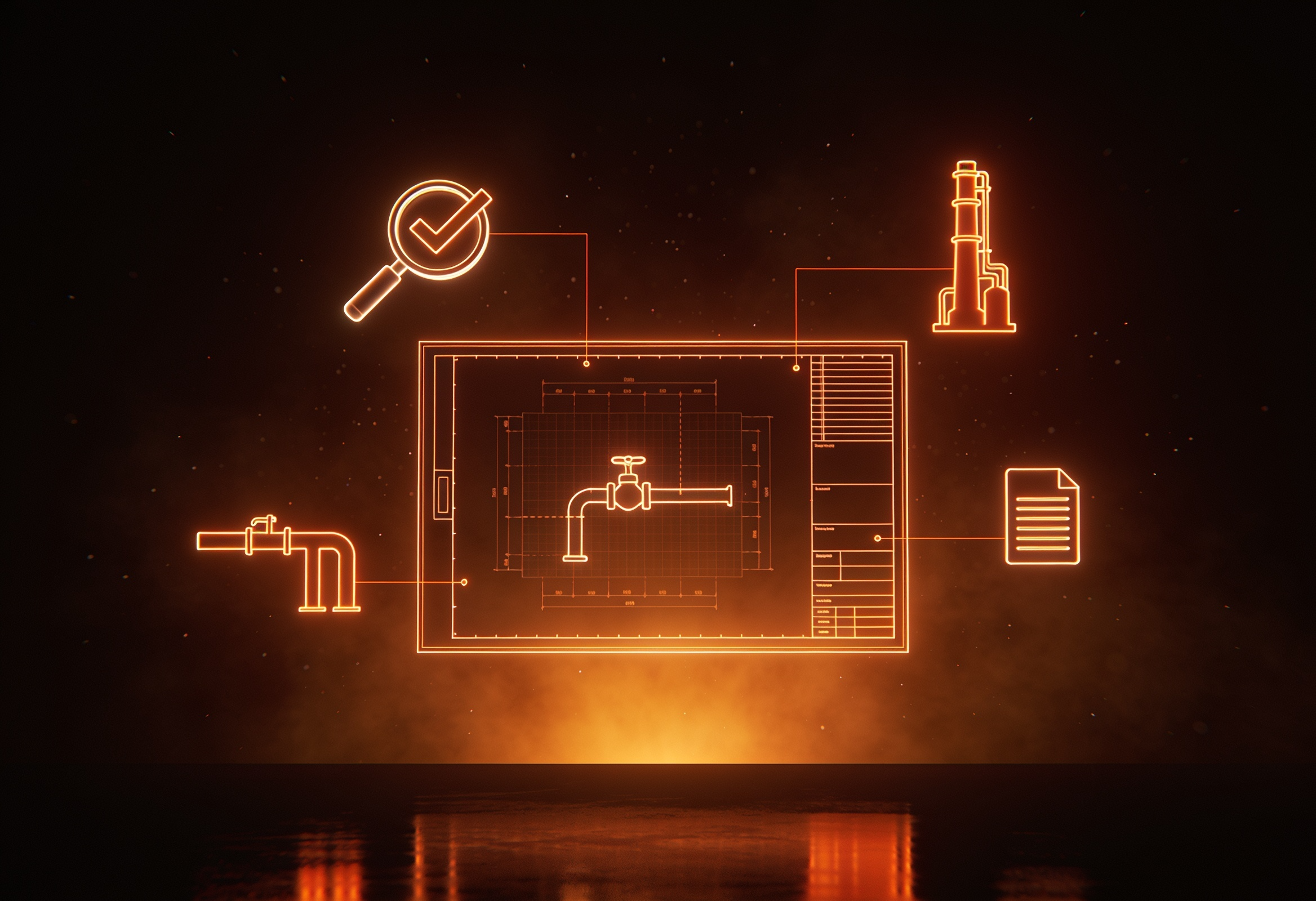
Azati's Engineering Document Intelligence turns complex engineering drawings, including P&IDs (Piping and Instrumentation Diagrams), piping isometrics, and other technical schematics, into structured engineering data that teams can trace, validate, and use.

Unlike generic OCR and document extraction tools, it connects identified equipment, tags, lines, and off-page references into a queryable representation of engineering relationships. This helps teams investigate discrepancies, perform supported cross-sheet tracing, and prepare verified information for downstream engineering and asset-management workflows.

Built for complex industrial archives, the approach can accommodate legacy drawings, scanned documents, and dense visual layouts, subject to source quality and assessment.

Discuss your engineering document workflow
250,000+
piping isometrics reconciled into a single flange register for a global energy company
120,000
P&ID documents processed in under 24 hours, with 98.8% reported extraction accuracy
Cross-sheet tracing
connect engineering tags, lines, off-page connectors, and related drawing information to preserve context across sheets

Expert insight

Andrew Babkin, CTO and Co-founder at Azati

Engineers aren’t becoming smarter. Plants are becoming bigger.

The scale of modern industrial facilities has outgrown manual drawing review. This doesn’t try to make engineers faster at reading drawings. It gives them a system that already knows what’s connected to what.

Andrew Babkin
CTO and Co-founder, Azati

Engineering Document Intelligence: Azati traces diagrams, not just extracts their contents

An engineering drawing is more than a collection of labels and symbols. Its meaning depends on how equipment, lines, tags, and off-page connectors relate to one another, and how those connections continue across sheets.

Azati's Engineering Document Intelligence connects identified engineering objects and relationships into a structured, queryable representation. Instead of returning isolated text or tags, it supports tracing and checking workflows based on the connections established in the source data.

Teams can use this information to:

  • Trace a connection between identified components, including across linked sheets where the required relationships are available.
  • Generate a From/To list from identified line and connection data.
  • Flag missing tags and other discrepancies against defined engineering rules.
  • Follow results back to the relevant source drawings for verification.

The result is not simply a searchable copy of the archive

It is structured engineering information that teams can investigate, validate, and prepare for downstream workflows.

Where this creates operational value

  1. Find discrepancies between design and as-built

    Project drawings describe intended design. The installed plant may differ. On one engagement, a design-vs-built comparison found that four tanks modeled as identical copies in the drawings were actually different once built.

    This was one of several discrepancies the comparison surfaced. Catching this during review is inexpensive; discovering it during operation isn’t. Supports engineering handover, brownfield reviews, and reliable records for ongoing operations.

  2. Support maintenance and asset integrity

    Structured drawing data and connection tracing help teams identify corrosion loops, trace connected equipment, and locate inconsistencies affecting maintenance planning. This reduces the manual tracing work, not replacing engineering assessment.

  3. Check equipment and procurement information

    Where drawing data and procurement or asset records can be linked, defined checks can flag a valve, flange, or component that doesn’t match the specified requirement before it becomes avoidable investigation or rework.

The problem is no longer finding a drawing. It’s understanding what connects to what.

Many industrial organizations have already digitized their engineering archives. Yet engineers still need to interpret drawings manually to trace lines, understand equipment relationships, check tagging rules, and reconcile records across documents.

That creates three recurring problems:

  • Engineering reviews take too long. Tracing a pipeline or assembling a complete From/To list can require repeated manual checks across multiple sheets.
  • Data inconsistencies are difficult to find at scale. Missing tags, conflicting attributes, and outdated records can remain hidden across large archives until a review, audit, or maintenance activity exposes them.
  • Critical knowledge stays with experienced engineers. That knowledge doesn’t need to leave with the people who hold it. A connected engineering graph keeps equipment, line, and system relationships available independent of any one engineer’s memory.

OCR and extraction tools identify text, symbols, and attributes. Engineering Document Intelligence connects those elements into a queryable representation of the engineering system, allowing an AI agent to trace relationships and check defined rules against the source data.

The goal is not to replace engineering judgment. It is to reduce the manual work required to assemble evidence, identify inconsistencies, and prepare engineering decisions.

Engineering Document Intelligence for complex and legacy drawings

Industrial engineering archives are rarely uniform. They can contain legacy drawings, scanned sheets, dense visual layouts, handwritten engineering annotations, and documents created under different standards and revision practices.

Generic OCR can extract text from a document without preserving the engineering relationships needed to interpret it. Azati's approach combines document processing with engineering-aware recognition and connection tracing to structure relevant information and retain its context.

The required preparation and verification depend on the condition of the archive, the drawing formats, and the intended use of the data.

The processing workflow can include:

Step 01

Visual recognition

Identify relevant symbols, tags, labels, and drawing elements.
#1
Step 02

Structured extraction

Organize the recognized information into machine-readable engineering data.
#2
Step 03

Connection tracing

Link relevant objects and off-page connectors where the relationships can be established.
#3
Step 04

Quality checks

Compare extracted data and connections against defined rules and known examples.
#4
Step 05

Manual verification

Review results as part of the quality-control process before they are used in consequential workflows.
#5

What is Engineering Document Intelligence?

Engineering Document Intelligence Intelligent Document Processing (IDP)

Engineering Document Intelligence is the process of turning complex technical drawings into structured, connected, and verifiable engineering information that can be traced, queried, and prepared for use in industrial workflows.

It combines visual recognition, engineering-aware data extraction, relationship mapping, and validation. For example, in a P&ID, identifying a valve tag is only one step. Understanding how that valve connects to a line, associated equipment, and off-page references across related sheets is what makes the extracted information useful for engineering investigation.

IDP provides relevant category context for the document-recognition and extraction stages. Engineering Document Intelligence extends beyond generic text or field extraction by connecting identified engineering objects and relationships into a representation that supports cross-sheet tracing and defined engineering checks.

This distinction matters in oil and gas and process engineering, where large drawing archives can contain dense visual layouts, inconsistent revisions, and connections that span multiple sheets. The extent of extraction, tracing, and validation depends on the source material and the scope established for the project.

AI agents can provide a natural-language interface to supported tracing and checking workflows. The underlying structured data, connection logic, and quality controls (not the chat interface alone) make the results useful for engineering work.

Visual processing for enterprise search in engineering archives

Engineering archives contain information that conventional text extraction may not fully capture. P&IDs, piping isometrics, scanned drawings, symbols, handwritten annotations, and off-page connectors can all carry information needed to understand an engineering system.

Azati's Engineering Document Intelligence uses visual processing to identify relevant drawing content and structure it for indexing, querying, and downstream use. Depending on the drawing and processing scope, this can include tags, symbols, attributes, and connections, not just words on a page.

When the identified relationships have been established and validated, teams can go beyond finding a drawing or matching a tag. They can investigate how equipment and lines connect across related sheets and follow supported results back to the source drawings.

The level of extraction and tracing depends on the source material. Legacy drawings, poor-quality scans, handwriting, and varying drawing conventions should be assessed using representative samples before the supported scope is agreed.

From Engineering Document Intelligence to connected engineering data

Extracting information from a drawing is only the beginning. Engineering Document Intelligence structures identified objects and relationships, checks them against defined rules, and prepares validated information for the workflows and systems that need it.

The implementation can include:

Assess the source archive

Review available P&IDs, piping isometrics, and other technical drawings for volume, condition, format, and coverage.

The available integrations, interfaces, and acceptance criteria depend on the client's environment. Azati establishes these requirements with the engineering team during technical assessment before extending the workflow to a larger archive or additional systems.

Assess your Engineering Document Intelligence use case

Start with the engineering workflow that creates the most friction: tracing connections across P&IDs, reconciling design and as-built records, checking engineering data, or preparing information for asset-management systems.

Azati can assess a representative drawing archive, the relationships that can be established, and the target workflow to determine whether Engineering Document Intelligence is appropriate, or whether a simpler extraction project would be sufficient.

Request an engineering document assessment

How the engineering graph and AI agent work together

The agent uses the structured engineering data to execute supported tracing and checking tasks. It plans how to retrieve or follow relevant connections, evaluates the results against the request, and links its findings to source drawings so engineers can inspect the evidence.

  1. Show the evidence

    Link relevant objects and paths to the source drawing for engineering review.

  2. Check the result

    Evaluate whether the retrieved path or rule-check output addresses the request; continue when necessary.

  3. Plan the query

    Select a retrieval or traversal approach based on the question.

  4. Connect drawing objects

    Represent equipment, tags, lines, and connections as a structured graph.

Built for verification, not blind reliance

Engineering document intelligence depends on the quality of the source drawings, extracted objects, and inferred connections. Validation should therefore include representative drawings, known connection paths, expected rule-check results, and cases where the available evidence is incomplete or conflicting.

Azati can define these checks with the client's engineering team and make source references available for review. Decisions affecting safety, inspection, compliance, or maintenance remain subject to the client's established approval process.

What does implementing Engineering Document Intelligence involve?

The starting point is the engineering archive and the workflow you want to improve. Azati assesses the available drawings and extracted data, the consistency of equipment identifiers and connections, and the systems that need to consume or validate the results.

Depending on the source format and target requirements, the implementation can include conversion into supported structured engineering formats, such as DEXPI or Proteus XML. The applicable formats and transformation steps are confirmed during technical assessment.

The scope typically covers:

Available P&IDs, piping isometrics, electrical drawings, HVAC schematics, and existing structured extraction outputs.

The implementation scope is agreed after assessing these dependencies. A focused pilot can validate a representative drawing set and target workflow before the solution is extended to a larger archive or connected to additional systems.

Who benefits from Engineering Document Intelligence?

The strongest fit is typically an organization with a substantial drawing archive, recurring engineering-information tasks, and a defined workflow where manual tracing or inconsistent records create meaningful cost, delay, or operational risk.

  • Asset owners and industrial operators. Oil & gas, petrochemical, utilities, and process manufacturing organizations with large engineering archives and recurring needs for equipment tracing, drawing validation, asset-data reconciliation, or turnaround preparation.
  • Capital projects and turnaround teams. Teams preparing revamps, project handovers, or maintenance outages that need to identify connected equipment and assemble the drawings and records requiring engineering review.
  • Engineering information management teams. Teams responsible for engineering-document quality, tag consistency, revision information, and the usability of legacy drawing archives across disciplines and projects.
  • Asset integrity and maintenance organizations. Teams that need to investigate discrepancies between engineering documentation and asset records, and want to prioritize potential data-quality issues for review before they affect downstream workflows.
  • Digital twin and industrial data program owners. Organizations assessing whether existing 2D engineering drawings can supply a connected, queryable data foundation for digital twins from engineering drawings or other industrial applications.

See how Azati’s P&ID agent works

Engineering Document Intelligence for oil and gas

Oil and gas operators and process-engineering teams manage large archives of P&IDs, piping isometrics, and other technical drawings. Engineering Document Intelligence helps structure the information in these archives so teams can trace supported connections, investigate discrepancies, and prepare verified data for maintenance, asset information management, and downstream engineering systems.

Azati helps structure this information so teams can trace supported connections, investigate discrepancies, and prepare engineering data for maintenance, asset information management, and downstream systems.

The same processing approach can be assessed for other technical drawing workflows in adjacent industries, including energy and construction, depending on document types and project requirements.

See what engineering document intelligence would look like on your archive

A scoping call with an Azati engineer, not a sales rep. Bring a sample drawing or a description of your archive, and we’ll give you a specific view of whether the graph-and-agent approach fits, what it would take, and an honest answer if a simpler extraction project is what you actually need right now.

Request a scoping call

Honest boundaries: what this isn’t

  • Not a replacement for document digitization

    Engineering Document Intelligence builds on extracted and structured drawing data. If the archive first needs scanning, OCR, or initial data extraction, that work may require a separate Computer Vision & OCR engagement.

  • Not a generic chatbot pointed at a file share

    The agent reasons over a purpose-built graph of your specific engineering data; it isn’t a document-search layer with a chat interface bolted on.

  • Not fully autonomous by default

    The agent proposes; a human disposes. High-consequence outputs (anything feeding inspection, compliance, or safety decisions) are built with human review in the loop, not shipped as an unsupervised black box.

  • Not a fit for a handful of drawings

    The value compounds with graph size and query frequency. A small, static archive rarely justifies this layer. Static extraction alone may be enough.

Frequently asked questions

Engineering Document Intelligence turns technical drawings such as P&IDs and piping isometrics into structured engineering information that can be queried, traced, and validated. Unlike document extraction alone, it connects identified engineering objects and relationships, supporting cross-sheet tracing, defined rule checks, and preparation of data for downstream engineering workflows.

Intelligent Document Processing (IDP) covers technologies for recognizing and extracting information from documents. Engineering Document Intelligence applies document recognition and extraction to engineering-specific needs, including connecting identified tags, lines, equipment, and off-page references across drawings. The distinction is the engineering context and relationship tracing, not simply text extraction.

Generic OCR and document extraction focus primarily on recognizing text, fields, and other document content. Engineering Document Intelligence also connects identified drawing elements and relationships where the required connections can be established, allowing teams to trace connections instead of working with isolated extracted values.

Legacy engineering documents, scanned engineering documents, and complex visual layouts can be assessed for processing suitability. The required extraction and verification steps depend on image quality, drawing format, handwriting, and the information that needs to be recovered. A representative sample should be evaluated before committing to processing an entire archive.

It can trace connections across sheets where the relevant tags, lines, off-page connectors, and related objects have been identified and linked. This helps preserve context that would otherwise be lost when sheets are processed independently. The achievable coverage depends on the source drawings and the consistency of the connections.

The workflow can include structuring extracted data, storing it in a database, and preparing it for transfer into agreed target systems. The specific interfaces, data mappings, and transfer steps depend on the client's environment. Supported destinations and integration requirements should be confirmed during technical assessment.

Structured engineering data can help maintenance and asset-integrity teams trace connected equipment, investigate corrosion loops, and identify inconsistencies between engineering documents and related records. The results help teams locate information and prioritize discrepancies for review; they do not replace established maintenance procedures or engineering approval.

Where the relevant engineering specifications can be linked to procurement, asset, or installed-equipment records, defined checks can flag potential mismatches, such as a valve or flange that differs from the expected specification. The feasibility of each check depends on the available records, identifiers, and validation rules.

Customer data and proprietary engineering archives are never aggregated across clients by default. Azati maintains strict data isolation standards for every deployment. Any cross-client data usage, model fine-tuning, or aggregate learning requires the client's explicit written permission and a mutually agreed-upon governance approach to data handling and security.

No. The system can extract and structure information, trace supported relationships, and flag results for investigation. Data quality checks and manual verification remain part of the workflow. Decisions affecting safety, inspection, compliance, or maintenance remain subject to the client's engineering approval process.

Azati has experience with engineering-document processing for P&ID data extraction, piping isometrics, electrical one-line diagrams, HVAC schematics, and fire/gas loop diagrams. Connecting information across these disciplines requires consistent object identification and validated relationships between the relevant drawings. The supported drawing types and cross-discipline connections are established during project assessment.

Azati’s related engineering document intelligence expertise

AI-Powered Engineering Drawing Digitization and DEXPI Conversion
Oil & Gas

AI-Powered Engineering Drawing Digitization and DEXPI Conversion

35,000 engineering drawings transformed into searchable engineering data
60-80% estimated reduction in manual engineering effort
DEXPI industry-standard engineering data ready for enterprise integration
  • Python
  • Computer Vision
  • OpenCV
  • FastAPI
  • Oracle Cloud Infrastructure
  • Engineering document AI

⚡ Pain Points We Tackled

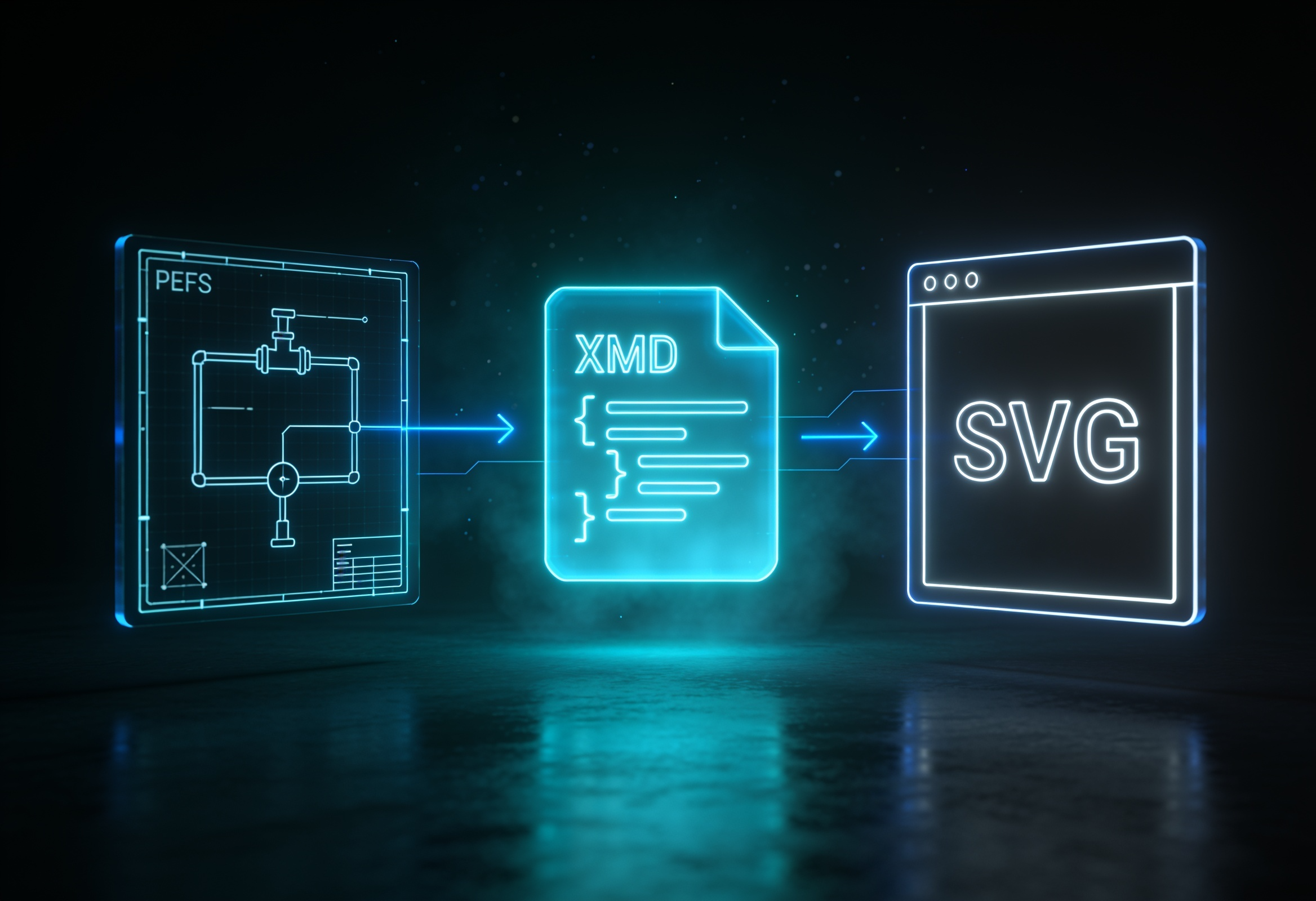
An oil and gas operator struggled to utilize 35,000 static engineering drawings (PEFS) due to fragmented file formats (AutoCAD, PDF, TIFF), which hindered searchability, process tracing, and system integration. Manual reviews caused significant operational delays, creating a need for a scalable, automated solution to convert these documents into structured, machine-readable data while preserving engineering relationships and industry standards.

Our Approach

Azati's AI-powered platform automates PEFS drawing processing, converts data to the DEXPI standard, and validates results for system integration. This transforms static archives into a searchable knowledge base that improves decision-making, streamlines workflows, and supports future digital twin initiatives.

AI-Powered Piping Isometric Digitization, Flange Register Consolidation
Energy, Oil & Gas

AI-Powered Piping Isometric Digitization, Flange Register Consolidation

250,000 piping isometrics consolidated
70% reduction in project schedule
50% reduction in manual engineering effort
  • Python
  • TensorFlow
  • OpenCV
  • OCR
  • AWS
  • Engineering document AI

⚡ Pain Points We Tackled

A global energy company needed to create a single, reliable flange register by consolidating information scattered across approximately 250,000 piping isometrics, CAD drawings, and marked-up inspection documents produced by more than ten engineering contractors.

The documentation varied significantly in format, quality, and annotation standards, making manual reconciliation impractical and error-prone. Differences in drawing layouts, handwritten notes, inconsistent page structures, and varying engineering conventions prevented reliable alignment between CAD drawings and marked-up documentation. Without a unified, traceable dataset, flange management, inspection planning, and integrity management remained highly labor-intensive.

Our Approach

Working as Petronas's AI engineering partner, Azati developed a customized computer vision and machine learning pipeline that automatically extracted engineering data, identified flanged joints, mapped CAD and marked-up drawings, and generated a consolidated flange register.

Rather than relying on off-the-shelf OCR, the solution used trainable recognition models and custom machine learning components tailored to engineering documentation, enabling accurate extraction across highly inconsistent datasets and providing a scalable foundation for future processing of engineering documentation.

Multi-Document Engineering Drawing AI: P&ID, Electrical, HVAC & Fire/Gas
Engineering & Manufacturing Energy, Oil & Gas

Multi-Document Engineering Drawing AI: P&ID, Electrical, HVAC & Fire/Gas

4 structurally different drawing types recognized by one pipeline: P&ID, fire and gas, HVAC, electrical
15 months from first annotation task to a working production pipeline
Dedicated team spanning development and data annotation
  • Python
  • PyTorch
  • PyTorch Lightning
  • Ultralytics YOLO
  • OpenCV
  • FastAPI

⚡ Pain Points We Tackled

A refining and petrochemical operator needed object detection, tag matching, equipment classification, and attribute extraction across P&ID, fire and gas, HVAC, and electrical one-line drawings. The drawing types differ structurally, so a single template-matching approach could not cover the archive.

Our Approach

Azati built a computer vision and OCR pipeline combining YOLO-based small-object detection with scene text recognition and attribute extraction across four drawing disciplines. A dedicated team spanning development and data annotation delivered the production pipeline over 15 months.

AI-Powered Engineering Document Verification and Data Quality Automation
Oil & Gas

AI-Powered Engineering Document Verification and Data Quality Automation

~100,000 engineering documents processed in production
50-70% estimated reduction in manual engineering document review
40-60% less time spent preparing engineering reporting data
  • Python
  • Computer Vision
  • FastAPI
  • PostgreSQL
  • Oracle Cloud Infrastructure
  • Engineering document AI

⚡ Pain Points We Tackled

A major Middle Eastern oil and gas operator struggled with manually reviewing and reconciling massive volumes of engineering documents, leading to operational delays and errors. The client required a scalable, automated verification solution that integrated seamlessly with their existing engineering workflows.

Our Approach

Azati developed an AI-powered platform that automates the extraction and validation of technical documents and AutoCAD drawings, seamlessly integrating with the client's Knowledge Hub to streamline reviews without disrupting existing workflows.

Automated Tag Extraction and AVEVA Table Generation from Engineering Drawings
Energy, Oil & Gas

Automated Tag Extraction and AVEVA Table Generation from Engineering Drawings

300 engineering documents processed per hour by the extraction pipeline
3 months to deliver the full MLOps pipeline from data annotation to production
Multi-level tag classification using visual context from drawings, not template matching
  • Python
  • PyTorch
  • OpenCV
  • FastAPI
  • AWS
  • Docker

⚡ Pain Points We Tackled

A large oil and gas engineering operator needed tag data extracted and classified from engineering drawings, categorized for AVEVA Engineering tables, and equipment connections identified from wiring diagrams, fast enough to replace a multi-engineer manual process.

Our Approach

Azati built the full pipeline in three months: multi-level visual context analysis for tag classification, equipment connection detection from wiring diagrams, and structured AVEVA Engineering table generation at up to 300 documents per hour.

Last updated

Got a job for Azati? Let’s talk business!

This site is protected by reCAPTCHA and the Google Privacy Policy and Terms of Service apply.

What's next?

  • 1. Tell Us Your Story
    Describe your project. We come back within 24 hours with team availability and a rough plan. NDA on request before the first call.
  • 2. Get Your Roadmap
    Receive a detailed proposal with scope, team composition, timeline, and costs tailored to your goals.
  • 3. Start Building
    Azati aligns on details, finalize terms, and launch your project with full transparency.