
Engineering Document Intelligence
Extracts and connects supported information from P&IDs, piping isometrics, and other technical documents. Relevant data can inform material and asset reconciliation.
Industrial operators often manage material and asset records across ERP systems, maintenance platforms, plant registers, and engineering documents. The same component may appear under different descriptions or codes, equipment identifiers may not align with functional locations, and incomplete records can make inventory decisions harder to validate.
Azati develops industrial data solutions that normalize material master records, identify candidate duplicates, reconcile equipment identifiers with asset hierarchies, and support spare-parts criticality analysis and MRO inventory optimization.
Start with the data you have: existing ERP or CMMS records, engineering-document data where relevant, or a combination of both.
Discuss your MRO data workflowDigitizing engineering documents does not automatically reconcile the material and asset records held in enterprise systems. An ERP or CMMS also does not guarantee consistent descriptions, identifiers, hierarchies, or inventory policies across sites.
For example, a ball valve might appear as “VLV-BALL-2IN-SS,” “Valve, Ball, 2 in Stainless,” and “BALL VLV 2IN SS316.” These records may describe the same item or components with important differences. Their attributes and context need to be checked before records can be treated as duplicates or equivalents.
Inconsistent data can make it harder to:
The result is less confidence in what is available, what is needed, and where a component belongs. Azati helps address these problems while retaining the client’s existing ERP, CMMS, and engineering platforms where they remain fit for purpose.
Industrial master data remediation can start with existing ERP, CMMS, inventory, and asset records. Engineering documents can provide additional evidence when equipment identifiers or material attributes need to be extracted or verified.
Azati’s Industrial Master Data & MRO AI capability reconciles the relevant information into more consistent, reviewable records for maintenance, procurement, and inventory workflows.
Extracts and connects supported information from P&IDs, piping isometrics, and other technical documents. Relevant data can inform material and asset reconciliation.
Normalizes material records, identifies candidate duplicates, reconciles equipment identifiers with functional locations or asset hierarchies, and supports criticality and inventory analysis.
Prepares structured engineering information as part of a broader digital-twin data foundation, which may also require 3D models, spatial information, operational data, and integrations.
These capabilities can be combined when they serve the same operational objective, but they are not a mandatory sequence. A master-data initiative can start with ERP exports; engineering-document extraction can add context where needed; and a digital-twin program may require a broader scope.
The goal is to make the relevant data more consistent, traceable, and usable without imposing a new system architecture.
Azati scopes these capabilities around the client’s source data, operational priorities, and target workflows. They can be delivered together or as a focused workstream.
The challenge: The same or similar materials may appear under different descriptions, codes, units, or attribute conventions across plants, suppliers, and legacy systems. This fragments inventory visibility and makes duplicate detection difficult.
How Azati can help: Use attribute-based matching and AI-assisted normalization to identify candidate duplicates, compare material descriptions, and organize records around an agreed nomenclature and taxonomy. Matching rules can account for relevant characteristics such as dimensions, material grade, manufacturer, and part number where those attributes are available and reliable.
The objective is to improve the consistency of the material register while preserving the information needed for engineering, procurement, and maintenance review. Records should not be merged solely because their descriptions look similar: the acceptance criteria must reflect the material attributes that distinguish interchangeable from non-interchangeable parts.
The challenge: Equipment tags in engineering documents may not align cleanly with functional locations, asset hierarchies, or maintenance records. Differences in naming conventions, missing identifiers, and legacy changes can make relationships difficult to establish.
How Azati can help: Match available equipment tags and asset identifiers to functional locations or asset records using agreed rules and source references. Engineering-document extraction can supply useful context when available, but it is not a prerequisite if the relevant records already exist digitally.
The terminology and data model depend on the environment. SAP functional locations, for example, should not be treated as interchangeable with every location or asset object in another CMMS. Mapping rules must reflect the client’s actual hierarchy and maintenance model.
The challenge: Criticality classifications may be inconsistent across sites or rely heavily on local experience. Teams can struggle to justify which spares warrant special stocking policies and which can follow routine replenishment rules.
How Azati can help: Structure and evaluate spare-parts criticality using agreed criteria. Typical factors include what the equipment does, what happens if it fails, how often it’s failed before, whether a substitute exists, and how long a replacement takes to source. The specific list is agreed with the client’s reliability and maintenance teams.
The method should be agreed with the client’s reliability and maintenance teams. A reliability-centered maintenance-informed approach may be appropriate where it fits the client’s methodology, but the exact framework and inputs should be established during discovery.
AI can help organize evidence and apply consistent rules; it should not independently make safety-critical maintenance or stocking decisions.
The challenge: Inconsistent material records make it harder to see the true inventory position. Duplicate records can fragment stock visibility, while weak criticality classifications or incomplete supplier data can lead to unsuitable replenishment decisions.
It’s a common pattern: three plants each keep “just in case” stock of what looks like the same bearing, because nobody can confirm from the records alone whether they’re actually interchangeable. Multiply that by a few thousand SKUs, and the padding adds up to real capital sitting in three warehouses instead of one.
How Azati can help: Combine normalized material records with available stock balances, consumption history, supplier lead times, and agreed stocking policies to support more informed inventory analysis. Depending on data quality and scope, this can include identifying potential surplus, highlighting stockout exposure, and proposing replenishment parameters for review.
Inventory optimization is not simply about reducing stock. The goal is to identify where stock may be unnecessary while preserving the availability requirements of critical equipment. Any proposed change should be evaluated against demand patterns, supplier constraints, maintenance needs, and the consequences of a stockout.
Whether the issue is duplicate material records, inconsistent asset hierarchies, or limited visibility into spare-parts inventory, the starting point is understanding the data and decisions involved. Azati can help define the relevant data sources, validation requirements, and a practical scope for remediation.
Discuss your MRO data workflowThe workflow depends on the data available and the operational problem to solve.
The resulting data can support maintenance, procurement, inventory analysis, and digital-twin initiatives. Required outputs and integrations depend on the source data, target systems, and workflows in scope.
Material and asset data can affect purchasing, maintenance planning, and critical-spare availability. A false duplicate match or incorrect criticality classification can create operational risk, so proposed changes need clear validation and approval.
| AI supports reconciliation | Matching and classification components identify candidate relationships and inconsistencies for review |
|---|---|
| Validation rules check defined requirements | Agreed constraints and reference data flag invalid or conflicting values |
| Uncertain cases remain visible | Missing attributes, ambiguous matches, and conflicting source records can be routed to the relevant data owner |
| The client controls approval | The client’s approval process remains in place for material merges, hierarchy changes, criticality classifications, and production-system updates |
| Changes remain traceable where the implementation supports it | Source references, proposed changes, validation status, and review outcomes can be retained according to the agreed data model and audit requirements |
The purpose is to make the reconciliation process more consistent and reviewable while keeping consequential decisions under appropriate engineering, maintenance, and procurement governance.
Review a representative material master, asset register, or inventory extract. Identify the key inconsistencies, available attributes, source systems, and business decisions affected by the data.
Agree how materials should be compared, which identifiers establish asset relationships, what criteria govern criticality, and which records require manual review.
Test the proposed normalization, matching, mapping, or classification approach against a representative sample. Review false matches, unresolved cases, missing data, and the effort needed for human approval.
Agree on the required outputs, integration approach, data ownership, approval responsibilities, and validation criteria. Begin with the selected scope before extending the process to additional sites, catalogs, or systems.
A sample assessment can help determine whether the available data supports the proposed approach and what further validation may be needed. It does not, by itself, establish the full implementation effort, guarantee inventory reduction, or confirm integration readiness. Scope, deliverables, and data-handling arrangements should be agreed before sample files are transferred.
This capability is designed for asset-heavy organizations where inconsistent material and asset records affect maintenance, procurement, and inventory decisions.
Need consistent spare-parts classifications and a defensible basis for reviewing stocking policies.
Need better visibility into duplicate material records, unclaimed stock, supplier lead times, and inventory exposure.
Manage material master quality, ERP or CMMS records, asset hierarchies, and the downstream impact of data changes.
Oil and gas, petrochemical, utilities, and process manufacturing organizations with large or multi-site catalogs and recurring data-reconciliation work.
Need more consistent material and asset records as one part of a broader data foundation.
A focused data-quality or inventory analysis may be sufficient for some organizations. The initial assessment should establish whether a larger MRO data initiative is justified.
Industrial master data requires more than standardizing text fields. Material attributes determine whether components are genuinely equivalent; equipment identifiers may need to be reconciled across engineering documents and maintenance hierarchies; and spare-parts criticality must reflect operational criteria.
Azati combines AI-assisted matching with industrial software engineering to address these relationships in the context of the client’s existing data and systems. Depending on the use case, the work can connect material normalization, asset hierarchy reconciliation, and MRO inventory analysis.
Rather than assuming that the client needs to replace its current platforms, Azati scopes the required data workflows, validation logic, and integration components around the target environment and its governance requirements.
Industrial master data management for MRO focuses on making material, spare parts, equipment, and related asset records consistent and usable across maintenance and procurement workflows. Depending on the scope, this can include nomenclature normalization, duplicate detection, equipment-to-location mapping, criticality analysis, and inventory optimization.
No. The work can start with material masters, asset registers, inventory exports, and other existing digital records. Engineering Document Intelligence can provide additional information when relevant equipment tags or attributes need to be extracted from technical drawings, but it is not a prerequisite for every master-data initiative.
Azati can assess material, inventory, and asset records from SAP, Maximo, or comparable environments and define the required normalization and reconciliation workflow. The relevant data objects, interfaces, mappings, and transfer method depend on the client’s configuration and the agreed scope. Compatibility should be confirmed during technical assessment.
AI-assisted matching can compare material descriptions and available attributes to identify candidate duplicates or equivalent items. The matching criteria must reflect the characteristics that distinguish interchangeable parts from similar but incompatible components. Ambiguous cases should be flagged for review rather than merged automatically.
Criticality is determined using a defined framework agreed with the client’s maintenance and reliability specialists. Depending on the methodology, relevant factors may include equipment function, failure consequences, historical failures, replacement lead time, and substitute availability. AI can help structure the evidence and apply consistent rules, while final classifications remain subject to the client’s approval process.
Better material normalization and inventory visibility can help identify potential duplicate records, surplus stock, and inconsistencies that affect replenishment decisions. The impact depends on the quality of the source data, demand patterns, supplier lead times, stocking policies, and operational criticality. Proposed changes should be validated against those constraints rather than optimizing for stock reduction alone.
The workflow can prepare normalized records, mappings, and recommendations for transfer into agreed systems. Whether updates are automated, staged, or handled through controlled exports depends on the target environment and governance requirements. Material merges, hierarchy changes, and other consequential updates should follow the client’s approval process.
Yes. A more consistent material and asset registry can contribute to the data foundation for a digital twin. A complete digital twin may also require engineering relationships, 3D models, spatial information, operational data, and other integrations. The necessary scope depends on the intended digital twin use case.
Data use depends on the agreed engagement and applicable confidentiality and data-handling requirements. Any use of client material or asset data beyond the authorized project scope should require explicit agreement. Data access, isolation, and any model-development arrangements should be documented before work begins.
Start with a representative material master, inventory extract, or equipment register. Azati can review the available data and discuss whether it supports the intended normalization, reconciliation, criticality, or inventory-analysis use case.
Before sample files are transferred, agree on the assessment scope, expected deliverables, and data-handling arrangements.
Request an MRO data assessmentIndustrial master data work often depends on information spread across engineering documents, material registers, and enterprise systems. These Azati engagements demonstrate related capabilities in engineering data reconciliation, extracting equipment identifiers, and preparing structured data for downstream workflows.

A large petrochemical operator faced high carrying, maintenance, and disposal costs from unclaimed and duplicate inventory across multiple ERP systems using different coding conventions. The same material was often tracked under different codes, making it impossible to see true inventory levels without manual reconciliation.
Azati ran a seven-year dedicated team engagement building and operating an on-premise inventory management platform with AI-assisted nomenclature normalization across disconnected ERP systems, covering backend development, DevOps, and test automation alongside the core product functionality.

A global energy company needed to create a single, reliable flange register by consolidating information scattered across approximately 250,000 piping isometrics, CAD drawings, and marked-up inspection documents produced by more than ten engineering contractors.
The documentation varied significantly in format, quality, and annotation standards, making manual reconciliation impractical and error-prone. Differences in drawing layouts, handwritten notes, inconsistent page structures, and varying engineering conventions prevented reliable alignment between CAD drawings and marked-up documentation. Without a unified, traceable dataset, flange management, inspection planning, and integrity management remained highly labor-intensive.
Working as Petronas's AI engineering partner, Azati developed a customized computer vision and machine learning pipeline that automatically extracted engineering data, identified flanged joints, mapped CAD and marked-up drawings, and generated a consolidated flange register.
Rather than relying on off-the-shelf OCR, the solution used trainable recognition models and custom machine learning components tailored to engineering documentation, enabling accurate extraction across highly inconsistent datasets and providing a scalable foundation for future processing of engineering documentation.
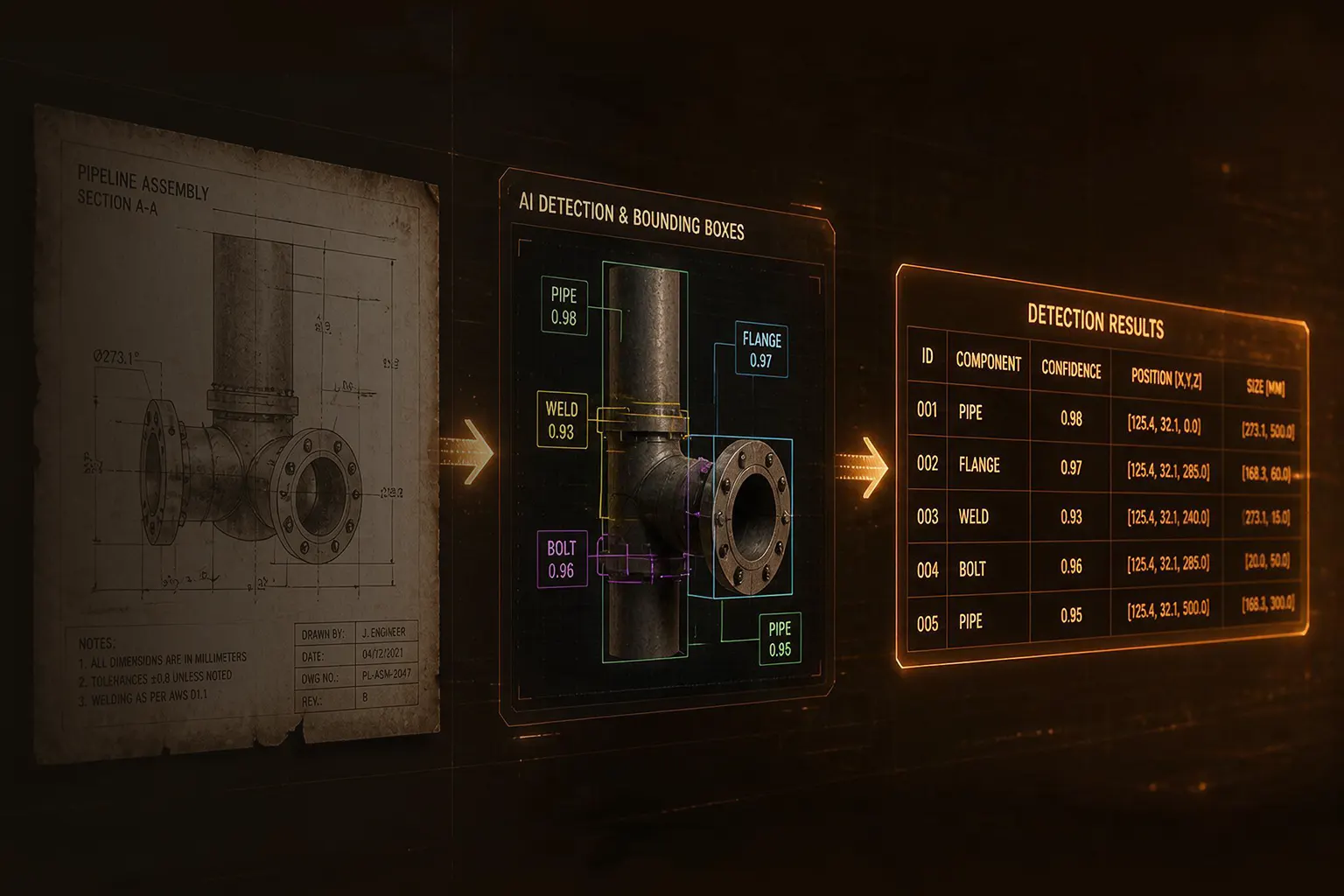
A large industrial operator needed to extract flange and engineering data from low-quality legacy P&IDs and piping isometrics to prepare Flange Master Registers (FMR). Degraded scans, inconsistent layouts, handwritten annotations, and ambiguous graphical elements made conventional OCR and fully autonomous AI unreliable.
Azati built a hybrid engineering document intelligence workflow combining computer vision, multimodal AI, deterministic validation, and human engineering QA. The solution identified flange joints, interpreted engineering annotations, structured the extracted data, and prepared validated FMR outputs while keeping engineers in control of ambiguous cases.

A large oil and gas engineering operator needed tag data extracted and classified from engineering drawings, categorized for AVEVA Engineering tables, and equipment connections identified from wiring diagrams. The manual process required multiple engineers and could not keep pace with document volume.
Azati built a full pipeline from data annotation to production that extracts and classifies tags, identifies equipment connections, and generates structured AVEVA Engineering tables, delivered in three months.
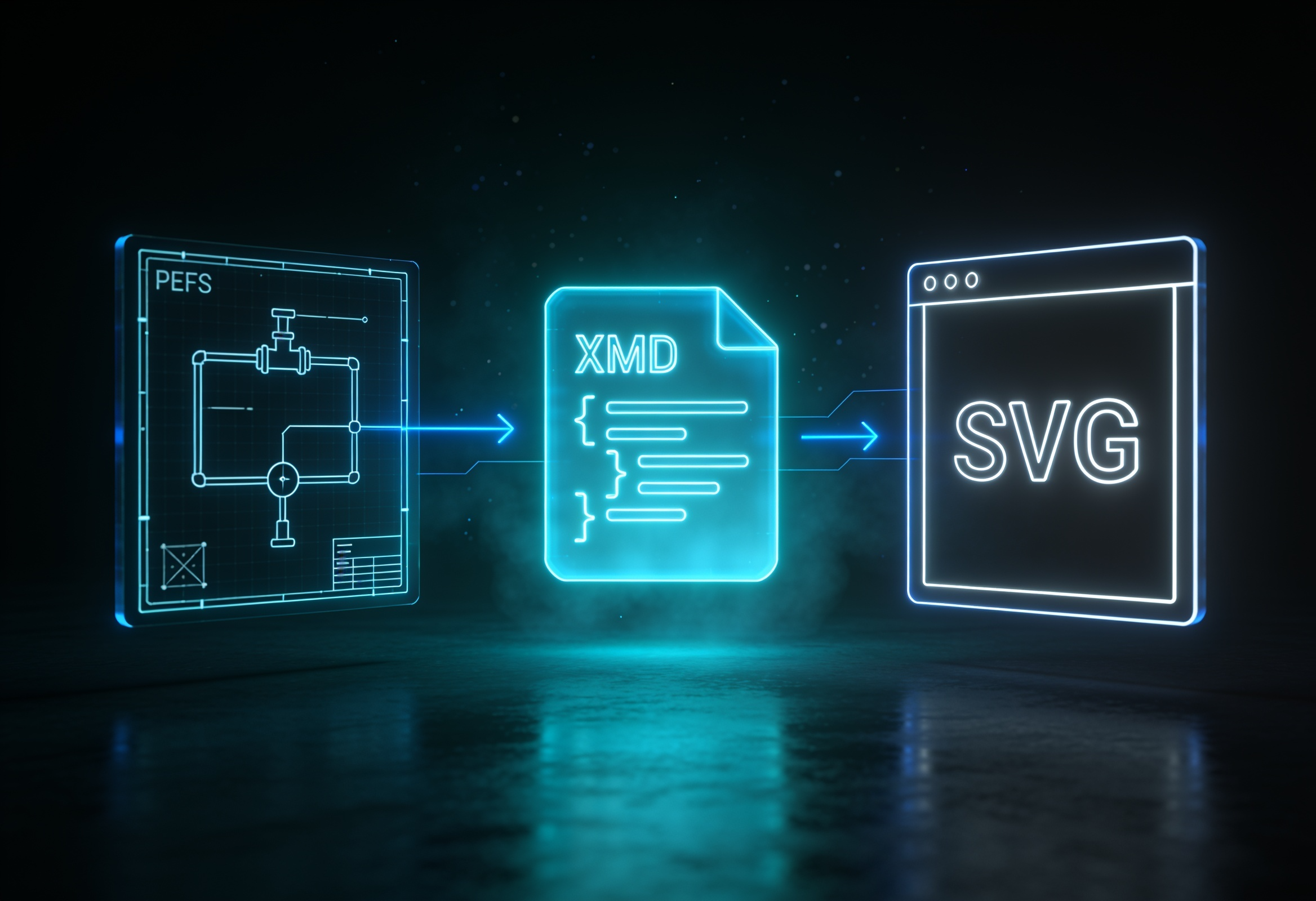
An oil and gas operator struggled to utilize 35,000 static engineering drawings (PEFS) due to fragmented file formats (AutoCAD, PDF, TIFF), which hindered searchability, process tracing, and system integration. Manual reviews caused significant operational delays, creating a need for a scalable, automated solution to convert these documents into structured, machine-readable data while preserving engineering relationships and industry standards.
Azati’s AI-powered platform automates PEFS drawing processing, converts data to the DEXPI standard, and validates results for system integration. This transforms static archives into a searchable knowledge base that improves decision-making, streamlines workflows, and supports future digital twin initiatives.
