AI Integration Services
The bottleneck isn't AI. It's the gap between AI capability and your running systems. Azati helps fill it. Every major enterprise has now run at least one AI pilot. Most have run several. The results are consistent: models perform well in isolation, and almost nothing makes it to production at scale.
The reason is rarely the model. It's the integration. Enterprise systems weren't designed for probabilistic outputs. They expect deterministic inputs, validated data, clean handoffs. Connecting AI to them isn't a prompt engineering problem – it's a systems engineering problem. And it requires people who understand both sides: how large language models actually behave under load, and how enterprise software actually works in regulated, legacy-heavy environments. That's the gap Azati fills.
Azati's view on where enterprises get stuck
Pilots succeed. Integrations fail. The gap is architecture.
We've seen the pattern enough times to recognize it. A proof of concept gets built in isolation – clean data, controlled environment, a single happy path. It works. Leadership approves. Engineering takes over. Six months later, the project is stalled.
The stall points are always the same: the AI output format doesn't match what the downstream system expects; there's no fallback when confidence is low; logging doesn't meet audit requirements; no one planned for what happens when the model gets updated.
These aren't AI problems. They're integration architecture problems. And they're entirely predictable – which means they're preventable, if you design for them from the start.
What AI integration actually requires
Output contracts, not just outputs
AI systems need to produce structured, validated outputs that downstream systems can trust. We design output schemas, validation layers, and confidence thresholds before a single API call is wired up.
Fallback and escalation logic
Every AI integration needs a human-in-the-loop path for low-confidence cases. In regulated industries – financial services, insurance, healthcare – this isn't a nice-to-have. It's a compliance requirement.
Audit-ready logging
Every AI-assisted decision needs a traceable record: what input, what model version, what output, what action followed. We design audit logging as a first-class architectural concern.
Change management for model updates
LLMs change. Providers update models. Prompt behavior drifts. A production AI integration needs regression testing, canary deployments, and rollback capability – the same discipline you apply to any other production dependency.
Data pipeline integrity
Most AI integration failures are upstream data failures. We design the connectors, transformation layers, and error handling that sit between your existing systems and the AI layer – because an AI system is only as reliable as the data it receives.
AI we integrate with enterprise IT landscapes
-
LLMs into existing applications
Embedding large language model capabilities – intelligent search, document summarization, classification, Q&A, generation – into products your teams already use. Via API, with proper output validation and fallback logic built in.
-
Agents into business workflows
Autonomous and semi-autonomous agents deployed inside existing processes: claims handling, invoice processing, compliance checking, lead qualification, technical documentation search. Agents that operate within your toolchain, not as a separate system your people have to context-switch into.
-
AI into ERP and CRM systems
SAP, Salesforce, Dynamics, HubSpot, custom enterprise systems – we've connected AI to all of them. The pattern is consistent: automate data entry and classification, surface anomalies, route decisions, generate structured outputs for downstream processing. Our production deployments in insurance have delivered 52% cost reduction per document at 40,000+ documents per month.
-
Document intelligence pipelines
OCR, extraction, classification, and routing pipelines that connect to existing document management systems. Particularly relevant in insurance, financial services, engineering, and any regulated industry where document processing is a core operational function.
Where we work
We have particular depth in regulated environments – industries where AI integration requires not just engineering competence but regulatory awareness: DORA, NIS2, EU AI Act, HIPAA-aligned architectures.
Real life project case studies

Scaling Customer Support for a B2B SaaS Platform
AI-managed support automation built on Zendesk and Confluence that reduced ticket load, improved CSAT, and scaled operations without new hires.

NLP Solution For Pharmaceutical Marketing
AI and Computer Vision solution for automated pharmaceutical marketing assessment reports.

AI Candidate Matching Case Study: 40% Faster Hiring
LLM-powered microservice for automated candidate selection with semantic search.
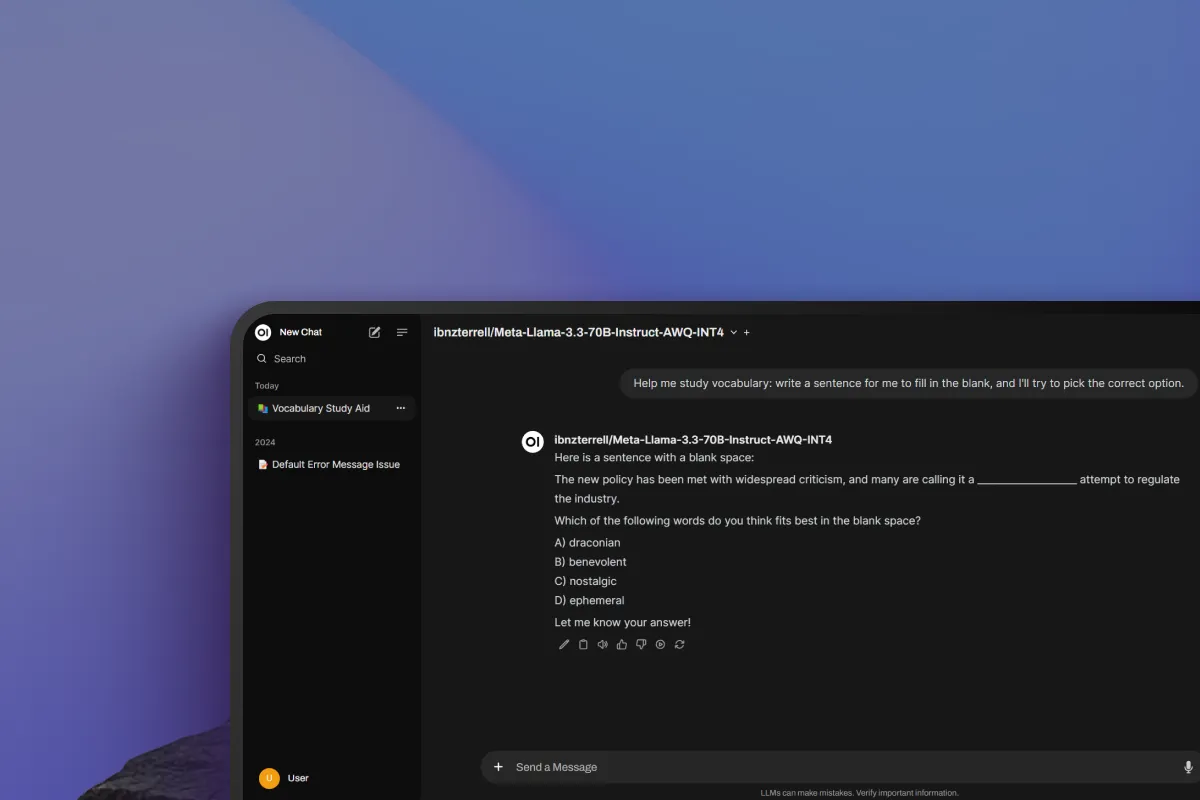
A Secure LLM for Enhanced Information Sharing
Secure locally-hosted LLM alternative for confidential corporate communication.
AI-Powered Patent & Sequence Intelligence Platform
AI platform transforming patent and sequence data into actionable insights with advanced AI modules.

Managed AI for Invoice & Document Processing
Managed AI solution that automates invoice and document processing with seamless ERP integration and built-in compliance.
Engagement models
Integration architecture assessment
We map your existing systems, identify AI integration points with the highest near-term ROI, surface the likely failure modes, and produce a prioritized roadmap. Typically 2–3 weeks. Useful as a standalone engagement before committing to a full build.
Integration build & deployment
Full engineering delivery: connectors, validation layers, monitoring, audit logging, documentation, and handoff. We stay through go-live, not just delivery.
Ongoing integration operations
Model monitoring, prompt drift detection, performance benchmarking, and iterative improvements on a retainer basis. AI integrations aren't set-and-forget – the teams that treat them as such are the ones calling us to fix things six months later.
Azati's AI differentiators
We're not an AI consultancy. We don't produce strategy decks and leave implementation to someone else. We're also not a systems integrator that treats AI as just another middleware layer. We're engineers who have built production AI systems – including our own – and who take responsibility for what we ship staying operational. That's a different kind of engagement than most of the market is offering right now. Learn more about how we work.
What are you trying to connect?
Tell us your stack and the workflow you want to automate. We'll come back with a concrete integration approach – not a proposal for further discovery.
Start the conversationFrequently asked questions
Enterprise AI pilots usually perform well in isolation, but fail when it comes to full-scale production integration. The primary bottleneck is an architectural gap: standard enterprise software requires deterministic inputs, validated data, and clean handoffs, whereas AI models naturally generate probabilistic outputs. Projects typically stall because the AI output formats do not match what downstream applications expect, systems lack automated fallbacks for low-confidence scenarios, logging fails audit requirements, or there is no plan for handling model drift and updates. Azati bridges this gap through rigorous systems engineering tailored for legacy and regulated environments.
To connect large language models (LLMs) safely to your running toolchain, we implement five critical integration layers:
- Output Contracts: We design strict output schemas, validation layers, and confidence thresholds so downstream enterprise systems receive structured, trustworthy data.
- Fallback & Escalation Logic: We embed custom human-in-the-loop paths to handle low-confidence AI responses safely.
- Audit-Ready Logging: We treat traceability as a core concern, logging the exact input, model version, AI output, and subsequent workflow action taken.
- Model Change Management: We provide regression testing, canary deployments, and rollback capabilities to prevent prompt drift when underlying LLMs are updated by providers.
- Data Pipeline Integrity: We construct robust connectors and transformation layers to shield the AI from upstream data failures.
Yes. Azati integrates advanced AI capabilities directly into the software your teams already use—including major ERP and CRM suites like SAP, Salesforce, Microsoft Dynamics, and HubSpot, as well as custom legacy document workflows. We connect LLMs via APIs to automate manual data entry, optimize document summarization, surface anomalies, and route complex operational decisions. This allows autonomous and semi-autonomous AI agents to execute business processes within your existing toolchain, completely eliminating the need for your staff to context-switch between separate systems.
We specialize in deployment engineering within highly regulated and legacy-heavy environments. For clients operating in financial services, banking, insurance, and healthcare, we design specialized architectures aligned with strict international frameworks, including DORA, NIS2, the EU AI Act, and HIPAA. By building mandatory human-in-the-loop escalation logic and deep, audit-ready version logging, we ensure that every AI-assisted workflow remains fully compliant, traceable, and ready for regulatory scrutiny.
Azati's integrations focus directly on driving operational efficiency rather than delivering surface-level features. For example, our live production deployments for clients in the insurance industry have successfully delivered a 52% cost reduction per document while processing over 40,000+ complex documents per month through our automated document intelligence pipelines.
We offer three flexible engineering engagement models to support your automation goals:
- Integration Architecture Assessment: A standalone 2-to-3-week engagement where we map your stack, identify high-ROI integration points, flag failure modes, and deliver a prioritized deployment roadmap.
- Integration Build & Deployment: Full-lifecycle systems engineering, covering everything from building custom connectors and validation layers to monitoring setup and team handoff.
- Ongoing Integration Operations: Continuous monitoring, prompt drift detection, performance benchmarking, and iterative improvements delivered on a convenient retainer basis.
Last updated
