Reconstruct Engineering Data for Brownfield Digital Twins

Your plant’s engineering truth is scattered across decades of drawings, scans, revisions, and asset records. Azati turns those archives into structured, source-traceable engineering data that existing industrial platforms can use.

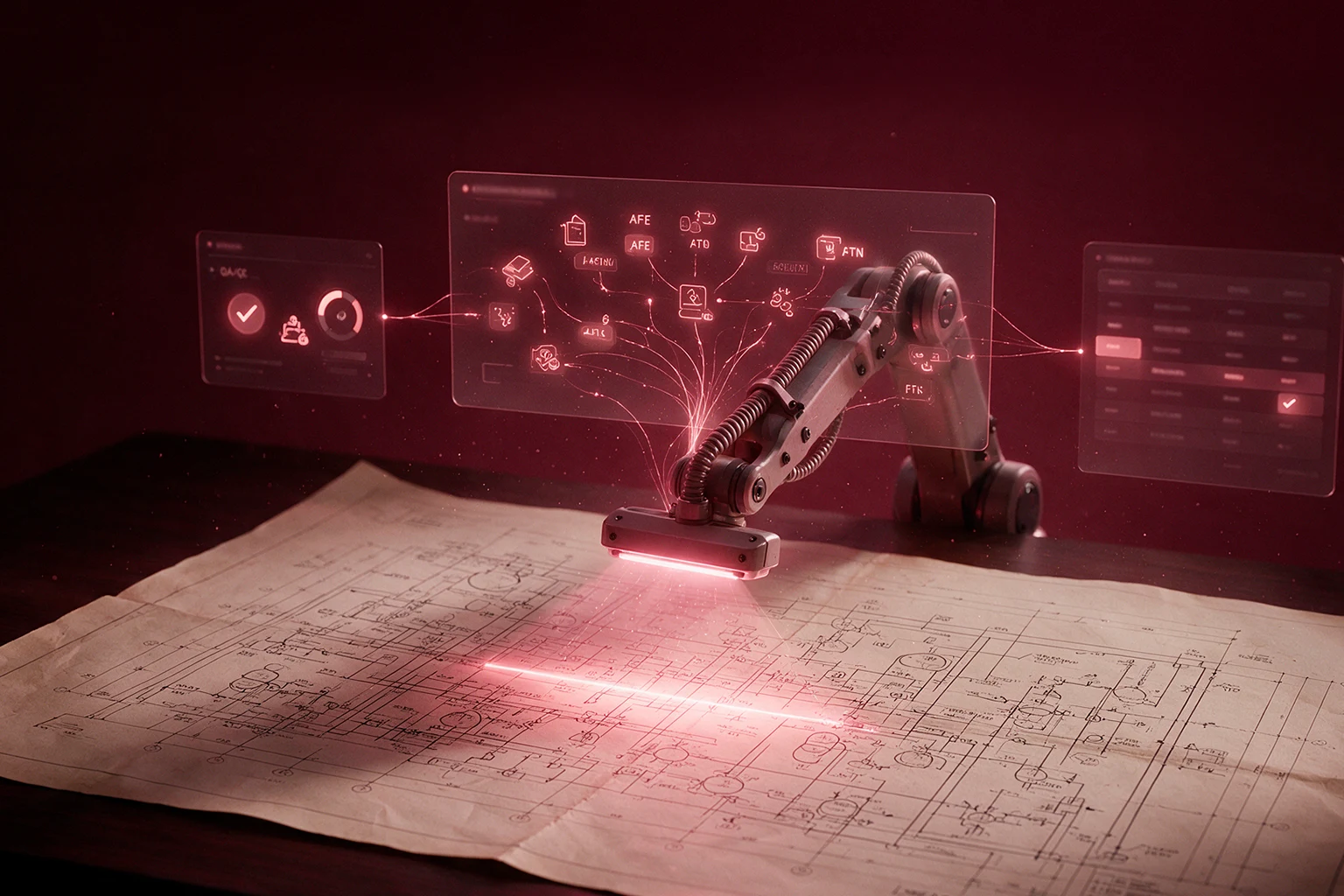
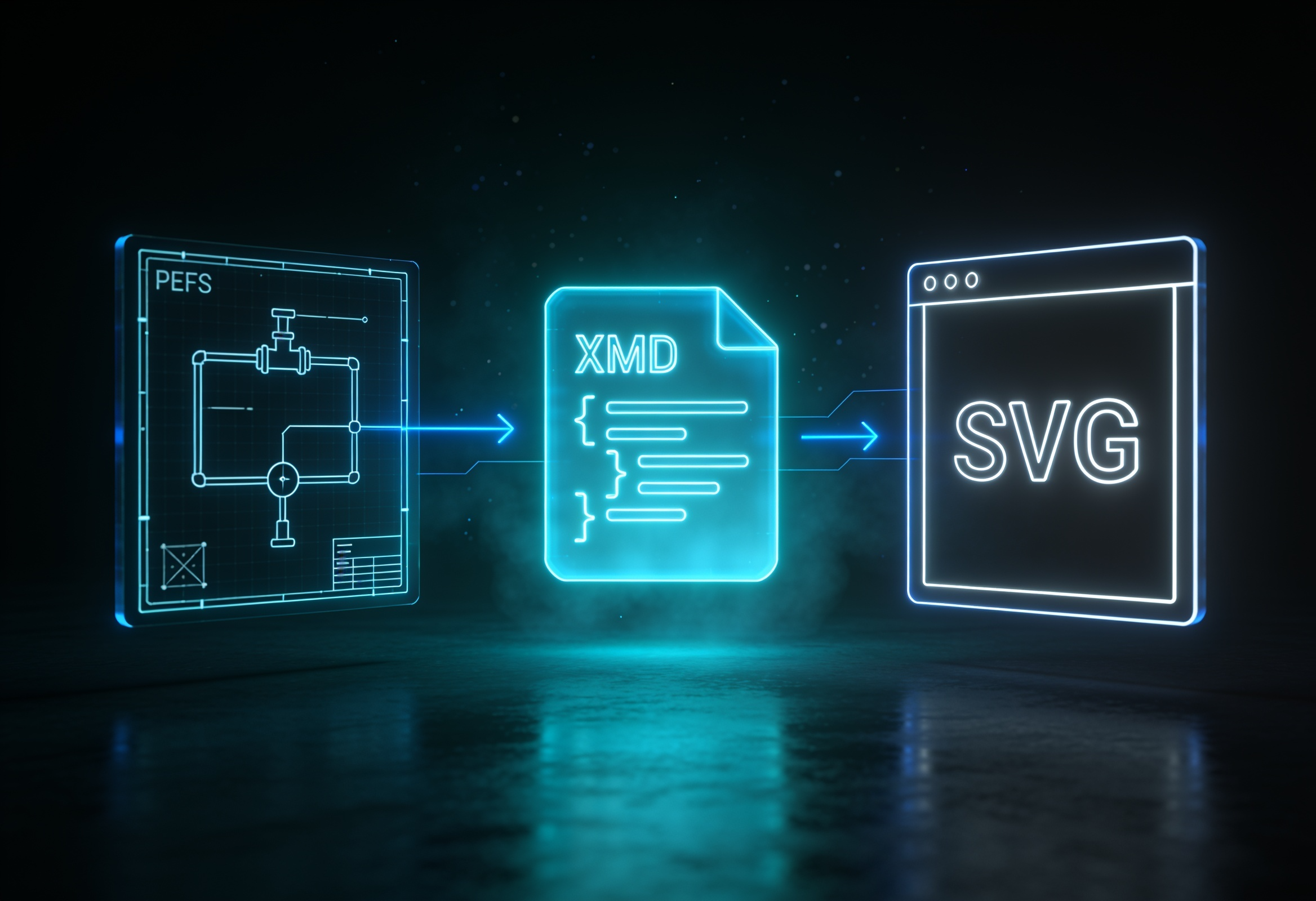
Azati does not ask you to replace your existing digital twin platform. We reconstruct the information held in P&IDs, piping isometrics, PEFS, scanned documents, and asset registers, including equipment tags, attributes, and relationships that may be difficult to recover through text extraction alone.

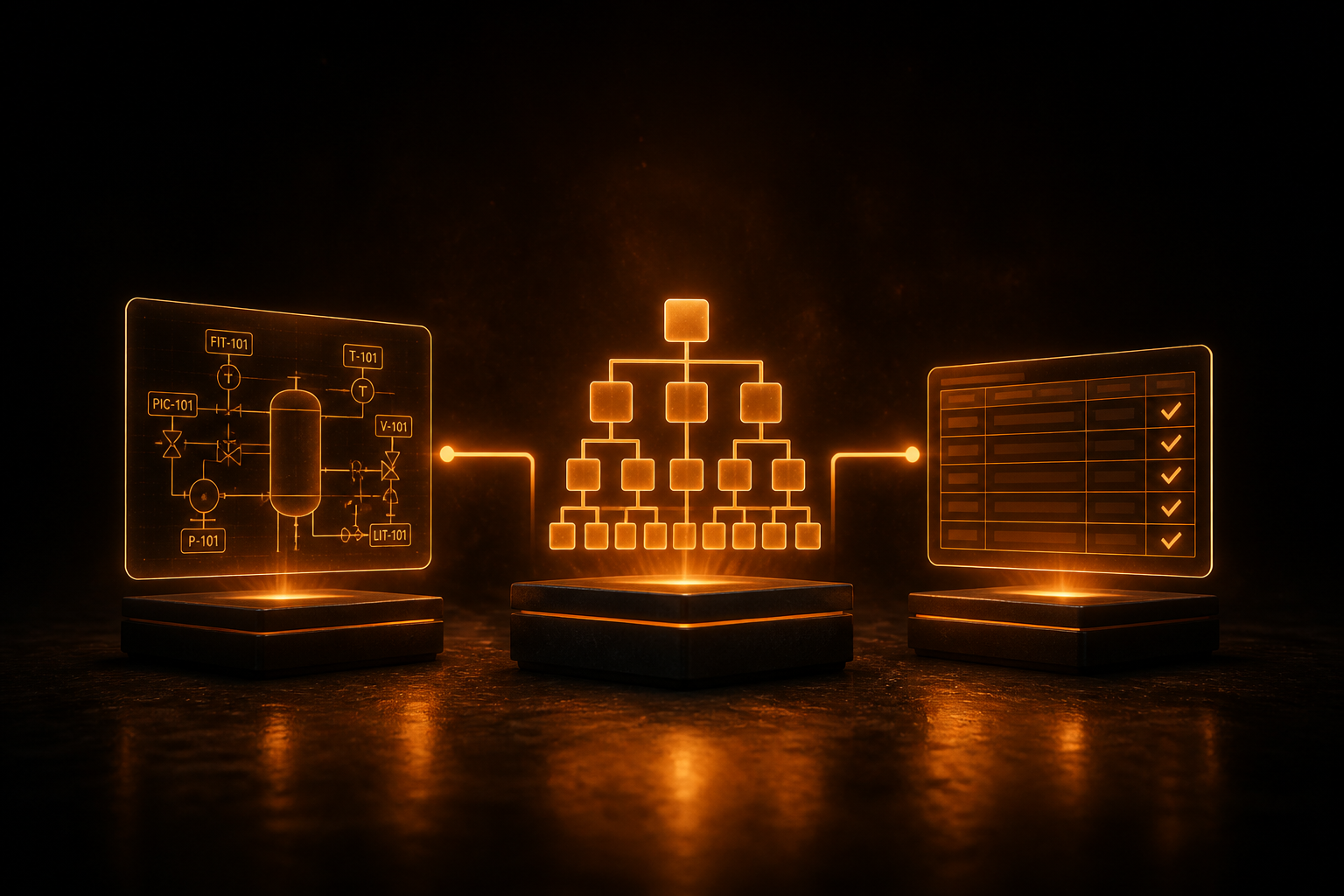
The result is a structured data layer between your legacy archive and the systems you already use, such as AVEVA, Hexagon, SAP, or Maximo. We feed your platform. We don’t ask you to replace it.

Have an archive that’s hard to process? Send us the difficult sample instead of the clean drawings.

Send a difficult document sample
5M+
technical documents processed for a Fortune 500 energy company across a large, heterogeneous technical-document estate
250,000+
piping isometrics reconciled into a consolidated flange register. Azati worked as Petronas’s AI engineering partner
35,000
PEFS drawings converted to DEXPI via Proteus XML, with process topology reconstructed to make the archive queryable and usable by downstream engineering systems
From legacy archive to usable engineering data
Extraction, classification, relationship reconstruction, validation, and structured output designed around your existing systems’ requirements

Why do brownfield digital twin projects need engineering data reconstruction?

Brownfield digital twin projects often depend on engineering information that is incomplete, outdated, or inconsistent across drawings, asset registers, maintenance systems, and document archives. A 3D model may be available, but its underlying data can still be difficult to reconcile with the physical asset.

In industrial environments, critical information may be spread across P&IDs, piping isometrics, PEFS, equipment datasheets, scanned archives, and spreadsheets. Before that information can reliably support a digital twin or downstream engineering workflow, it may need to be extracted, reconciled, structured, and validated.

Engineering data reconstruction addresses this foundation. It helps organizations turn fragmented legacy records into structured information that can be checked against its sources and prepared for existing engineering and asset systems.

These gaps create practical business problems:

  • Decisions based on inconsistent information. Teams cannot confidently rely on a model when asset identifiers, specifications, or connections disagree across sources.
  • Manual reconciliation before work can proceed. Engineers and asset teams spend time checking drawings and registers instead of using the information in their workflows.
  • Disconnected digital investments. A 3D model, engineering data platform, and maintenance system may each hold useful information without a reliable connection between them.
  • Limited reuse of existing documentation. Historical drawings and scans remain archives rather than structured inputs for engineering, asset management, or modernization.
  • Uncertain returns from further investment. Organizations risk expanding a digital twin initiative before establishing whether the underlying data is sufficiently complete and reliable for the intended use case.

The answer is not necessarily to replace the current platform or build a complete digital twin immediately. It is to identify what the intended use case requires, assess the available data, and address the gaps that prevent the solution from being useful.

How do you turn legacy engineering drawings into structured asset data?

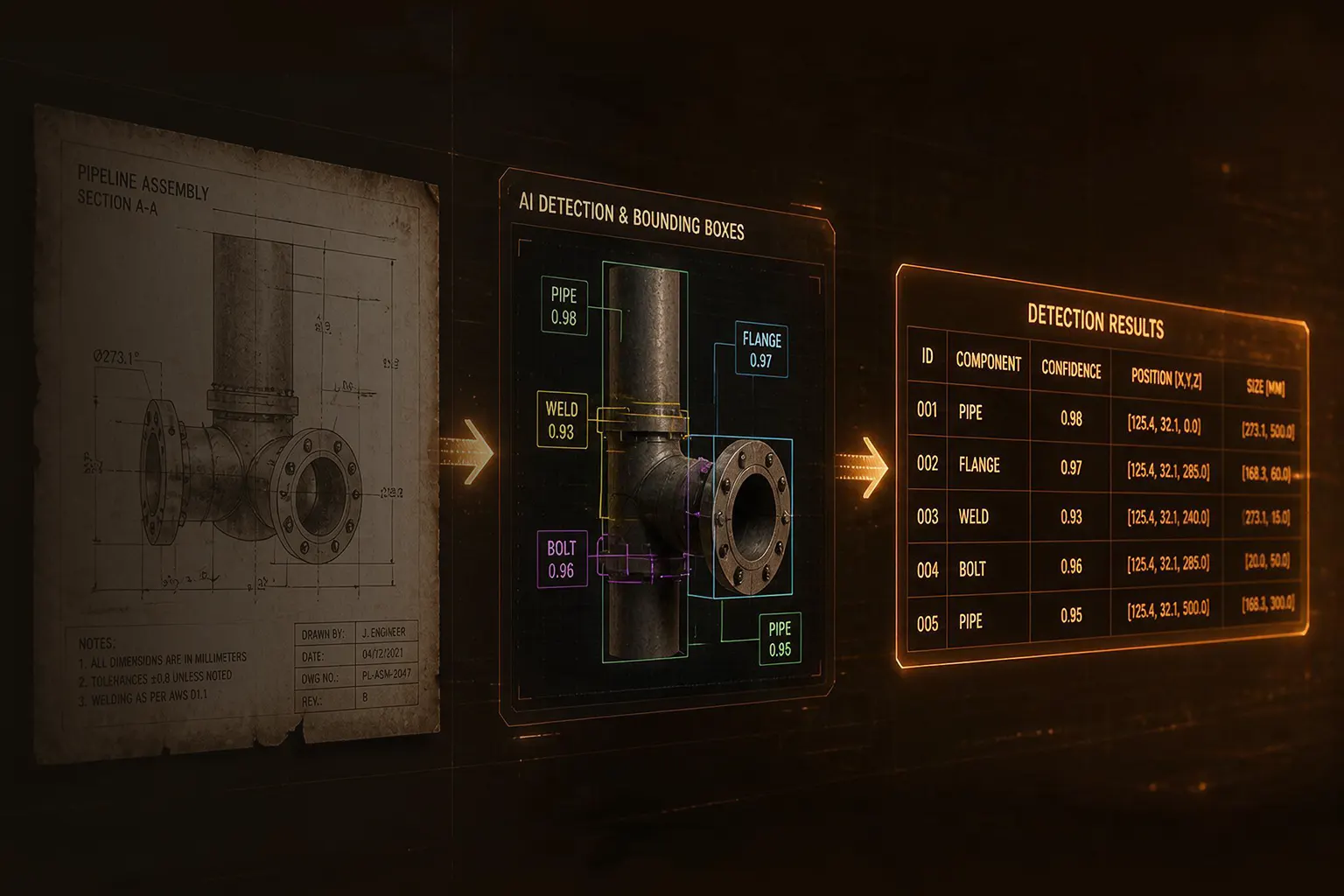
Azati uses computer vision, OCR, engineering-aware classification, relationship reconstruction, and validation to convert supported legacy drawings into structured engineering data. Depending on the document type and use case, outputs can include equipment tags, attributes, process topology, flange registers, or DEXPI/Proteus XML for downstream systems.

The workflow is defined around the source material and the intended use of the extracted information:

Step 01

Assess the source documents

Identify drawing types, scan quality, formats, revisions, and the information the target workflow requires.
#1
Step 02

Extract relevant information

Detect and interpret supported text, symbols, tags, tables, and drawing elements.
#2
Step 03

Reconstruct relationships

Where supported by the documents, identify connections between components, tags, sheets, and related records.
#3
Step 04

Reconcile and validate

Apply agreed rules to identify duplicates, inconsistencies, missing information, and low-confidence results.
#4
Step 05

Prepare structured outputs

Map validated data to the agreed schema, exchange format, register, or target-system interface.
#5

The pattern underneath every step is the same: AI proposes a result, deterministic rules validate it against defined criteria, an engineer reviews what the rules flag as uncertain, and only reviewed information enters the structured data layer. Nothing skips the review step by being confident.

The required workflow varies by document type. Extracting a table from a scanned PDF, reconstructing process topology from a PEFS drawing, and consolidating a flange register are different tasks with different validation requirements.

Not every relationship can be inferred reliably from every source. Ambiguous or conflicting information should remain visible for engineering review rather than be treated as verified fact.

Can extracted engineering data be traced to its original document and revision?

Azati can structure engineering data with references to its source material, helping teams verify extracted information against the underlying documents. Depending on the source archive and implementation, those references may include the document, page or sheet, revision, extraction details, and validation status.

For example, an equipment attribute in a structured record may link back to the drawing or document page from which it was extracted. A structured record might read:

Pump P-2047, design pressure 16 bar, material SS316

Each attribute tied back to a specific archive box, document, and page, not asserted as fact on its own.

This makes it easier to investigate conflicting revisions, check the evidence behind a value, and identify information that requires engineering review.

The level of traceability depends on the identifiers, revision history, and relationships available in the source archive, as well as the metadata captured in the implemented workflow. Source references help teams verify information. They do not, by themselves, establish that the underlying engineering record is current or that a physical asset has been independently verified.

Illustrative traceability chain:
  1. Legacy document
  2. Source page or sheet
  3. Extracted equipment reference
  4. Tag or attribute
  5. Structured record
  6. Revision and validation status

How does Azati prepare engineering data for AVEVA, Hexagon, SAP, and Maximo?

Azati prepares structured engineering outputs and integration components for the agreed target environment. The approach depends on the source data, target system, available interfaces, data model, and intended workflow. Compatibility and validation criteria are established during discovery rather than assumed from a list of platform names.

A typical engagement may involve:

Map the current landscape

Identify the authoritative sources for asset identity, engineering specifications, documents, and maintenance information.

Azati has experience with environments including AVEVA, Hexagon, SAP, Maximo, Bentley, and DEXPI exchange via Proteus XML. The availability and scope of any specific integration must be confirmed for the target platform, version, data model, and use case.

We feed your platform, not replace it. The goal is to make existing digital investments more useful, not to introduce a competing platform or assume that every environment needs a new digital twin application.

How do you evaluate engineering data reconstruction on difficult source documents?

Azati evaluates engineering data reconstruction against representative source documents to establish extraction capabilities, relationship mapping, and engineering review needs.

Testing difficult samples like degraded scans, handwritten annotations, or conflicting revisions provides realistic feasibility insights.

Agreeing on scope, data handling, and criteria before document transfer ensures an evidence-based assessment of the workflow.

Submit a difficult document sample

What does engineering data reconstruction include, and what still needs engineering review?

Engineering data reconstruction can include source-data assessment, extraction, classification, relationship reconstruction, reconciliation, validation, and preparation of structured outputs for an agreed target system. The scope depends on the source documents, intended workflow, data model, and integration requirements.

Potential deliverables include:

  • An assessment of the selected use case, source data, and system landscape.
  • An agreed data model, integration approach, and acceptance criteria.
  • Data extraction, transformation, reconciliation, and validation components.
  • Structured outputs such as equipment attributes, asset-register data, or agreed engineering exchange formats, where supported by the source material.
  • Integration components, APIs, and testing for agreed target systems.
  • Technical documentation and deployment support for the implemented scope.

A project should not automatically be assumed to deliver a complete, continuously updated digital twin, pre-built connectors for every platform, validated predictive models, or regulatory compliance. Agreements should explicitly define data ownership, validation responsibilities, ongoing updates, security, hosting, and operational support.

Engineering review may still be necessary when source records are missing, ambiguous, contradictory, or outdated; when relationships cannot be established confidently; or when decisions require engineering judgment. The workflow should flag these cases rather than silently treating uncertain extraction results as authoritative data.

Additional digital twin engineering capabilities

For organizations whose requirements extend beyond engineering archive reconstruction, Azati can also develop selected digital twin software components, including 3D visualization, point-cloud processing, data-management services, and integrations.

These capabilities are relevant when a project needs a browser-based model viewer, a workflow for working with building scans, or application components that connect a digital representation to other systems. The required scope depends on the product and operational use case.

Turn raw scan data from a physical device into a browser-based 3D building model your team can query, annotate, and collaborate around.

Azati contributed to a building digital twin SaaS and IoT platform that connected physical building scans with cloud-based point-cloud processing, browser-based 3D visualization, and real-time collaboration. The 24-month engagement covered product engineering across frontend, backend, AI components, and cloud infrastructure.

From engineering documents to a digital twin data foundation

Engineering Document Intelligence reconstructs structured information from complex engineering drawings and archives. That capability can support document search, cross-sheet tracing, asset-register preparation, and other workflows independently of a digital twin.

AI-powered digitization of engineering drawings and P&IDs

Engineering Document Intelligence

When a digital twin is the target application, Azati can extend the workflow by preparing the required data model, reconciling asset records, and connecting validated outputs to the chosen platform.

Explore Engineering Document Intelligence for the core document-understanding capability.

Which industries benefit from digital twin engineering?

Digital twin engineering is most relevant when organizations need to connect physical assets, engineering information, and software workflows to support a defined operational or commercial objective.

  • Construction and real estate

    Building scans, point clouds, and as-built information can support digital building models used in inspection, assessment, property intelligence, and collaboration. Azati has delivered a scan-to-view SaaS and IoT platform for a construction technology startup, including cloud processing, browser-based visualization, and real-time collaboration.

  • Energy, oil and gas, and process industries

    Engineering drawings, asset registers, and maintenance records may contain overlapping or conflicting views of the same installation. Structured asset information can support selected engineering workflows, document reconciliation, and downstream asset-management applications. The appropriate scope depends on document quality, system interfaces, and the intended operational use.

  • Manufacturing and heavy industry

    Manufacturing organizations may need to connect engineering data, equipment information, and existing enterprise systems to support asset visibility and selected operational workflows. The digital twin scope may focus on a particular asset, production area, facility, or integration requirement rather than an enterprise-wide rollout.

  • Ports, terminals, and infrastructure

    Large or long-lived facilities can accumulate extensive documentation across equipment, networks, structures, and maintenance records. Digital twin initiatives may benefit from reconciling these sources and making the resulting data accessible to the systems and teams responsible for inspection, planning, and asset management.

Not every organization needs a full digital twin. Some may gain more immediate value from scan processing, digitizing engineering documents, consolidating asset registers, or integrating existing systems.

How do you start without committing to a full rollout?

Start with a defined use case and a representative part of the archive, asset, or facility. A bounded first phase helps establish the condition of the source data and what is feasible before the scope expands.

The initial work can include:

  1. 1

    Intended workflow

    Reviewing the intended workflow and the information it requires.

  2. 2

    Representative sources

    Assessing representative drawings, scans, asset registers, or existing models.

  3. 3

    Gaps and constraints

    Identifying data gaps, conflicting records, integration constraints, and validation needs.

  4. 4

    Next phase

    Defining the next phase, with agreed deliverables and acceptance criteria.

The result should be a clearer view of what can be reconstructed, what still requires engineering review, and which data-processing, integration, or digital twin components are justified by the use case. The duration and scope of any implementation should be established after the source data and requirements have been assessed.

Reconstruct engineering data for brownfield environments

From scan-to-digital twin workflows for buildings to engineering-data foundations for industrial assets, Azati focuses on making digital representations usable in the workflows they are intended to support, not just visible on screen.

Schedule a discovery call

Why choose Azati for digital twin engineering?

Azati works between the archive and the target platform: extracting engineering information, reconstructing supported relationships, validating structured outputs, and preparing data for the agreed destination.

We feed your platform, not replace it

AVEVA, Hexagon, SAP, Maximo, and other enterprise systems can only use the engineering information available to them. In brownfield environments, that information may still be locked in scanned drawings, inconsistent revisions, and disconnected asset records.

The goal is to make existing digital investments more useful, not to introduce another platform that duplicates their role. The specific data formats, interfaces, and integration scope are established during discovery.

Experience with an end-to-end building digital twin workflow

In a 24-month engagement, Azati contributed to a SaaS and IoT platform connecting physical building scans, cloud processing, browser-based 3D visualization, and collaboration. The work covered product development across the frontend, backend, AI components, and cloud infrastructure.

Practical integration with existing systems

Digital twin initiatives often depend on existing data and workflows. Azati can assess those dependencies and develop the interfaces or components needed to connect them, with platform-specific compatibility confirmed during scoping.

A measured approach to data quality

Evaluate the digital representation against available evidence and intended use. Conflicting sources, uncertain attributes, and validation requirements need to be handled explicitly. The implementation should make the limits of its data visible rather than imply that visualization alone guarantees accuracy.

See how Azati’s P&ID agent works

Frequently asked questions

Engineering data reconstruction is the process of extracting, reconciling, structuring, and validating information held in legacy engineering documents and asset records. For a brownfield digital twin, it can provide structured information—such as equipment tags, attributes, and relationships—that a target platform can use. The scope depends on the available sources and intended workflow.

The workflow depends on the drawing type and required output. It may combine computer vision, OCR, engineering-aware classification, symbol and tag extraction, relationship reconstruction, and validation. A P&ID, PEFS drawing, and piping isometric require different processing and validation rules; the workflow should be assessed against representative source documents.

Yes, for suitable source material and an agreed target structure. Azati has delivered PEFS digitization and DEXPI conversion using Proteus XML, including process-topology reconstruction. The required schema, source quality, mapping rules, and validation criteria should be confirmed for each engagement.

Azati can reconstruct supported relationships from engineering drawings where the source information is sufficiently clear, and the required connections can be identified. This may include relationships across drawing elements or sheets, depending on the document set and implementation. Ambiguous or conflicting connections should be flagged for review rather than treated as verified.

Source traceability can link structured information to supporting documents and, where available and captured by the workflow, the relevant page or sheet, revision, extraction details, and validation status. The completeness of that trace depends on the source archive and implemented data model. Traceability helps engineers verify information; it does not independently establish that the source record is current.

Azati can prepare structured engineering outputs and integration components for an agreed target environment. The available interfaces, platform version, data model, exchange formats, and required workflow need to be assessed during discovery. Integration scope and compatibility are confirmed for the specific environment rather than assumed from the platform name alone.

These conditions should be evaluated using representative source documents. The workflow may combine image processing, OCR, document interpretation, confidence checks, and validation rules to identify usable information and flag uncertain results. Where revisions conflict or a scan does not support a reliable interpretation, engineering review may still be required.

Validation can include checks against agreed data rules, source references, expected relationships, and available reference records. Low-confidence results, missing values, and conflicts should be identified for review. Acceptance criteria need to reflect the intended use: the evidence required for document search or preliminary reconciliation may differ from what is required for safety-critical engineering decisions.

Start with a representative sample that reflects the actual archive, including difficult cases where possible. Before transfer, agree on the assessment scope, data-handling requirements, evaluation criteria, and expected outputs. The assessment should identify what can be extracted and structured, which relationships can be reconstructed, what remains uncertain, and what would require engineering review.

Which Azati projects demonstrate brownfield engineering data reconstruction?

Azati’s engineering-document and industrial data projects cover different parts of the reconstruction workflow, from extracting structured information from scanned archives to converting engineering drawings into defined data formats and consolidating information for downstream use.

The projects below illustrate specific capabilities and outcomes. Results apply to the documented project scope and should not be interpreted as universal performance guarantees.

AI-Powered Engineering Drawing Digitization and DEXPI Conversion
Oil & Gas

AI-Powered Engineering Drawing Digitization and DEXPI Conversion

35,000 engineering drawings transformed into searchable engineering data
60-80% estimated reduction in manual engineering effort
DEXPI industry-standard engineering data ready for enterprise integration
  • Python
  • Computer Vision
  • OpenCV
  • FastAPI
  • Oracle Cloud Infrastructure
  • Engineering document AI

Business challenge

An oil and gas operator struggled to utilize 35,000 static engineering drawings (PEFS) due to fragmented file formats (AutoCAD, PDF, TIFF), which hindered searchability, process tracing, and system integration. Manual reviews caused significant operational delays, creating a need for a scalable, automated solution to convert these documents into structured, machine-readable data while preserving engineering relationships and industry standards.

Solution at a glance

Azati’s AI-powered platform automates PEFS drawing processing, converts data to the DEXPI standard, and validates results for system integration. This transforms static archives into a searchable knowledge base that improves decision-making, streamlines workflows, and supports future digital twin initiatives.

How Azati solved the challenge

  • Multi-format engineering document processing: Developed an AI pipeline capable of processing engineering drawings from AutoCAD, PDF, TIFF, and JPEG formats, creating a unified workflow regardless of the original document source.
  • Engineering data extraction: Applied computer vision and OCR to identify equipment, instruments, engineering tags, and process elements while automatically associating textual information with corresponding engineering objects.
  • Process topology reconstruction: Built intelligent algorithms that reconstruct relationships between engineering components, transforming disconnected drawing elements into structured representations of process networks rather than simple collections of extracted symbols.
  • DEXPI-standard conversion: Converted engineering data into DEXPI-compliant models with automated validation, enabling direct integration with engineering platforms, asset management systems, and future digital engineering initiatives.
  • Continuous quality improvement: Implemented an iterative review and model refinement process that continuously improves extraction accuracy as additional engineering drawing types and conventions are processed.

Business outcomes

  • Searchable engineering knowledge: Converted approximately 35,000 engineering drawings into structured engineering information, enabling engineers to locate equipment, process relationships, and engineering assets without manually reviewing thousands of documents.
  • Reduced engineering workload: Pilot results demonstrated an estimated 60-80% reduction in manual engineering effort by automating extraction, classification, topology reconstruction, and standards-based conversion.
  • Higher engineering data quality: Delivered validated engineering information in an industry-standard format, improving consistency, traceability, and confidence in engineering documentation.
  • Integration-ready engineering data: Produced DEXPI-compliant outputs that can be consumed directly by engineering platforms, enterprise asset management systems, and other downstream applications without requiring extensive custom transformation.
  • Foundation for digital engineering: Established the structured engineering data layer required to support future initiatives such as digital twins, predictive maintenance, engineering analytics, and intelligent asset management.

3D Digital Twin Platform for Building Inspection and Property Intelligence
Construction Technology & PropTech

3D Digital Twin Platform for Building Inspection and Property Intelligence

End-to-end scan-to-digital twin workflow
Real-time collaboration on large 3D models
Cloud-native processing for large-scale 3D datasets
  • TypeScript
  • Angular
  • NestJS
  • AWS
  • Three.js
  • 3D digital twins

Business challenge

A US construction technology startup set out to build a SaaS platform that transforms physical buildings into interactive digital twins for inspection, property assessment, and collaboration. The platform needed to process large 3D datasets, provide responsive browser visualization, support real-time collaboration, and establish scalable cloud infrastructure.

Solution at a glance

Azati partnered throughout product development, delivering core components from frontend interfaces and backend microservices to cloud infrastructure and 3D visualization capabilities. The solution automated the complete journey from building scan upload through cloud processing to browser-based analysis and collaboration.

How Azati solved the challenge

  • End-to-end digital twin workflow: Transforms captured building scans into browser-accessible digital twins.
  • Interactive browser-based 3D visualization: High-performance web viewers for complex building models and point cloud processing.
  • Cloud processing platform: Orchestrates processing of large 3D datasets and distributed workloads.
  • Collaboration workflows: Real-time collaboration, notifications, and integrations for distributed teams.
  • Scalable SaaS foundation: Infrastructure-as-code, deployment automation, and monitoring.

Business outcomes

  • Complete digital inspection workflow: Connects physical scanning with cloud processing and browser-based visualization.
  • Faster access to building intelligence: Stakeholders interact with large digital models in a web browser.
  • Scalable cloud architecture: Supports increasingly large datasets with improved reliability.
  • Foundation for product evolution: Commercially viable digital twin platform combining cloud, 3D, and SaaS expertise.
AI-Powered Piping Isometric Digitization, Flange Register Consolidation
Engineering & Manufacturing Energy, Oil & Gas

AI-Powered Piping Isometric Digitization, Flange Register Consolidation

250,000 piping isometrics consolidated
70% reduction in project schedule
50% reduction in manual engineering effort
  • Python
  • TensorFlow
  • OpenCV
  • OCR
  • AWS
  • Engineering document AI

Business challenge

A global energy company needed to create a single, reliable flange register by consolidating information scattered across approximately 250,000 piping isometrics, CAD drawings, and marked-up inspection documents produced by more than ten engineering contractors.

The documentation varied significantly in format, quality, and annotation standards, making manual reconciliation impractical and error-prone. Differences in drawing layouts, handwritten notes, inconsistent page structures, and varying engineering conventions prevented reliable alignment between CAD drawings and marked-up documentation. Without a unified, traceable dataset, flange management, inspection planning, and integrity management remained highly labor-intensive.

Solution at a glance

Working as Petronas's AI engineering partner, Azati developed a customized computer vision and machine learning pipeline that automatically extracted engineering data, identified flanged joints, mapped CAD and marked-up drawings, and generated a consolidated flange register.

Rather than relying on off-the-shelf OCR, the solution used trainable recognition models and custom machine learning components tailored to engineering documentation, enabling accurate extraction across highly inconsistent datasets and providing a scalable foundation for future processing of engineering documentation.

How Azati solved the challenge

  • AI-powered engineering document processing: Developed custom OCR and computer vision models capable of identifying flanged joints, interpreting piping topology, and extracting engineering attributes from both CAD drawings and scanned, marked-up isometrics with varying document quality.
  • Cross-document reconciliation: Built intelligent mapping logic that automatically aligned CAD drawings with contractor markups despite differences in layouts, page structures, drawing orientation, and engineering conventions, creating consistent links between both document sources.
  • Automated data enrichment: Extracted and assigned engineering attributes, including flange identifiers, pipe specifications, materials, and pipe sizes, creating complete and standardized flange records from fragmented source documentation.
  • Scalable processing pipeline: Designed a production-grade AI pipeline capable of processing very large engineering document collections efficiently while continuously adapting to newly discovered document variations through iterative model improvements.
  • QA/QC verification support: Delivered a verification interface allowing engineering teams to review mapped flanges alongside extracted metadata, accelerating quality assurance while simplifying validation and issue resolution.

Business outcomes

  • Unified engineering data: Created a single, consistently tagged flange register linked across CAD and marked-up documentation, providing a trusted source of engineering information.
  • Accelerated project delivery: Reduced the overall project schedule by 70% by automating document reconciliation and eliminating large-scale manual engineering activities.
  • Lower engineering effort: Reduced manual processing requirements by approximately 50%, allowing engineering specialists to focus on higher-value inspection and integrity activities.
  • Improved traceability and quality: Increased consistency, auditability, and confidence in flange information by automatically reconciling engineering data across multiple contractors and document sources.
  • Scalable foundation for asset integrity management: Delivered an AI-driven processing framework capable of supporting future inspection planning, maintenance programs, and engineering documentation initiatives across additional assets and projects.
Industrial-Scale Technical Document AI for Energy
Energy, Oil & Gas

Industrial-Scale Technical Document AI for Energy

5M+ technical documents in scope
15+ distributed processing jobs
20+ pipeline processing steps
  • Python
  • PyTorch
  • Ray
  • Kubernetes
  • NVIDIA CUDA
  • Hugging Face
  • ClickHouse

Business challenge

A Fortune 500 energy company operating across more than 50 countries needed to make approximately five million technical records searchable and usable as structured data. Its document estate included engineering drawings, regulations, contracts, and pipeline and facility documentation. Manual processing and generic OCR could not reliably handle the scale, complex layouts, and domain-specific information required for operational use.

Solution at a glance

Azati engineered a distributed document intelligence pipeline that transforms raw PDFs into searchable documents and structured business outputs. The solution combines custom GPU-accelerated OCR, context-aware page classification, engineering metadata and entity extraction, and automated QA/QC. Distributed processing and reconciliation components support repeatable processing across the large document estate.

How Azati solved the challenge

  • Custom OCR for complex engineering documents: Azati developed a GPU-based OCR stack for high-resolution engineering drawings, P&IDs, and technical records. Polygon-level text detection, rotation correction, and tiled inference helped address challenging orientations, irregular text regions, and unusually long lines that conventional OCR approaches struggle with.
  • Context-aware document classification: A hierarchical DistilBERT-based model classified pages using information from preceding pages, rather than treating every page as an isolated image. This helped establish document and page context for downstream metadata extraction.
  • Domain-specific metadata and entity extraction: Azati developed custom entity extraction for technical information such as Authorization for Expenditure (AFE) numbers, Facility Tracking Numbers (FTNs), facilities, lines, countries, and related metadata. Confidence scoring and out-of-distribution detection helped identify results requiring further scrutiny.
  • Automated validation and structured reporting: The pipeline combined OCR and machine learning with deterministic business rules, QA/QC generation, and reconciliation. It produced searchable PDFs with embedded OCR text alongside four structured report types covering document indexes, document metadata, FTN metadata, and record metadata.
  • Distributed processing architecture: Azati coordinated the workflow using Ray, KubeRay, Kubernetes, and NVIDIA GPU infrastructure, supported by asynchronous batching and task tracking. The resulting system integrated three OCR microservices, three ML services, 15+ Ray jobs, and more than 20 processing steps.

Business outcomes

  • A five-million-document estate ready for processing at scale: The distributed architecture established a repeatable workflow for processing approximately five million technical records, from document conversion through extraction, validation, and reporting.
  • Searchable engineering documentation: Processed PDFs included embedded OCR text, making technical documents searchable rather than leaving relevant information locked inside scans and drawings.
  • Structured technical data for operational use: The pipeline extracted document information, engineering metadata, FTNs, and record-level details into structured reports, supporting downstream access and analysis.
  • Quality controls around AI extraction: Confidence scoring, out-of-distribution detection, deterministic rules, QA/QC, and reconciliation added mechanisms for checking probabilistic model outputs and identifying results that may need verification.
  • An integrated document intelligence pipeline: Custom OCR, contextual classification, entity extraction, and distributed processing were combined into one production-oriented workflow, rather than a collection of disconnected document processing tools.
Automated Tag Extraction and AVEVA Table Generation from Engineering Drawings
Energy, Oil & Gas

Automated Tag Extraction and AVEVA Table Generation from Engineering Drawings

300 engineering documents processed per hour by the extraction pipeline
3 months to deliver the full MLOps pipeline from data annotation to production
Multi-level tag classification using visual context from drawings, not template matching
  • Python
  • PyTorch
  • OpenCV
  • FastAPI
  • AWS
  • Docker

Business challenge

A large oil and gas engineering operator needed tag data extracted and classified from engineering drawings, categorized for AVEVA Engineering tables, and equipment connections identified from wiring diagrams. The manual process required multiple engineers and could not keep pace with document volume.

Solution at a glance

Azati built a full pipeline from data annotation to production that extracts and classifies tags, identifies equipment connections, and generates structured AVEVA Engineering tables, delivered in three months.

How Azati solved the challenge

  • Tag extraction and classification: Identifies tags on engineering drawings and classifies them using visual context.
  • Equipment connection identification: Detects connections between equipment from wiring diagrams.
  • AVEVA table generation: Produces structured tables ready for AVEVA Engineering.

Business outcomes

  • 300 documents per hour: The pipeline processes up to 300 engineering documents per hour.
  • Three months to production: The full MLOps pipeline, from data annotation to deployment, was delivered in three months.
AI-Assisted Engineering Data Extraction and Legacy Drawings Digitization
Energy, Oil & Gas

AI-Assisted Engineering Drawings Digitization

471 engineering drawings processed
2x faster engineering review and FMR preparation
45% reduction in manual interpretation workload
  • OCR
  • Python
  • YOLO11 / Ultralytics
  • Qwen3.5-VL
  • Transformer
  • Amazon S3

Business challenge

A large industrial operator needed to extract flange and engineering data from low-quality legacy P&IDs and piping isometrics to prepare Flange Master Registers (FMR). Degraded scans, inconsistent layouts, handwritten annotations, and ambiguous graphical elements made conventional OCR and fully autonomous AI unreliable.

Solution at a glance

Azati built a hybrid engineering document intelligence workflow combining computer vision, multimodal AI, deterministic validation, and human engineering QA. The solution identified flange joints, interpreted engineering annotations, structured the extracted data, and prepared validated FMR outputs while keeping engineers in control of ambiguous cases.

How Azati solved the challenge

  • AI-powered flange identification: Used object detection to identify flange joints across archived piping drawings, assign unique IDs, and generate engineering markups, including for low-quality scans.
  • Multimodal engineering document understanding: Combined OCR and multimodal AI to interpret engineering annotations, tables, and contextual information within drawings and convert the results into structured data.
  • Context-aware data extraction: Analyzed drawing regions and engineering context rather than relying on text extraction alone, enabling the workflow to handle fragmented layouts and non-standard documentation.
  • Deterministic validation and normalization: Applied rules-based validation to detect inconsistent outputs, filter noise and hallucinations, normalize extracted information, and maintain data consistency.
  • Human engineering QA: Designed a human-in-the-loop workflow in which engineers review and correct ambiguous cases instead of manually processing every drawing from scratch.
  • Flange Master Register preparation: Combined validated flange identification and engineering metadata into structured outputs suitable for FMR preparation and downstream maintenance, procurement, and asset-integrity workflows.

Business outcomes

  • 2x faster engineering review: AI-assisted extraction and validation accelerated flange identification and FMR preparation, reducing the time required for engineering review.
  • 45% less manual interpretation: The hybrid workflow automated repetitive document analysis while allowing engineers to focus on exceptions and engineering validation.
  • 471 drawings processed: The solution demonstrated automated processing of 471 engineering drawing pages while maintaining a controlled validation workflow.
  • Better maintenance readiness: Structured and validated engineering information reduced documentation bottlenecks for maintenance and shutdown planning.
  • Reusable foundation for engineering document modernization: The project established a practical workflow for applying AI to additional legacy engineering documentation and future engineering data modernization initiatives.
Automated Table Extraction from Scanned Oil & Gas Documents
Energy, Oil & Gas

Automated Table Extraction from Scanned Oil & Gas Documents

Fully automated tabular-data extraction pipeline
12 months from task setup and data labeling to production deployment
From scratch table detection and OCR models trained in-house
  • Python
  • PyTorch
  • PyTorch Lightning
  • NumPy
  • Albumentations
  • OpenCV

Business challenge

A large Middle Eastern oil and gas operator relied on semi-manual processing to extract tabular data from PDFs, technical drawings, and scanned documents. Off-the-shelf models delivered insufficient extraction quality, while irregular table layouts, including title blocks in scanned AutoCAD drawings, made reliable automation more difficult.

Solution at a glance

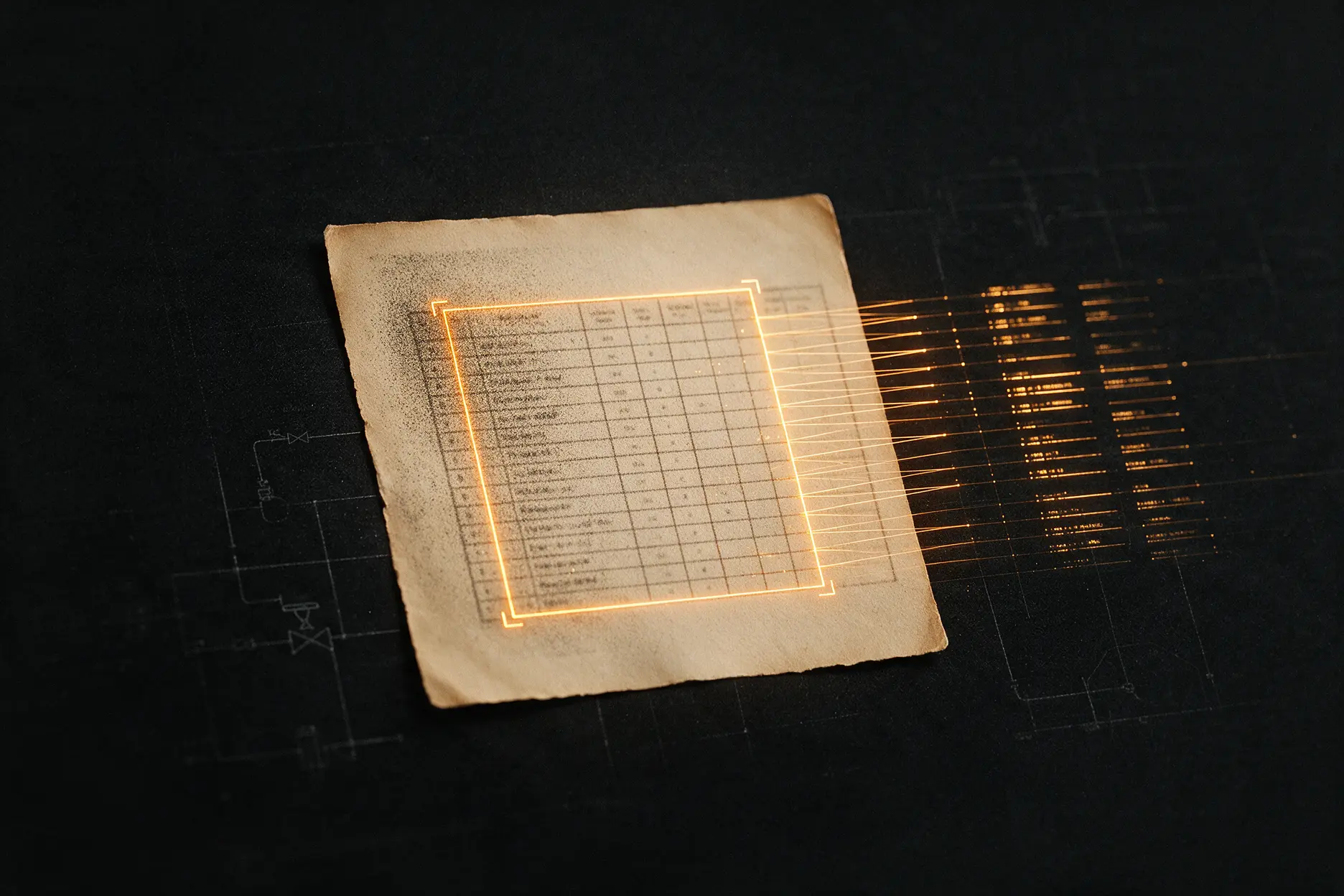
Azati developed and deployed an automated document processing pipeline that detects tables, extracts text, reconstructs table structures, and converts the results into structured data. After evaluating existing solutions, the team collected and labeled training data, developed table detection and OCR models from scratch, and exposed the pipeline through an integration API.

How Azati solved the challenge

  • Client-specific table detection: Azati developed a table detection model trained from scratch on collected and labeled data. The model locates table regions in scanned documents, providing the starting point for automated extraction.
  • Custom OCR model development: The team built and trained an OCR model in-house to extract text from detected table regions. This approach was selected after ready-made models failed to meet the quality requirements of the client's documents.
  • Table structure reconstruction: Instead of relying on conventional column detection, Azati framed table structure recognition as an image segmentation task. This enabled the pipeline to handle irregular layouts, including title blocks in scanned AutoCAD drawings.
  • Structured data post-processing: Azati developed a post-processing layer that combines recognized text with detected table structures to produce structured tabular data, making the extracted information available for downstream use.
  • Production integration: The team integrated the components into a single pipeline and exposed the results through an API. The platform was deployed to production after a 12-month engagement covering research, data labeling, model training, and implementation.

Business outcomes

  • Automated tabular-data extraction: The platform replaced the previous semi-manual extraction process with an end-to-end automated pipeline, from scanned document input to structured data output.
  • One pipeline for multiple document types: PDFs, technical drawings, and scanned documents could be processed through the same platform, including irregular table layouts in scanned AutoCAD title blocks.
  • Models tailored to client documents: Custom table detection and OCR models were trained on collected and labeled data after existing solutions proved insufficient, allowing the extraction approach to be tailored to the client's document types.
  • Structured data ready for integration: Post-processing converted raw recognition output into structured tables, while an integration API made the results accessible to other systems.
  • Continued technology partnership: The client continued working with Azati after the engagement, extending a relationship built around specialized document processing and computer vision engineering.

Last updated

Got a job for Azati? Let’s talk business!

This site is protected by reCAPTCHA and the Google Privacy Policy and Terms of Service apply.

What's next?

  • 1. Tell Us Your Story
    Describe your project. We come back within 24 hours with team availability and a rough plan. NDA on request before the first call.
  • 2. Get Your Roadmap
    Receive a detailed proposal with scope, team composition, timeline, and costs tailored to your goals.
  • 3. Start Building
    Azati aligns on details, finalize terms, and launch your project with full transparency.