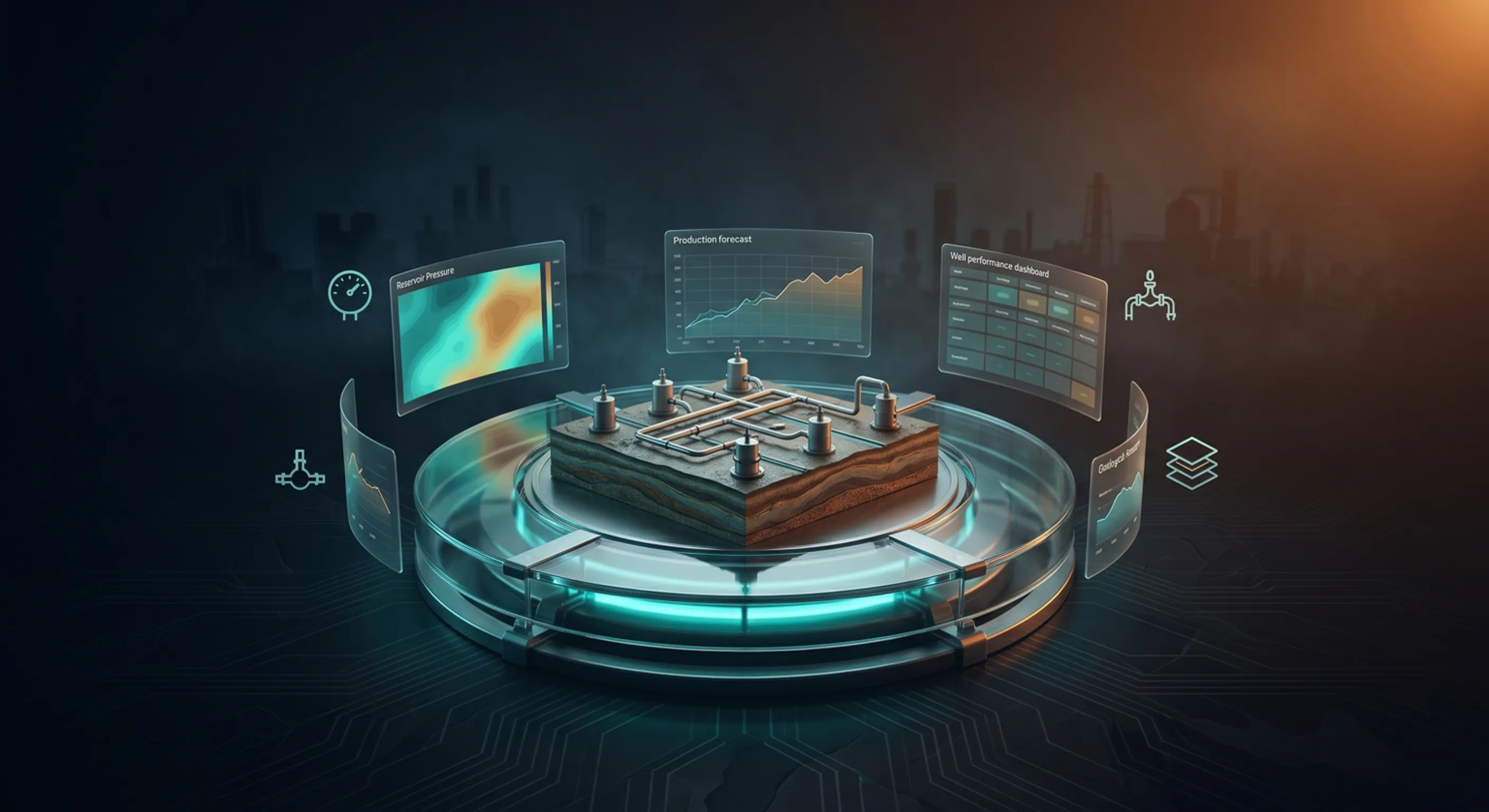
Data Engineering as AI Readiness Foundation

We assess, modernize, govern, and activate the data infrastructure your AI strategy depends on – so every model, agent, and dashboard runs on data your business can trust.

Assess My AI Readiness
80%
ETL runtime reduction delivered for a client
5M+
records ingested & normalized in one platform
80TB+
data processed daily in a live warehouse
90-95%
typical prediction accuracy once data is AI-ready

Clients Feedback

Clients value our ability to transform large datasets into actionable business insights. Through cutting-edge data analytics algorithms, machine learning models, and data visualization, we enhance decision-making accuracy and operational efficiency.

What is AI data readiness – and why don't most enterprises have it yet?

AI data readiness is the degree to which your data – its quality, governance, metadata, lineage, and architecture – can support AI in production, not just in a pilot. Azati is the data engineering partner that builds this foundation for enterprises deploying GenAI, machine learning, and AI agents at scale.

Our capabilities: the engineering behind each phase

01 – AI Data Readiness Assessment

We identify exactly which data gaps are blocking your AI roadmap – quality, completeness, freshness, lineage, and bias – scored against the specific GenAI, ML, or agent use cases you're planning. The output is a roadmap your teams can execute.

  • Readiness assessment & gap analysis
  • Unstructured data pipelines
  • Data quality & bias scoring
  • GenAI retrieval readiness – the RAG and memory engineering layer that determines whether agents retrieve the right context

How does Azati run an AI data readiness assessment?

Every engagement starts with a scoped, time-boxed assessment. We benchmark your environment against the specific AI initiatives you're planning.

  1. 01

    Discovery & use-case mapping

    We define exactly which AI, GenAI, or agent initiatives the assessment needs to support, and the business outcomes each one is accountable for – the same intake used in Azati's Enterprise AI readiness diagnostic.

  2. 02

    Architecture & integration audit

    We map your current data architecture, source systems, and integration maturity against what those specific use cases require – not a generic benchmark.

  3. 03

    Governance & ownership review

    We evaluate metadata, lineage, access controls, and data ownership across business units to identify where accountability breaks down.

  4. 04

    Quality & risk scoring

    We score data quality, completeness, freshness, and compliance exposure against use-case-specific thresholds.

  5. 05

    Prioritized roadmap & quick wins

    We deliver a scored gap analysis and phased remediation roadmap ranked by business impact, with quick wins identified for the first delivery cycle.

Enterprise AI Readiness Diagnostic 2026 — cover FREE DIAGNOSTIC

Don't guess your starting point – score it.

The Enterprise AI Readiness Diagnostic benchmarks your organization across six core pillars, backed by 2026 data on why most enterprises still aren't ready to run AI agents in production, plus a self-scoring worksheet you can complete on your own.

Get the diagnostic Free PDF, instant.

What does this actually look like in production? These are the real-world data platforms built for enterprise scale.

Technology alone doesn't create business value. Reliable data does.

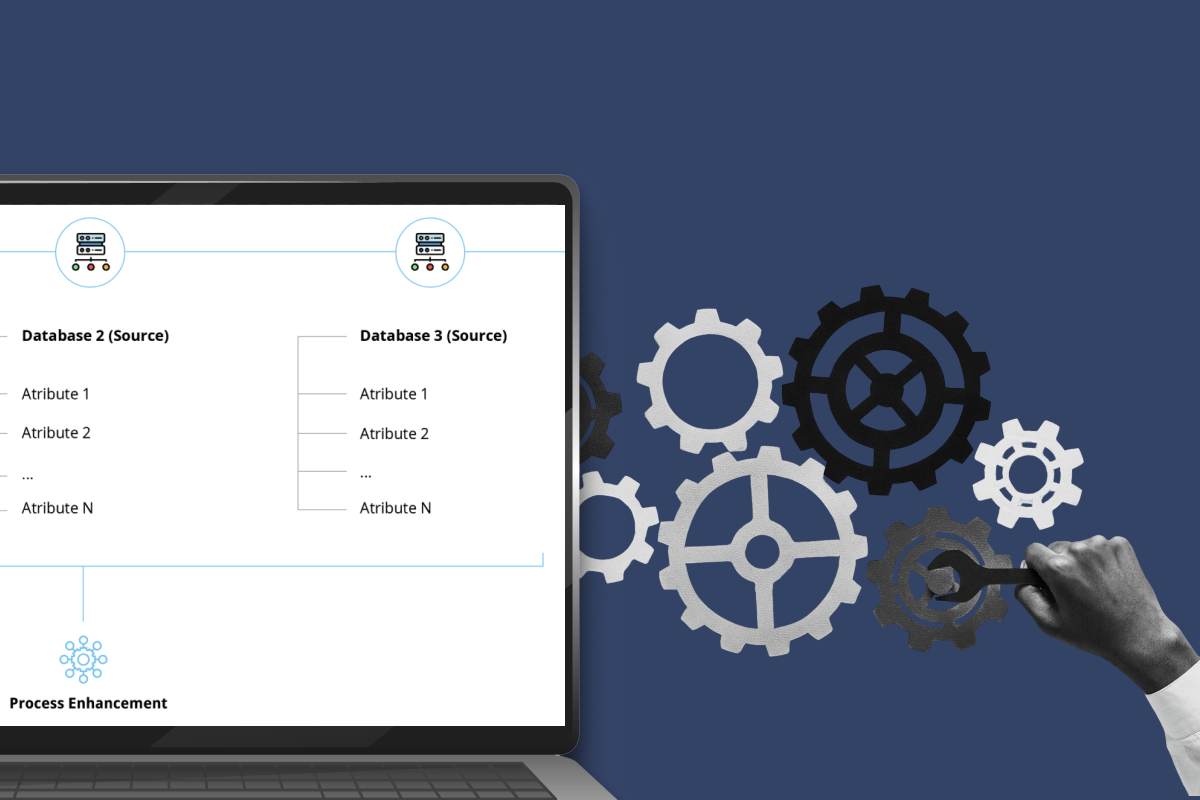
ETL Process Enhancement for Insurance and Healthcare
Insurance & Healthcare

How do you stop bad data from silently overwriting good data?

80% reduction in ETL runtime
3-5x increase in data processing capacity
95% reduction in duplicate/conflicting entries
  • Oracle
  • Oracle SQL
  • Survivorship Matrix
  • ETL

⚡ Pain Points We Tackled

A national leader in customized insurance, claims, and patient safety & risk solutions was losing trust in its own reporting. Reference data arrived from multiple operational systems of inconsistent reliability, and the ETL process had no way to distinguish a complete, trustworthy record from a thin one – so a detailed, verified attribute could be silently overwritten by a blank or low-confidence value from a weaker source. Duplicate and conflicting entries piled up in the warehouse, reporting errors followed downstream, and the nightly ETL run stretched past 30 minutes, delaying same-day analytics.

Our Approach

Azati designed a rules-based Survivorship Matrix, built directly into the Oracle SQL ETL logic, that decides – attribute by attribute – whether an incoming value should overwrite the existing record or be discarded in favor of the higher-priority source already in the warehouse. The decision logic runs inline as data loads, with no separate reconciliation stage.

Applied Methods and Practices

  • Source Reliability Scoring: auditing every attribute from every upstream system and scoring it for reliability and completeness.
  • Survivorship Matrix Design: rules-based logic embedded directly in the ETL layer to resolve conflicts at load time.
  • Configurable Priority Weighting: rules that can be re-ranked as new sources come online, without touching the surrounding workflow.
  • Pipeline Consolidation: removing redundant comparison and cleansing steps that had bloated the original ETL job.

Solution Features

  • Inline Conflict Resolution: no manual reconciliation queue or nightly cleanup script – the warehouse never holds a degraded value even transiently.
  • Configurable Rules Engine: priority logic adjustable as source reliability changes, without a re-engineering cycle.
  • Faster, Leaner ETL: runtime cut from 30+ minutes to under 5, within the same infrastructure footprint.
  • Audit-Ready Data Trail: a single, consistent view of policy and reference data defensible to auditors and regulators.

AI Sports Data Management Platform
Sports & Entertainment

How do you unify 5 million records that have no shared identifiers?

5M+ athlete & event records ingested and normalized
70% reduction in manual data oversight
92% accuracy in semantic search & AI summarization
  • Apache Spark
  • Elasticsearch
  • AWS
  • Kubernetes
  • React
  • .NET Core
  • Java Spring Boot

⚡ Pain Points We Tackled

An international sport organization needed to centralize athlete and event data streaming in from live feeds, official results APIs, media outlets, CSVs, XML, HTML pages, and historical archives – with inconsistent naming conventions and no consistent identifiers linking the same athlete or event across sources. Every update, correction, and conflict was reviewed manually, a process that couldn't scale as feed volume grew, leaving administrators no automated way to catch anomalies before they reached a report or partner feed.

Our Approach

Azati built a four-layer platform: distributed ETL pipelines on Apache Spark for batch and streaming ingestion, a containerized microservices layer for entity linking and deduplication, an AI-assisted enrichment stage using NLP and embeddings for semantic search, and a governance hub with full versioning, conflict comparison, and audit trails.

Applied Methods and Practices

  • Distributed ETL at Scale: batch and streaming pipelines normalizing multi-format data (JSON, CSV, XML, HTML) at terabyte scale.
  • Entity Resolution & Deduplication: modular microservices (Docker/Kubernetes on AWS) linking records to a single athlete or event identity.
  • NLP & Embedding-Based Enrichment: resolving naming ambiguities and powering natural-language semantic search via Elasticsearch.
  • Governance & Versioning: full audit trails, approval workflows, and side-by-side conflict comparison for every profile change.

Solution Features

  • Unified Athlete & Event Identity: 5M+ records normalized and cross-linked across every source system feeding the platform.
  • Automated Anomaly Detection: event-driven alerts replace manual, periodic data-quality checks.
  • Natural-Language Semantic Search: analysts query historical results conversationally instead of hand-building filters.
  • Elastic, Event-Ready Infrastructure: dynamic cloud scaling absorbs traffic spikes around major competitions.
BI and DWH Services for Telecommunication Provider
Telecom

How do you turn 80TB of daily data into real-time marketing decisions?

80TB+ data processed daily
100+ advanced audience-segmentation dimensions
30+ integrated data sources
  • Big Data
  • ETL
  • JavaScript
  • Machine Learning
  • Node.js
  • IBM Db2 Warehouse

⚡ Pain Points We Tackled

A major entertainment company managing cable channels, streaming services, and digital platforms faced overwhelming data volume – terabytes daily from online and offline sources. They needed deep insight into audiences (age, gender, hobbies, social connections, behavior) and a way to optimize content release timing, ad-targeting, and audience retention that manual, historical-data analysis couldn't deliver.

Our Approach

Azati built a unified BI and data warehouse solution combining 30+ sources into a central platform, enabling advanced audience segmentation across 100+ attributes and fast, self-service access for marketing and analytics teams – streamlining content planning and ad-targeting across TV and digital platforms. Azati has run and extended this platform for the client since 2017.

Applied Methods and Practices

  • Big-Data Processing Workflows: automated extraction, transformation, and loading pipelines handling 80+ terabytes per day.
  • Machine-Learning Audience Segmentation: algorithms building precise demographic, behavioral, and interest-based segments.
  • BI Dashboards & OLAP Analytics: analysis of impressions, play rate, click-through rate, engagement, churn, acquisition, and retention.
  • Data Warehousing & ETL Optimization: centralized storage and optimized ETL for performance, scalability, and maintainability.

Solution Features

  • Unified Audience-Planning Platform: integrates TV and digital campaigns for seamless targeting and campaign management.
  • Self-Service Analytics Dashboards: marketing teams query insights independently, without going through IT.
  • Rapid Access to Insights: centralized storage enables fast querying and reporting across every integrated source.
  • VOD Analytics & Optimization: tracks impressions, engagement, and churn to optimize content release timing and reach.
Enterprise Data Platform Pipeline Development
Chemical & Industrial Manufacturing

How do you keep 1,000+ tables trustworthy through 24+ months of nonstop growth?

24+ months of continuous, embedded delivery
100s of data flows across 1,000s of analytical tables
Dozens of data marts and pipelines developed
  • SQL
  • Python
  • dbt
  • Greenplum
  • PostgreSQL
  • ClickHouse
  • Apache NiFi
  • Apache Airflow

⚡ Pain Points We Tackled

A large chemical enterprise operated dozens of interconnected business systems feeding a central analytical platform – hundreds of data flows and thousands of analytical tables, all continuously expanding as new business initiatives and systems came online. Business teams depended on this platform for reporting and operational decisions, but growing volumes and increasingly complex transformations meant existing pipelines and loading logic constantly needed rework just to keep performance and consistency from degrading.

Our Approach

Azati joined as an embedded extension of the client's data engineering organization – not a bolt-on vendor – developing analytical pipelines, data marts, and orchestration workflows using SQL, Python, dbt, Apache Airflow, and Apache NiFi, on top of Greenplum, PostgreSQL, and ClickHouse. The engagement ran continuously for 24+ months under a Scrumban delivery model built for constantly evolving requirements.

Applied Methods and Practices

  • Analytical Pipeline & Data Mart Development: building and maintaining the ETL/ELT logic and reporting-oriented data marts consumed by BI teams.
  • Workflow Orchestration & Automation: Apache Airflow and Apache NiFi scheduling, monitoring, and automating processing across the full data ecosystem.
  • SQL & Transformation Optimization: query tuning, join improvements, and transformation refinement to sustain performance as volume grew.
  • Embedded, Continuous Delivery: a dedicated data engineering specialist integrated into the client's own architecture and Scrumban process.

Solution Features

  • Business-Ready Data Marts: curated analytical structures so BI teams consume trusted datasets without touching complex source systems.
  • Automated Orchestration & Monitoring: Airflow- and NiFi-driven pipelines replacing manual, ad hoc data movement.
  • Optimized, Maintainable Pipelines: ongoing SQL and transformation tuning keeping the platform performant as it scales.
  • Scalable Analytical Architecture: a foundation designed to keep absorbing new systems and reporting requirements without re-architecture.
Oilfield Reservoir Analytics Platform
Energy, Oil & Gas

How do you cut calculation error 1000x before it ever reaches production?

4 analytical modules delivered in a 4-month window
~1000x reduction in floating-point accumulation error
10 days to redesign the computational core pre-launch – UAT passed first attempt
  • Python
  • JavaScript
  • React
  • PostgreSQL

⚡ Pain Points We Tackled

A major oil and gas enterprise needed a petroleum analytics platform to calculate well interaction coefficients, target compensation, production rates and losses, reservoir pressure dependencies, and gas-oil ratio forecasts – processing high-volume production data across well coordinates, lithology, salinity, and historical production datasets. Requirements changed mid-sprint throughout the build, mathematical formulas needed constant validation, and because the calculations directly influence physical extraction decisions, precision and stability were non-negotiable.

Our Approach

Azati built a modular suite of Python-based calculation services, each independently deployable, covering well compensation, gas-oil ratio forecasting (with ML-assisted clustering and regression), and production rate calculation. Two weeks before launch, Azati's QA team caught a critical defect through property-based and stress testing on real historical geological data – impact coefficients were exceeding physical limits by 8–12x under extreme salinity conditions – and the engineering team redesigned the computational core in 10 days without slipping the delivery date.

Applied Methods and Practices

  • Modular Petroleum Calculation Engineering: independent, service-oriented Python modules for well interaction, compensation, and forecasting.
  • ML-Assisted Forecasting: clustering and piecewise linear regression for gas-oil ratio forecasting, replacing a heavier legacy methodology.
  • Property-Based & Stress QA: regression testing against real (not synthetic) historical geological datasets, including extreme edge cases.
  • Numerical Stability Engineering: Kahan summation and resource-isolation controls to eliminate floating-point drift and memory failures.

Solution Features

  • Modular, Independently Deployable Services: each analytical module can be updated or recalculated without touching the rest of the platform.
  • Transparent Engineering Diagnostics: automated anomaly reports and system commentary explain why a calculation failed or what geological condition caused it.
  • Physically-Constrained Validation Safeguards: invariant checks and circuit breakers stop physically impossible outputs from ever reaching production.
  • CI/CD-Integrated Edge-Case Testing: geological edge cases became a mandatory quality gate in the deployment pipeline going forward.

See more: explore the full Azati portfolio for additional Data Science and Enterprise AI engagements.

Which industries need this the most – and does yours qualify?

The industries Azati serves share one trait: data quality and decision speed are non-negotiable, whether that's a claims record, a trading position, or a patient chart.

Banking & Fintech

Enterprise warehouses that consolidate trading, risk, and customer data for real-time dashboards and automated regulatory reporting. See our dedicated Banking & Finance practice and AI Workflow Automation for BFSI for claims, underwriting, and AML use cases.

Insurance

Survivorship-rule ETL and MDM that reconcile claims, policy, and reference data across systems without losing auditability. More on our Insurance practice.

Life Sciences & Healthcare

HIPAA-aware clinical data warehouses linking EHR, lab, imaging, and billing data for population health and outcomes analytics. More on our Life Sciences & HealthTech practice.

Telecom & Entertainment

Multi-terabyte-a-day pipelines behind audience segmentation, VOD analytics, and self-service BI for marketing teams. See related work in our telecom portfolio.

Energy, Oil & Gas

Centralized data warehouses unifying drilling, production, and supply-chain data into real-time operational dashboards. More on our Energy, Oil & Gas practice.

Retail, Wholesale & Logistics

Omnichannel data warehouses feeding demand forecasting, inventory optimization, and customer segmentation models. More on our Retail, Wholesale & Logistics practice.

Infrastructure, Construction & Real Estate

Engineering data platforms that turn scanned drawings, point clouds, and ERP master data into structured, governed inputs for digital twins, asset registers, and cost-estimation systems. More on our Infrastructure, Construction & Real Estate practice.

Manufacturing

Analytical pipelines and data marts that keep thousands of production tables trustworthy through nonstop plant, supply-chain, and business-system growth. More on our Manufacturing practice.

Professional Services

Internal reporting, resourcing, and project-data platforms that give consulting, agency, and services firms one governed view of utilization and delivery. See related work in our Professional Services portfolio.

What actually changes once your data is AI-ready?

Before
  • Rebuilding pipelines for every new project

  • Debating which dashboard is “correct”

  • Manually preparing data for every model

  • Governance slowing innovation down

  • Launching isolated AI pilots department by department

After
  • Reusing governed data products across projects

  • Every team working from trusted enterprise definitions

  • AI teams consuming standardized, ready-made datasets

  • Governance built into the platform itself

  • Scaling AI as a shared enterprise capability

How does Azati get you from where you are to where you need to be?

Technology is one part of AI readiness. Our work builds the operational capabilities organizations need before AI can scale, across four connected phases.

  1. Assess

    Phase 1 – Assess

    • Understand where your data ecosystem supports – or limits – your AI ambitions.
  2. Modernize

    Phase 2 – Modernize

  3. Govern

    Phase 3 – Govern

    • Build trust through lineage, metadata, access controls, observability, and compliance – grounded in AI Consulting frameworks for EU AI Act, GDPR, and HIPAA alignment.

What uniquely positions Azati in AI data readiness assessment?

Azati's edge in AI data readiness assessment it's that the same engineers running the assessment also build and operate the AI systems it's meant to unblock, so the roadmap they hand back is written by people who've had to live with their own recommendations in production. That shows up as specificity: instead of scoring your environment against generic industry benchmarks, Azati calibrates thresholds to the exact GenAI, ML, or agent use case you're planning, because retrieval-quality requirements for a customer-facing copilot are genuinely different from those for an internal forecasting model. It also shows up as restraint – the default assumption is that most organizations don't need a full rebuild, and the assessment is built to find the smallest set of fixes (survivorship rules, governance gaps, a specific pipeline) that unlock the most AI value after the rapid AI MVP development.

Who is this built for?

Chief Data & Analytics Officers

Put observability, lineage, and ownership in place so every AI output can be trusted and defended to the board.

Chief Technology & Information Officers

Move AI programs past isolated pilots onto a data platform every team and application can build on.

Chief AI & Innovation Officers

De-risk GenAI and agent rollouts with the retrieval quality and governance foundation they depend on.

Heads of BI & Analytics

Replace dashboard disputes with a single governed source every team already trusts.

We don't prepare data for hypothetical AI. We build AI systems ourselves.

That distinction shapes every engineering decision we make. Azati is the technology partner that designs the data foundation and the AI running on top of it – because we've built both.

  • We engineer for long-term capability

    Not one-off implementations. Every pipeline and platform is designed to be reused across the next AI use case, not rebuilt for it.

  • We modernize incrementally

    Not through disruptive transformations. The discipline that took one client's ETL runtime from 30+ minutes to under 5 is applied in phases, so the business never pauses for engineering to catch up.

  • Strategy and hands-on engineering, together

    No slide decks handed off to someone else to build. The people designing the architecture are the people shipping it – the same engineering delivery approach behind every Azati engagement.

Executive insight

Data Science Team Lead
The biggest misconception about AI is that organizations think they're buying models – in reality, they're investing in data maturity. Every AI success story begins months before the first prompt is written, and by the time a model or an agent is doing something impressive, the real work is already done: data engineering isn't about designing data-ready infrastructure anymore, it's the competitive advantage that decides whether that moment happens at all.”
Alexander A.
Data Science Team Lead

Enterprise-grade platforms, chosen for governance and scale

  • Snowflake
  • AWS Athena
  • Google BigQuery
  • AWS RDS (PostgreSQL / MySQL)
  • IBM Db2 Warehouse
  • Alibaba AnalyticDB
  • Apache Spark
  • Apache Hadoop
  • Airflow
  • Elasticsearch
  • Power BI
  • Tableau
  • Python / Pandas / NumPy
  • Scikit-learn / XGBoost
  • TensorFlow / PyTorch
  • Docker / Kubernetes

So what should your next AI investment actually be?

It should be the data foundation every future model depends on. Whether you're deploying GenAI, modernizing legacy systems, or preparing enterprise data for AI agents, success starts with trusted, governed, production-ready data. And once it's live, our Managed AI & Process Re-engineering team keeps monitoring, tuning, and defending it in production. Let's identify what's holding your organization back – and build the foundation that moves AI from isolated pilots to enterprise capability.

Book a consultation

What do C-level and data leaders ask us most?

AI-ready data is data that is accurate, complete, consistently defined, traceable to its source, and governed enough for an AI system to use without manual cleanup. It's a property of your data engineering and governance, not a function of how much data you have.

The most effective starting point is an AI data readiness assessment, which evaluates your data architecture, governance, integration maturity, metadata, lineage, and quality against the specific AI initiatives you're planning – not generic industry benchmarks. The output is a prioritized roadmap showing where improvements create the greatest business impact.

Yes. Most organizations don't need a full rebuild. Targeted improvements to data quality, governance, and integration typically deliver more value than replacing existing systems, with incremental modernization minimizing disruption while improving long-term scalability.

Governance is far cheaper to build in from the start than to retrofit once AI is already running in production on ungoverned pipelines that are now load-bearing for business decisions.

AI can connect to legacy databases, but most legacy systems lack the structure, metadata, and quality controls AI needs for reliable output. Most organizations modernize incrementally rather than migrating everything before starting AI work.

It depends on the use case. A customer-facing AI assistant needs tighter quality and governance than an internal exploratory model, so the right approach sets quality thresholds per use case rather than chasing one enterprise-wide score.

AI can help detect anomalies and duplicates, but it can't resolve conflicting business definitions or missing governance by itself. Those require engineering and organizational decisions, not just better models.

Large language models, copilots, and AI agents rely on enterprise data to generate accurate responses. Fragmented, outdated, or poorly governed data increases hallucinations and inconsistent answers, while a strong data foundation improves retrieval quality – see Azati's LLM Development Services and Agentic AI Engineering – and strengthens the governance behind every AI output.

Metadata tells AI systems what a piece of data means, where it came from, and how current it is. Without it, AI has no way to judge whether a data point is trustworthy or relevant to the question being asked.

Data lineage is the traceable record of where data originated and every transformation it went through. It matters for AI because it lets you explain why a model or agent produced a given answer – essential for trust, debugging, and compliance.

AI agents typically retrieve enterprise knowledge through indexed, permissioned access to governed data sources rather than raw files – the RAG and memory engineering discipline covered in our Agentic AI Engineering service. Without correctly engineered access controls and metadata, agents can surface outdated or sensitive information without anyone noticing.

Data engineering builds the pipelines, platforms, and governance that make data trustworthy and accessible. Data science and AI teams then use that foundation to train and run models. Skip the engineering layer and AI initiatives run on unreliable data – exactly where most stall before production.

A focused readiness assessment typically takes two to four weeks. Full modernization is delivered incrementally over three to six months or longer, prioritized by use case, so the business sees measurable improvements in the first delivery phase rather than waiting for a complete transformation.

Yes. Some clients engage Azati as an end-to-end delivery partner through project-based delivery; others use our specialists to augment existing engineering teams via staff augmentation, provide architectural leadership, or accelerate a specific modernization program. The engagement model adapts to your internal capabilities.

Last updated

Got a job for Azati? Let’s talk business!

This site is protected by reCAPTCHA and the Google Privacy Policy and Terms of Service apply.

What's next?

  • 1. Tell Us Your Story
    Describe your project. We come back within 24 hours with team availability and a rough plan. NDA on request before the first call.
  • 2. Get Your Roadmap
    Receive a detailed proposal with scope, team composition, timeline, and costs tailored to your goals.
  • 3. Start Building
    Azati aligns on details, finalize terms, and launch your project with full transparency.