
Custom AI instead of off-the-shelf OCR
Recognition models were trained specifically for piping isometrics, engineering notation, contractor markups, and real project documentation.
How to create a single source of truth for flange management across hundreds of thousands of engineering drawings?
Azati partnered with Petronas to help a global energy company modernize engineering information by transforming fragmented piping documentation into a trusted data foundation. Using custom AI, trainable OCR, and engineering-aware computer vision, the solution reconciled more than 250,000 piping isometrics into a single flange register supporting inspection, maintenance, asset integrity, and future digital engineering initiatives.
piping isometrics automatically processed and reconciled
reduction in project schedule
reduction in manual engineering effort


Large industrial operators depend on accurate engineering documentation to manage inspections, maintenance, regulatory compliance, and asset integrity. When engineering records become fragmented across CAD files, contractor markups, and inspection reports, organizations lose a trusted source of information, increasing operational risk, slowing capital projects, and making maintenance planning significantly more expensive.
The client needed to establish a consolidated flange register. That is, a single record linking every flanged connection to its design documentation, inspection history, and engineering attributes. This register serves as the foundation for inspection planning, shutdown preparation, maintenance activities, regulatory reporting, and long-term asset integrity management.
Manual reconciliation was impractical due to the scale of documentation and the inconsistencies introduced by multiple contractors, varying drafting standards, and handwritten annotations.
Working together with Petronas, Azati developed a customized AI-powered processing pipeline capable of extracting, matching, validating, and consolidating engineering information into a unified flange register supporting inspection, maintenance, and integrity management.
Azati designed a specialized AI solution capable of understanding engineering drawings rather than simply extracting text. The platform combined trainable OCR, computer vision, topology analysis, and custom machine learning models to reconcile asset lifecycle information across highly inconsistent documentation while preserving traceability back to sources.
Azati modernized engineering information by transforming fragmented documentation into structured, validated engineering data while preserving traceability back to original CAD and marked-up drawings. Rather than replacing existing systems, the project established a trusted information layer that supports inspection, maintenance, brownfield modernization, and future digital engineering initiatives.
Flange information existed across CAD drawings, marked-up scans, inspection reports, and contractor documentation without a reliable mechanism for consolidation.
More than ten contractors produced drawings using different templates, drafting conventions, symbols, title blocks, and annotation styles.
Engineering specialists previously relied on manual comparison of drawings to validate flange information, making large-scale reconciliation slow and error-prone.
The client required a reusable process capable of supporting future inspection planning, maintenance activities, and integrity management.
Azati combined advanced AI engineering expertise with Petronas's deep understanding of piping documentation and flange management. Rather than relying on generic OCR technologies, the team designed custom trainable recognition models and engineering-specific computer vision components capable of handling highly variable industrial documentation at enterprise scale.
Recognition models were trained specifically for piping isometrics, engineering notation, contractor markups, and real project documentation.
Previous successful engagements within the energy sector reduced delivery risk for another large-scale engineering documentation initiative.
Unlike conventional OCR platforms designed to extract text, Azati developed an engineering-aware AI capable of interpreting piping topology, contractor-specific engineering notation, and relationships between CAD and marked-up documentation. This enabled reliable reconciliation of engineering information that conventional document processing platforms could not achieve.
The processing pipeline was tailored to the client's engineering validation processes, output formats, and QA/QC requirements rather than forcing standardized AI models into existing workflows.
The solution was designed to process hundreds of thousands of engineering documents while maintaining consistent quality and traceability.
Enterprise engineering modernization begins with trusted information. Azati helps industrial organizations transform fragmented engineering documentation into structured data that supports asset integrity, brownfield modernization, engineering analytics, and future AI initiatives.
Discuss your engineering AI initiativeAzati developed custom computer vision and engineering-aware AI capable of matching CAD drawings with highly inconsistent marked-up documentation produced by multiple contractors. The approach created reliable mappings across more than 250,000 engineering drawings while preserving full traceability back to the original documentation.
Rather than simply digitizing drawings, the project modernized engineering data by converting disconnected documentation into a structured information asset. The solution combined document understanding, computer vision, engineering topology analysis, and automated reconciliation to create a single flange register supporting multiple downstream engineering processes.
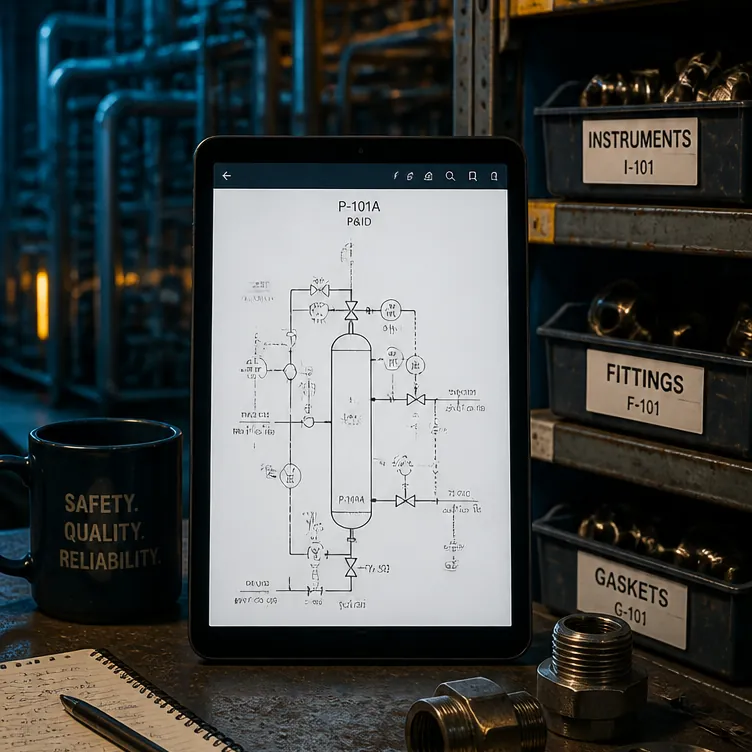
Although developed for piping isometrics, the same AI techniques can be applied to P&IDs, engineering drawings, inspection records, and other technical documentation.
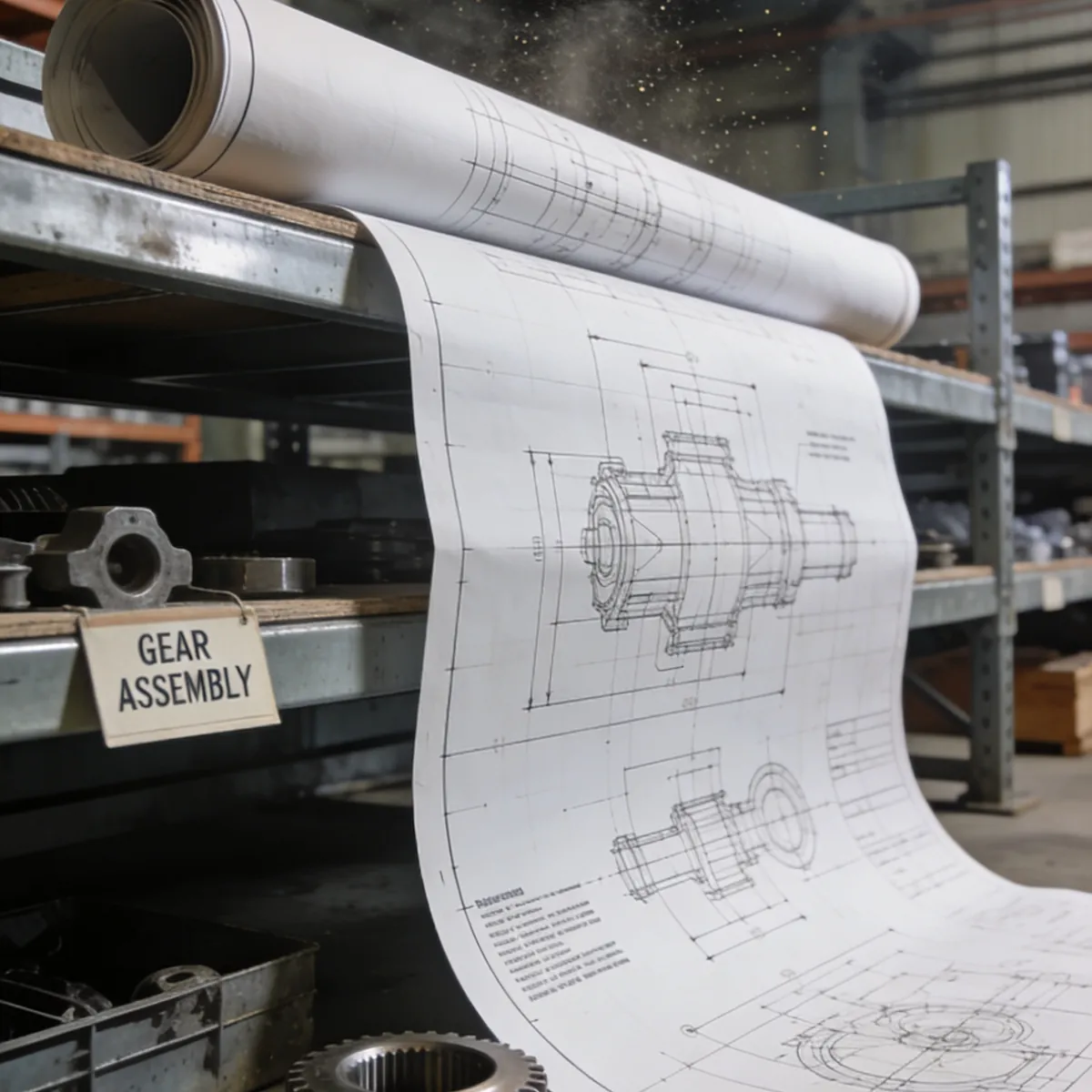
The platform automatically analyzed piping isometrics, identified flanged joints, interpreted engineering topology, and extracted engineering attributes from both CAD drawings and scanned markups.
Custom computer vision models matched CAD drawings with contractor markups despite differing layouts, scan quality, and document structures.
The platform assigned unique identifiers to every flange and consolidated engineering information into a consistent register linked to all source documentation.
Missing engineering attributes were automatically assigned using extracted information and engineering context.
Azati developed a review interface that enables engineering specialists to validate AI-generated results by synchronizing the visualization of drawings with extracted engineering data.
The production-grade processing pipeline was designed to efficiently process millions of engineering documents while supporting continuous optimization and future engineering initiatives.
Azati was responsible for designing and implementing the AI pipeline, custom OCR models, computer vision algorithms, and production processing infrastructure, while Petronas provided domain expertise in flange management and engineering documentation.
| Area | Azati contribution |
|---|---|
| AI engineering | Developed custom trainable OCR and ML models |
| Computer vision | Built drawing comparison and reconciliation algorithms |
| Engineering data extraction | Automated flange identification and metadata extraction |
| Data consolidation | Generated a unified flange register |
| QA/QC | Developed an engineering validation interface |
| Platform engineering | Built a scalable production processing pipeline |
| Delivery | Iterative Agile development with continuous model improvement |
Azati worked with one of the most challenging aspects of industrial AI: engineering documentation created by multiple organizations using inconsistent drafting standards over many years. Success depended on solving engineering-specific edge cases that conventional OCR solutions could not reliably address.
Marked-up drawings varied significantly in templates, symbols, scan quality, handwritten annotations, and drafting practices.
Some contractor drawings required non-trivial geometric transformations rather than simple image rotation to correctly align piping structures.
CAD drawings and contractor packages frequently divided engineering content differently, requiring intelligent cross-page matching.
Rather than replacing engineering experts, Azati developed a dedicated validation workspace allowing QA/QC specialists to review AI-generated flange mappings, compare synchronized CAD and marked-up drawings, flag discrepancies, and approve engineering data before publication. This accelerated validation while preserving engineering confidence in the final dataset.
New document variations and engineering edge cases required iterative optimization throughout the project.
Azati helps engineering organizations automate document processing, digitize technical records, and transform legacy engineering documentation into trusted digital assets.
Talk to an industrial AI expert| Metric | Value |
|---|---|
| Engineering drawings processed | 250,000+ |
| Project duration | 12 months |
| Schedule reduction | 70% |
| Manual effort reduction | 50% |
| Delivery model | Dedicated partner team |
| AI approach | Custom trainable OCR and computer vision |
Azati transformed fragmented engineering documentation into a trusted digital engineering asset that supports inspection, maintenance, and integrity management. The unified flange register became the operational reference for downstream inspection and maintenance workflows. The project reduced manual reconciliation while improving engineering traceability, auditability, and long-term operational readiness.
Engineering teams gained a consolidated flange register consistently linked to both CAD and marked-up documentation.
Automation dramatically reduced the time required to consolidate and validate engineering documentation across large projects.
Automated reconciliation reduced manual errors while improving consistency across engineering records.
Engineers could validate AI-generated results using dedicated review workflows rather than manually comparing thousands of drawings.
Brownfield modernization initiatives often begin with fragmented engineering documentation accumulated over decades of operations. By creating a trusted flange register linked to both CAD and marked-up drawings, Azati established reliable engineering information that can reduce manual document reconciliation during plant upgrades, shutdown planning, and asset modification projects.
The consolidated engineering dataset supports future brownfield modernization, engineering analytics, asset lifecycle management, and industrial AI initiatives.
The organization established a reliable engineering dataset spanning hundreds of thousands of documents without relying on manual reconciliation.
Modernizing existing industrial facilities requires accurate engineering records before equipment can be upgraded, inspected, or modified safely. The consolidated flange register provides a trusted engineering baseline that reduces documentation risk during future brownfield projects.
Digital engineering initiatives depend on trusted information. By reconciling engineering documentation into a consistent digital dataset, the project established reliable engineering data that future analytics, engineering systems, and industrial AI initiatives can build upon.
Engineering expertise was previously embedded across hundreds of thousands of disconnected documents produced by different contractors. The project transformed this fragmented engineering knowledge into structured, traceable information that engineering teams can search, validate, and reuse throughout the asset lifecycle.
A centralized, validated engineering dataset reduced the operational risks associated with inconsistent contractor documentation, improving confidence in engineering decisions throughout the asset lifecycle.
Centralized, validated engineering information accelerated planning, inspection, and operational activities.
Engineering specialists could focus on higher-value technical activities instead of repetitive document comparison.
Azati worked as Petronas's AI engineering partner, combining machine learning expertise with deep engineering domain knowledge.
The project followed Agile delivery with continuous refinement of recognition models based on newly discovered document variations and engineering edge cases.
The engagement combined machine learning engineers, computer vision specialists, data annotation experts, full-stack developers, and technical leadership to deliver a production-grade engineering document intelligence solution.
Explore our recent projects and see how Azati delivers measurable results for our clients.
The client needed a fast, scalable solution for digitizing large volumes of complex engineering documents, pipeline layouts, industrial plans, and technical maps, originating from multiple vendors with distinct formatting, templates, and symbol conventions. Previous manual workflows were slow, error-prone, and could not scale. Documents contained overlapping layers, handwritten notes, stamps, and domain-specific abbreviations that made automated extraction particularly difficult.
Azati, in collaboration with Digatex, built a cloud-based AI document digitization system that automatically detects vendor templates, resolves visual complexity in technical drawings, and normalizes domain-specific notation into structured data. The system was designed for minimal human intervention, processing 5,000+ documents per hour at 98.8% accuracy, a 5× cost reduction compared to the previous manual process.
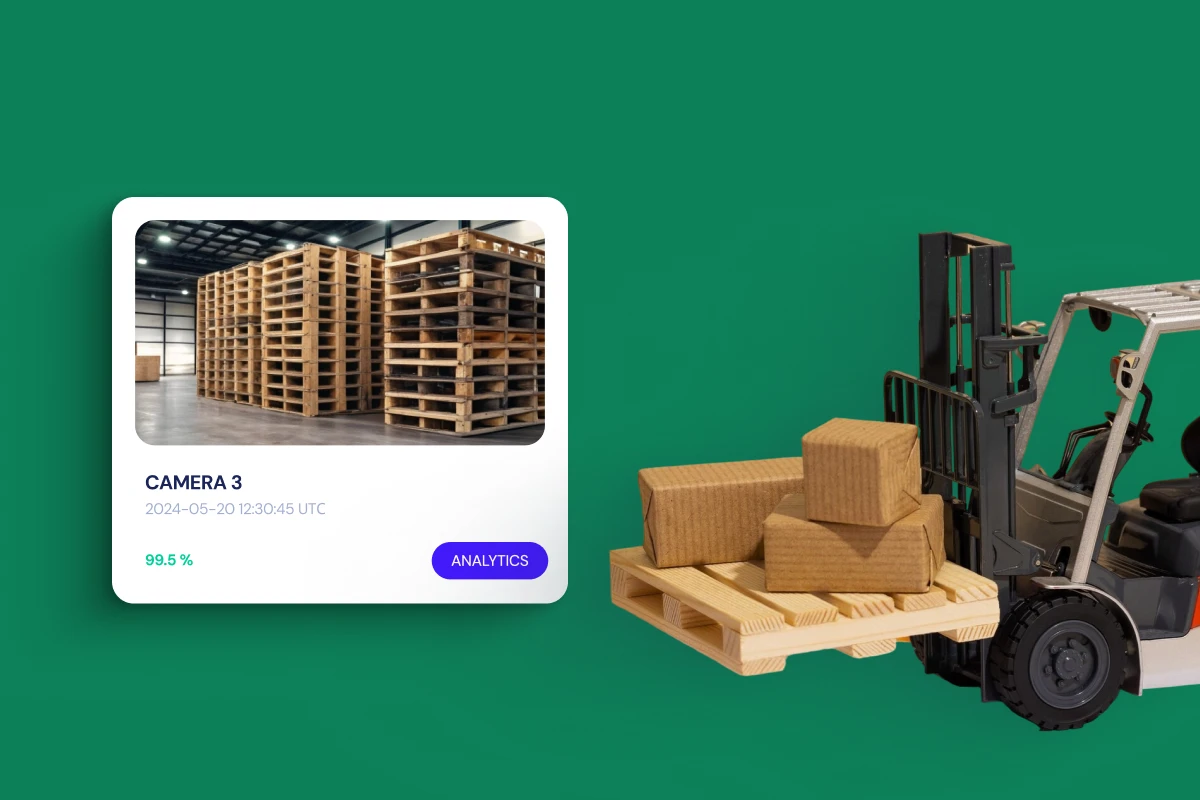
A large logistics organization relied on employees to manually count 200-300 pallets each day as part of warehouse inventory operations. The process was time-consuming, susceptible to human error, and difficult to scale as warehouse throughput increased.
The client required an automated solution capable of accurately counting pallets in complex warehouse environments while operating entirely offline. The system needed to handle irregular pallet arrangements, multiple camera feeds, and real-time processing without relying on cloud connectivity.
Azati developed an edge AI solution that automates pallet detection and counting using computer vision and machine learning. Running locally on NVIDIA Jetson hardware, the system analyzes live video streams, detects and tracks pallets, and produces accurate inventory counts without requiring internet access.
Designed for industrial environments, the solution combines real-time object detection, intelligent tracking, and hardware optimization to improve inventory accuracy, reduce manual effort, and support future warehouse expansion.

A US construction technology startup set out to build a SaaS platform that transforms physical buildings into interactive digital twins for inspection, property assessment, and collaboration. The vision required much more than a 3D viewer, it demanded a complete workflow connecting IoT-based building scans, cloud processing, browser visualization, and collaboration across multiple stakeholders.
The technical complexity was significant. The platform needed to efficiently process large 3D datasets, provide responsive visualization in a web browser, support real-time collaboration, and establish a scalable cloud infrastructure capable of evolving with the product. Bringing these capabilities together into a reliable commercial platform required expertise spanning frontend engineering, backend services, cloud architecture, computer graphics, and infrastructure automation.
Azati partnered with the client throughout product development, delivering core components of the digital twin platform from frontend interfaces and backend microservices to cloud infrastructure and 3D visualization capabilities. The solution automated the complete journey from building scan upload through cloud processing to browser-based analysis and collaboration. Designed as a cloud-native SaaS platform, the product enables users to process large building datasets, explore interactive digital twins, collaborate in real time, and support property inspection and assessment workflows through a unified digital environment.
A shared mission-critical service center processed 40,000+ documents monthly, yet relied on manual review and error-prone legacy OCR. The workflows were drowned in manual effort and SLA delays. The challenge was to keep the existing SAP and document management infrastructure. No replacing, no rebuilds.
Azati crafted AI workflow automation middleware that integrates with the legacy SAP and DMS infrastructure through pre-built connectors. The project’s scope was to build and operate the solution from scratch, so Azati owns extraction accuracy, uptime SLA, and non-stop improvement as the core delivery model, not optional maintenance.

A national bank relied on paper-based loan origination processes that required employees to work across multiple internal systems, manually enter customer information, and manage large volumes of printed documentation. These fragmented workflows increased processing times, introduced avoidable errors, and created an inconsistent customer experience across bank branches and retail locations. The bank sought to modernize its lending operations by digitizing the entire loan application journey, from customer onboarding and identity verification to approval, document generation, and contract signing, while ensuring the solution could be deployed consistently across its nationwide branch network.
Azati developed a digital loan origination platform that unified customer and employee workflows into a single automated process. The solution combined self-service loan applications, workflow automation, document generation, digital signatures, and enterprise integrations to eliminate paper-based operations and accelerate lending decisions. Built on a scalable microservices architecture, the platform supports both customer-facing and internal banking processes while providing a consistent lending experience across retail locations and bank branches.



Last updated
