AI-Powered Technical Document Processing and Defect Detection for Oil & Gas

How to cut manual review of engineering documents by up to 70% without losing accuracy?

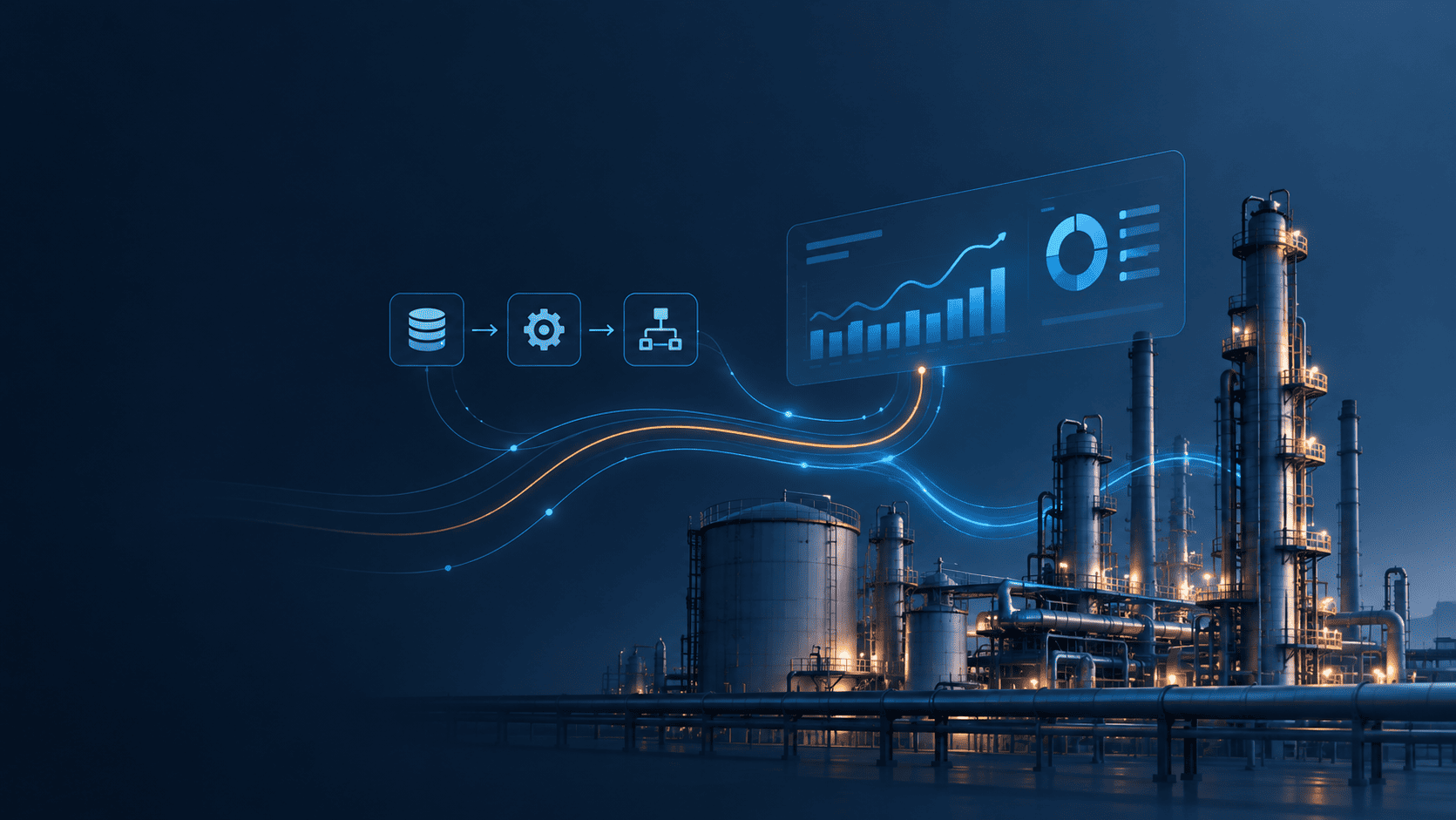
Azati built an AI-powered pipeline that extracts data from engineering documents and AutoCAD drawings for a large Middle Eastern oil and gas operator, cross-checks it against internal systems, flags discrepancies, and feeds verified results into the client's existing Knowledge Hub platform, processing roughly 100,000 documents with an estimated 50-70% cut in manual review effort.

Automate my document review
~100,000

technical documents processed by the AI pipeline to date

50-70%

estimated reduction in manual review effort for standard document packages

40-60%

estimated reduction in time spent preparing data for reporting

Technologies used

Python
Python
C#
C#
FastAPI
FastAPI
PyTorch
PyTorch
OpenCV
OpenCV
PostgreSQL
PostgreSQL
MongoDB
MongoDB
Oracle Cloud Infrastructure

Motivation

In oil and gas operations, technical documentation never stops arriving. Contractors submit engineering drawings, inspection reports, and compliance documents continuously, each one needing to be checked against what the operator's internal systems already know. Manually reading, cross-referencing, and reporting on all of it scales linearly with headcount and degrades in accuracy as volume grows.

The client, a large Middle Eastern oil and gas operator, was carrying exactly that burden largely by hand, made slower and riskier by the variety of formats contractors submitted documentation in.

Azati built an AI-powered pipeline that takes over the extraction, validation, and discrepancy-detection work, then feeds the results directly into the client's existing Knowledge Hub platform, the system engineers already use, rather than introducing a separate tool that competes for their attention.

Business challenges

Challenge 01

Manual extraction and validation that didn't scale

Engineers were manually pulling data out of technical documents and engineering drawings, then checking it by hand against internal software systems. At scale, this approach consumed significant time and introduced a real risk of human error in work where accuracy directly affects engineering and operational decisions:

  • Manual data extraction from dense technical documents and drawings
  • Manual cross-referencing against internal systems for every document
  • Error risk increasing with document volume and reviewer fatigue
  • No systematic way to prioritize which discrepancies mattered most
#1
Challenge 02

Engineering drawings that resist generic document processing

Standard OCR and document parsing tools are not built for AutoCAD drawings, P&ID diagrams, and dense technical schematics, where the meaningful information is embedded in layout, geometry, and notation as much as in text:

  • AutoCAD-specific drawing formats requiring specialized parsing
  • Geometric and layout-based information, not just text
  • High variability in drawing conventions across contractors
  • Need for engineering-aware interpretation, not generic OCR
#2
Challenge 03

Building on top of an existing platform, not around it

The client already relied on a Knowledge Hub platform for viewing and using processed results. A new, disconnected tool would have meant another system for engineers to learn and another silo of data to reconcile:

  • Existing Knowledge Hub platform already embedded in daily workflows
  • Need to extend rather than replace the platform engineers already trust
  • Integration requirements spanning tags, documents, purchase orders, and functional locations
  • Bulk update workflows via Excel already in active use
#3
Challenge 04

Requirements that kept evolving as new document types appeared

As the project progressed, new categories of documents and edge cases surfaced that hadn't been part of the original scope, requiring the team to clarify requirements iteratively rather than work from a fixed specification:

  • New document types surfacing after initial scope was defined
  • Business requirements clarified iteratively through client communication
  • Security requirements that needed rapid reprioritization mid-engagement
  • Contractor-submitted formats varying in structure and completeness
#4

Why oil and gas operators choose Azati for AI-powered document processing

Computer vision and LLMs combined for engineering documents specifically

Generic document AI doesn't handle AutoCAD drawings and engineering schematics well. Azati combined computer vision and large language models with real engineering-document expertise, building extraction logic that understands geometry, layout, and technical notation, not just text on a page.

Integration into the client's existing platform, not a parallel tool

Azati built the solution as an AI integration into the client's existing platform rather than a competing tool. That decision meant engineers kept working in the system they already knew, with AI-extracted, verified data simply appearing where they expected it.

Proven at real scale: roughly 100,000 documents processed

This isn't a proof of concept. The pipeline has processed approximately 100,000 technical documents in production, the kind of volume that surfaces edge cases a pilot never would.

Iterative requirements handled without losing momentum

New document types and use cases kept surfacing as the engagement progressed. Azati's team translated evolving, sometimes informal business requests into clear technical specifications quickly enough to keep delivery moving, including a rapid two-week turnaround when client security requirements needed urgent rework.

Drowning in technical documentation from contractors?

If your team is manually extracting data from engineering drawings and chasing discrepancies by hand, Azati can show you what an AI-powered pipeline looks like for your document volume.

Cut my document review time

How AI-powered document processing and defect detection works in practice

Azati combined computer vision, OCR, and large language models with deep engineering-document expertise to build a pipeline that extracts, validates, and surfaces discrepancies in technical documentation at scale, then feeds the results directly into the client's existing platform.

01

Document and drawing data extraction

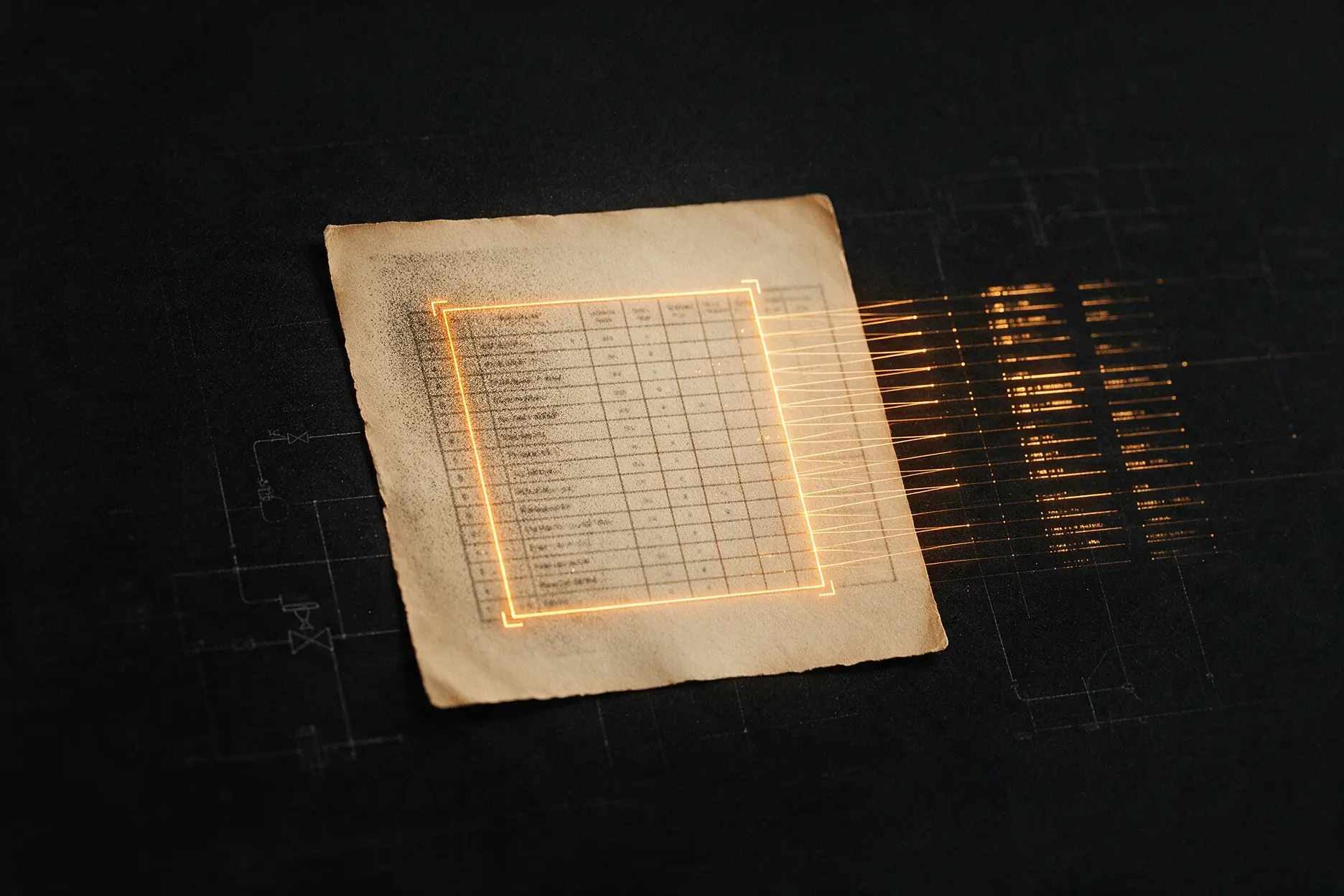
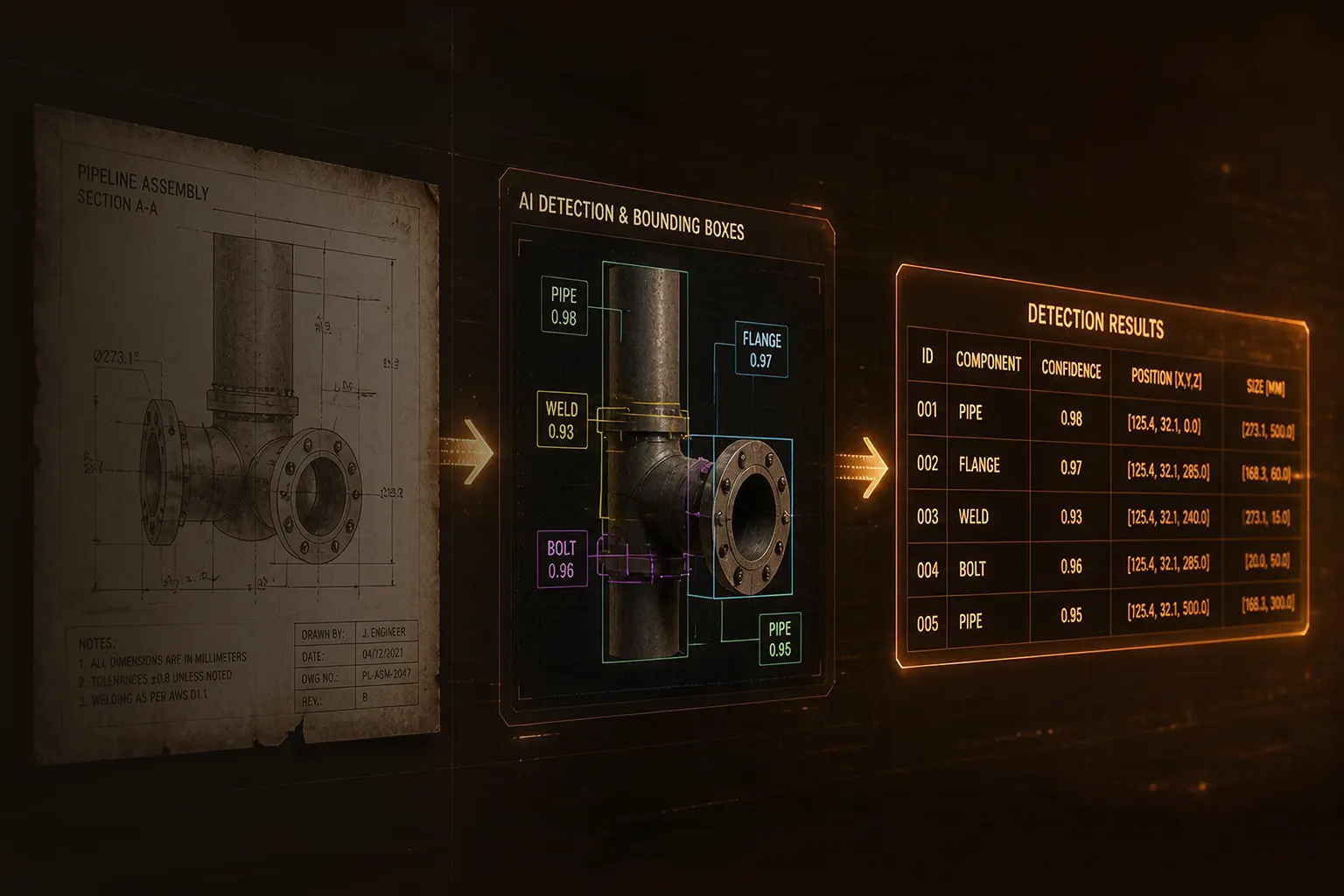
The pipeline extracts relevant data directly from technical documents and AutoCAD engineering drawings, using computer vision and geometry-aware processing to interpret layout, tags, and notation, not just plain text. This is the layer that turns unstructured documents into structured, analyzable data, ready for downstream use.

Key capabilities:
  • Computer vision-based extraction from AutoCAD drawings
  • OCR and layout-aware document parsing
  • Geometry and tag recognition via Shapely and OpenCV
  • Structured data output from unstructured source documents
02

Cross-validation against internal systems

Extracted data is checked against existing records in the client's internal systems to identify discrepancies, missing information, or inconsistencies, replacing manual cross-referencing and validation work that previously consumed significant engineering time.

Key capabilities:
  • Automated comparison against internal system records
  • Discrepancy and error flagging
  • Traceable validation results linked to source documents
  • Reduced dependency on manual cross-checking
03

LLM-assisted interpretation of technical content

Large language models help interpret the extracted content in context, supporting more nuanced understanding of technical language and documentation patterns than rule-based extraction alone could achieve.

Key capabilities:
  • PyTorch and Transformers-based language model integration
  • Secure LLM-based context-aware interpretation of technical terminology
  • Support for varying contractor documentation formats
  • SGLang-based serving for production inference
04

Knowledge Hub integration

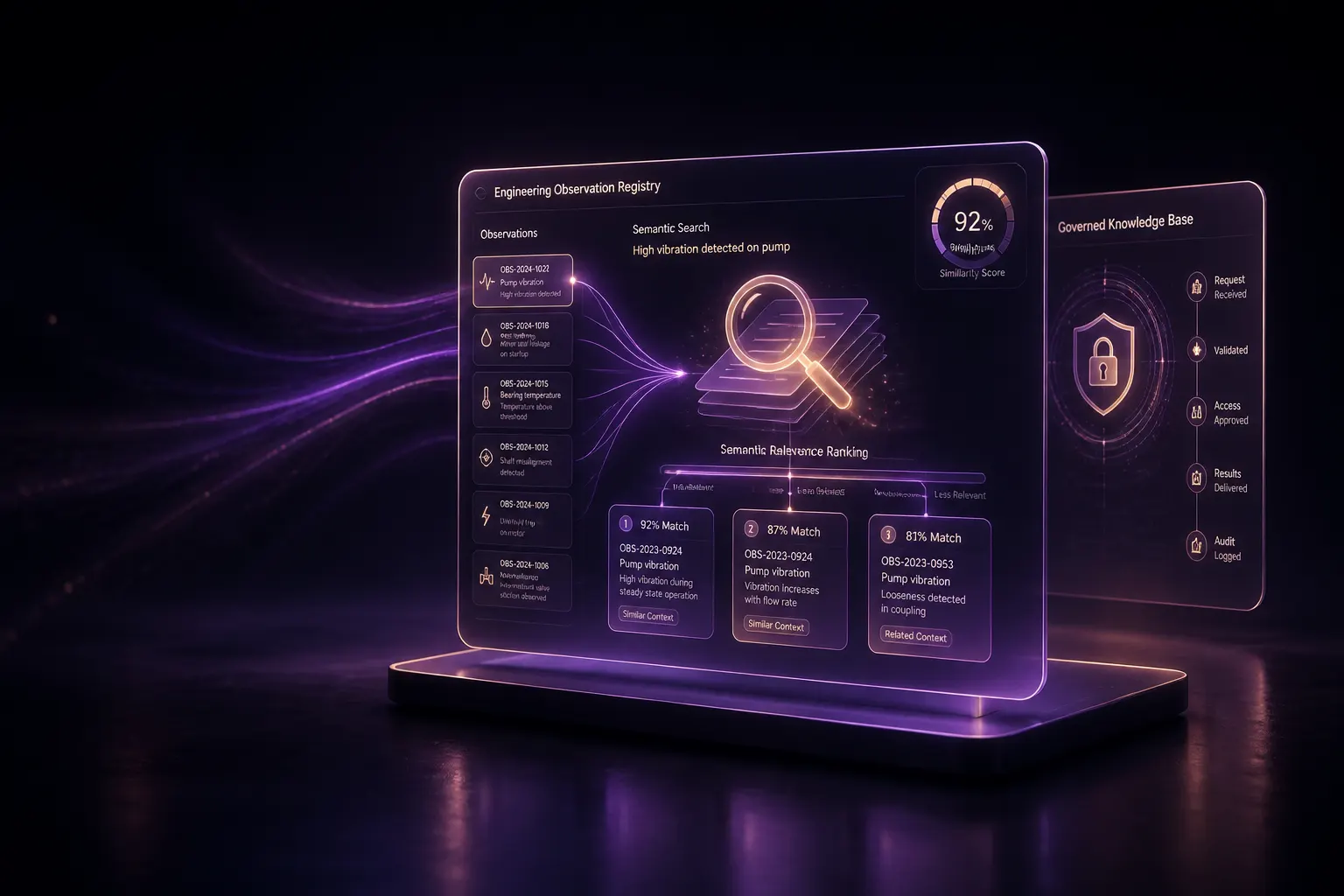
Verified, structured results are delivered directly into the client's existing Knowledge Hub platform, where engineers already review documents, examine extracted objects and attributes, and compare results against the original source.

Key capabilities:
  • Direct integration with existing Knowledge Hub platform
  • Object and attribute viewing against original documents
  • Search and filtering across processed documents
  • No separate, disconnected tool to maintain
05

DD Projects: tags, documents, and bulk operations

Beyond document-level review, the platform supports working with hierarchies of tags, documents, purchase orders, and functional locations, including bulk updates via Excel for teams managing large volumes of related records.

Key capabilities:
  • Tag, document, and purchase order hierarchies
  • Functional location management
  • Bulk update workflows via Excel
  • Structured project-level organization of processed data
06

Reporting Hub

A dedicated reporting module turns processed data into exportable, filterable reports, with direct links back to the original document and the specific object in question, closing the loop from raw drawing to actionable report.

Key capabilities:
  • Filtering by project code
  • Quick preview and Excel export
  • kh-link references back to source documents
  • Direct navigation from report to original object

What Azati did

AreaAzati contribution
Document extractionBuilt computer vision and OCR pipelines for technical documents and AutoCAD drawings
Data validationImplemented automated cross-checking against internal system records
AI/LLM integrationApplied large language models to interpret technical document content
Platform integrationConnected processing results into the existing Knowledge Hub platform
Requirements engineeringTranslated evolving client business needs into technical specifications
SecurityDelivered critical security requirements within a two-week turnaround
Client communicationMaintained ongoing iterative communication with client and contractors
ScaleProcessed approximately 100,000 technical documents in production

Security

The engagement accounts for the client's confidentiality requirements and internal procedures for handling technical documentation, reporting, and contractor interactions. The solution is designed around transparency of document processing and traceability of results, so every extracted data point and flagged discrepancy can be traced back to its source document. When client security expectations were clarified mid-engagement, the team reprioritized and delivered the critical security requirements within two weeks to protect the project and maintain client trust.

Engagement & delivery

T&M engagement, now extended into its second year

The engagement runs on a Time and Material basis and has been active for roughly six months, with the client extending the contract for at least another year as new document types and use cases continue to expand the scope.

Kanban delivery with continuous client and contractor communication

The team works in a Kanban delivery model, prioritizing iterative delivery as requirements and document types evolve:

  • Kanban workflow supporting continuously evolving scope
  • Regular client communication to collect feedback and refine requirements
  • Translation of informal business requests into technical tasks
  • Coordination accounting for external contractors submitting documentation

Results & business impact

Roughly 100,000 documents processed

The pipeline has moved from concept to production scale, processing approximately 100,000 technical documents, real volume that validates the approach well beyond a pilot.

50-70% reduction in manual review effort

For standard document packages, agentic AI-driven extraction and discrepancy detection shifted the bulk of the work from fully manual to semi-automated, where the system handles extraction and initial checking and a specialist verifies the result.

40-60% faster reporting data preparation

Time spent preparing data for reporting dropped substantially compared to a fully manual process, freeing engineering time for higher-value review work instead of data wrangling.

A scalable, managed process instead of a fragile manual one

The client moved from a process dependent on individual experts manually reviewing every document to a more transparent, scalable infrastructure-backed workflow that doesn't break down as volume grows or specific people become unavailable.

Strategic wins

What this engagement demonstrates beyond the numbers:

AI that extends a platform instead of replacing it

The decision to integrate directly into the client's existing Knowledge Hub, rather than building a separate AI tool, is what made adoption real. Engineers didn't have to change how they worked; the AI simply made the system they already trusted smarter and faster.

Engineering-document AI is a different problem than generic document AI

AutoCAD drawings, P&ID diagrams, and technical schematics carry meaning in geometry and layout, not just text. Treating engineering documents as a specialized domain rather than applying generic OCR is what makes extraction from this kind of documentation actually reliable.

Trust earned through fast turnaround under pressure

When client expectations on security shifted mid-engagement, the team reprioritized and delivered the critical pieces in two weeks. That kind of responsiveness is part of why this dedicated team engagement got extended rather than ended.

Built for contractor-heavy industries where documentation never stops

In industries where external contractors continuously submit documentation in varying formats, a static, rule-based system breaks down fast. A pipeline designed to absorb new document types and evolving requirements is what keeps working a year in.

The described expertise is relevant for

  • AI-powered document processing for oil and gas and industrial operators
  • Computer vision and OCR for engineering drawings and AutoCAD documents
  • Large language model integration for technical document understanding
  • Automated defect and discrepancy detection at scale
  • Integration of AI pipelines into existing knowledge management platforms
  • Contractor-submitted documentation processing and validation

Last updated

Got a job for Azati? Let’s talk business!

This site is protected by reCAPTCHA and the Google Privacy Policy and Terms of Service apply.

What's next?

  • 1. Tell Us Your Story
    Describe your project. We come back within 24 hours with team availability and a rough plan. NDA on request before the first call.
  • 2. Get Your Roadmap
    Receive a detailed proposal with scope, team composition, timeline, and costs tailored to your goals.
  • 3. Start Building
    Azati aligns on details, finalize terms, and launch your project with full transparency.