AI where engineering work already happens
Azati embedded AI into the existing engineering registry instead of introducing another application, reducing context switching and adoption friction.
How Azati embedded AI-powered knowledge retrieval into an existing capital project platform, helping engineering experts find relevant historical observations faster without disrupting established review workflows.
Oil & gas capital project teams can retrieve similar engineering observations in seconds with Azati's embedded AI search. The result: faster reviews, more consistent production decisions, and no new tool for reviewers to learn.
Faster search for similar engineering observations
Similarity-matching quality in feature testing
Historical observations accessible across 6–8 active projects


Engineering teams accumulate valuable knowledge across capital projects, but finding a comparable past observation still often requires manually searching project records, reviews, and documentation.
The client’s enterprise platform supported engineering reviews, requirements, PDRI assessments, assurance processes, documentation, and project observations across large oil & gas projects. As the portfolio grew, experts needed a faster way to reuse relevant engineering knowledge without leaving their existing workflow.
Azati embedded AI-powered semantic search into the platform, allowing experts to find and rank similar observations within the relevant engineering discipline. The solution combined enterprise AI orchestration, domain-restricted retrieval, and contextual recommendations while preserving the existing UX, governance, and review process.
Experts manually searched observations, project phases, and technical reviews to find comparable cases, adding significant time to engineering analysis.
Valuable engineering experience existed across completed projects but was difficult to reuse consistently across new work.
The client needed AI inside the established capital project platform, not another application for experts to learn and maintain.
AI-assisted recommendations needed to stay within the relevant engineering discipline and operate within existing infrastructure, governance, and security requirements.
Azati embedded AI into the existing engineering registry instead of introducing another application, reducing context switching and adoption friction.
The enterprise platform integrates semantic retrieval, domain restrictions, LLM orchestration, request lifecycle management, and controlled response handling.
Azati quickly learned a specialized oil & gas engineering environment and translated evolving requirements into a working AI capability in just four weeks.
The approach made historical engineering observations searchable and reusable while keeping the client's existing workflow, governance, and infrastructure untouched.
Azati helps industrial organizations implement enterprise AI, semantic search, and knowledge management solutions that improve engineering productivity while preserving governance, security, and existing business processes.
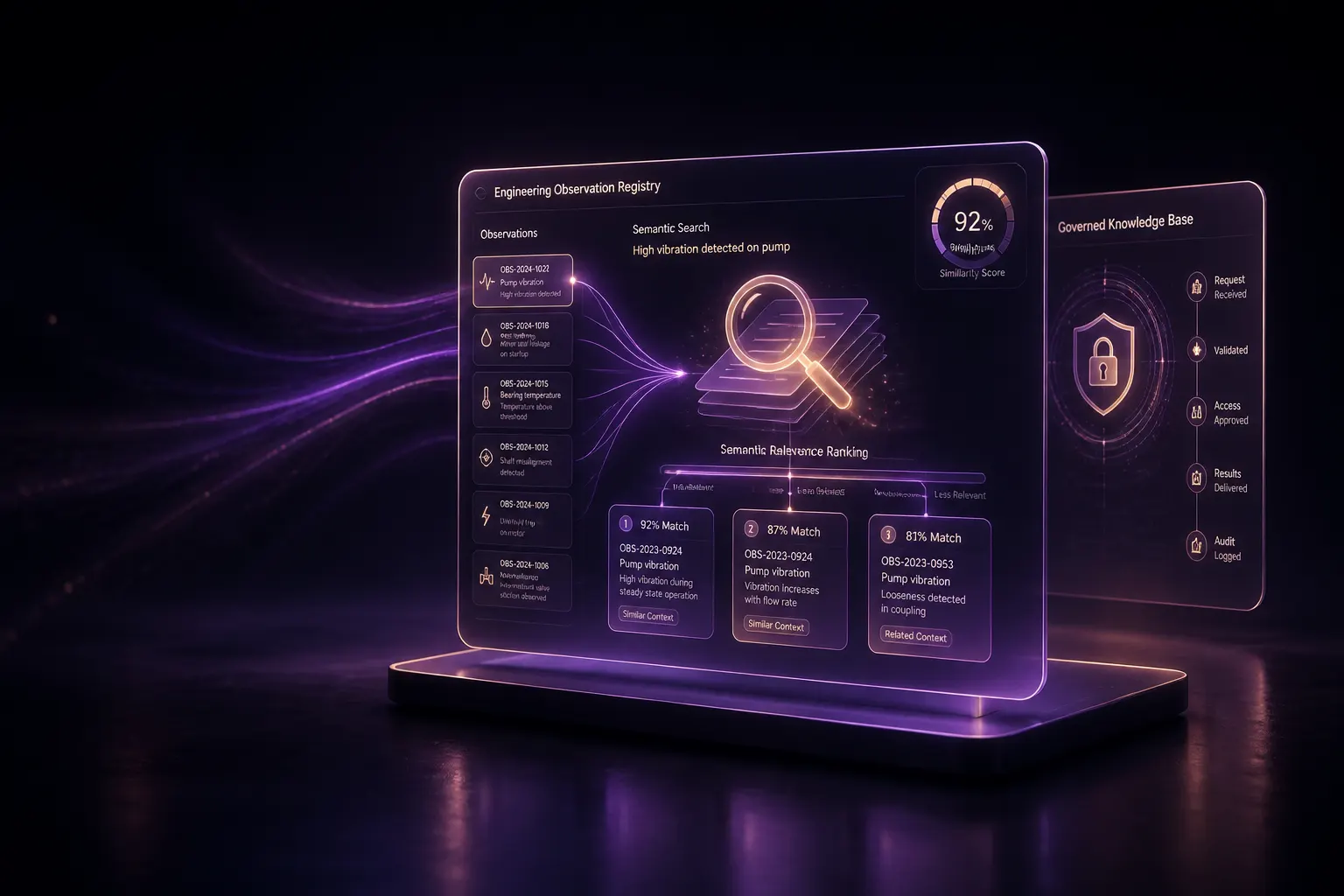
Discuss enterprise AI strategyAzati added AI-powered knowledge retrieval directly to the client's existing engineering platform rather than introducing a standalone assistant. Experts can search for similar observations from within the engineering registry and review relevant project history without leaving their normal workflow.
The solution analyzes engineering recommendations, retrieves similar historical observations within the same engineering discipline, and ranks them by semantic relevance. Results link back to the source projects, phases, activities, and remediation history.
Experts launch the search directly from an engineering observation and receive ranked recommendations inside the existing interface. This removes unnecessary context switching while preserving established review and approval workflows.
Azati implemented an orchestration layer that manages AI requests, LLM processing, response persistence, lifecycle handling, timeouts, and controlled execution. Domain restrictions and workload controls help keep AI operations predictable and governable within the enterprise environment.
Instead of returning generic search results, the platform presents ranked observations with the context experts need to assess their relevance, including similarity score, project stage, engineering phase, event and priority, remediation status, and responsible engineer.
| Area | Contribution |
|---|---|
| Enterprise AI | Embedded AI directly into an existing capital project management platform |
| AI-assisted engineering review | Implemented AI-powered retrieval of similar engineering observations |
| Knowledge management | Enabled organizational reuse of engineering expertise across projects |
| Workflow automation | Integrated AI recommendations into existing engineering review workflows |
| Enterprise architecture | Connected LLM services with enterprise applications through secure backend orchestration |
| Decision support | Improved access to historical engineering knowledge during technical review |
| Engineering productivity | Reduced manual searching across historical project records |
| Platform engineering | Delivered enterprise AI capabilities without disrupting existing business processes |
Engineering teams accumulated valuable expertise across multiple capital projects, but locating relevant historical observations required manual searches through project records, engineering reviews, and technical documentation. As the knowledge base expanded, this became increasingly time-consuming and inconsistent.
The client wanted AI to strengthen existing engineering processes rather than replace them. New capabilities needed to integrate seamlessly into the enterprise platform without changing how experts reviewed observations, managed documentation, or governed project decisions.
AI-assisted engineering review needed to deliver relevant recommendations while operating reliably inside the client's enterprise environment. The solution also had to control LLM workload, restrict searches to the appropriate engineering domain, and fit within existing infrastructure and security requirements.
Whether you're implementing AI-assisted engineering review, introducing enterprise AI, or building intelligent engineering knowledge management systems, Azati helps organizations embed AI into existing business applications while preserving governance, security, and operational continuity.
Discuss enterprise AI implementation| Area | Outcome |
|---|---|
| Enterprise AI implementation | Production-ready within 4 weeks |
| AI-assisted engineering review | Available from every engineering observation |
| Organizational engineering intelligence | 50,000+ historical observations searchable |
| Workflow integration | No reviewer retraining required |
| Engineering productivity | Faster lookup vs. manual project navigation |
| Organizational knowledge accessibility | Improved across engineering disciplines |
| AI governance | Domain-restricted retrieval with request audit |
| Enterprise AI foundation | Established for future AI-assisted workflows |
Faster engineering review
~500 observations in 6–8 active projects
AI-assisted search and copy reduced the time experts spent finding comparable observations 85–90%
Similarity-matching quality during testing. Ranked results appear inside the existing review workflow, reducing repetitive research and accelerating engineering review.
Historical engineering knowledge was distributed across projects and difficult to reuse. The solution made 50,000+ historical observations searchable through one AI-assisted experience, turning previously siloed project knowledge into reusable organizational engineering intelligence.
Experts spent valuable review time locating comparable observations instead of evaluating engineering decisions. Faster access to relevant historical expertise reduced repetitive research and freed reviewers to focus on technical assessment. 85% less manual search effort per reviewer per week.
Introducing AI as a separate tool would have added training, workflow changes, and adoption friction. Azati embedded AI into the existing engineering interface and delivered the capability in four weeks, with no end-user retraining required.
AI requests are centrally managed through a dedicated orchestration layer with request tracking, response persistence, timeout handling, and configurable retention policies, providing controlled enterprise AI operations instead of direct, unmanaged LLM calls.
By embedding AI into the existing project management platform, the team got a new capability without changing how they worked. This reduced workflow disruption and simplified adoption.
Experts continued working within familiar review processes while gaining AI-assisted recommendations at hand. Existing governance, documentation, and project approval procedures remained unchanged.
The solution transformed years of engineering observations into searchable organizational intelligence. This will bring value more easily across future capital projects, engineering reviews, and technical assessments.
The project established a practical pattern for introducing AI into business-critical applications through controlled orchestration, domain-restricted retrieval, and existing enterprise governance. In a nutshell, the same approach can support future AI-assisted engineering initiatives and facilitate decision-making.
The project demonstrated how enterprise AI can be introduced incrementally into business-critical applications, enabling organizations to modernize engineering processes without replacing existing systems or breaking what already functions.
For high-frequency, in-flow engineering work, embedding AI into the existing enterprise platform can reduce adoption friction and workflow disruption. A standalone copilot is better suited to exploratory, cross-system questions.
The right choice depends on where AI needs to operate: inside an established workflow or across multiple information sources.
| Dimension | Embedded AI in existing platform | Standalone AI copilot |
|---|---|---|
| Reviewer workflow | AI surfaces directly inside the engineering registry, eliminating context switching | Reviewers leave the registry, open the copilot, enter a query, and return to the workflow |
| Adoption speed | Can go live in weeks with no retraining when the existing UI remains unchanged | Requires user onboarding, training, and change management |
| IT and security | Works within the existing platform's SSO, RBAC, audit, and approval workflows | Introduces a separate security and governance perimeter |
| Best fit | Repeated, in-flow lookups such as similar observations, prior decisions, and remediation history | Exploratory, open-ended, or cross-system questions |
| Risk profile | Lower delivery and adoption risk because AI is added to a trusted application | Higher risk from new procurement, data-handling reviews, governance, and failure surfaces |
| Time to value | Value can be demonstrated with the first production release and compounds as the knowledge base grows | Usage patterns may take longer to stabilize after rollout |
Choose embedded AI when the workflow is high-frequency, in-flow, and governed, such as engineering review, document review, claims triage, or capital project assurance.
Choose a standalone copilot when the workflow is exploratory, cross-system, or unbounded, such as natural-language research across multiple enterprise repositories.
Many enterprise AI programs can use both. Azati typically starts with embedded AI when it can deliver value faster inside an established workflow.
Embedded AI means AI capabilities are delivered inside the existing enterprise application reviewers already use. For example, surface similar historical engineering observations directly within the engineering registry, rather than as a separate AI tool or chatbot.
It depends on the workflow. Embedded AI is often a better fit for frequent, in-flow tasks because users can access AI without switching tools or learning a separate interface. Standalone copilots are better suited to exploratory or cross-system research. Both have their place. What's usually wrong is forcing one pattern to do both jobs.
For this implementation, Azati used a Java/Spring Boot backend, GraphQL APIs through Hasura, PostgreSQL, React, and a domain-restricted LLM orchestration layer that targets semantic search within a specific engineering discipline.
LLM behavior is controlled through backend orchestration: requests are routed through governed services, searches are restricted to the relevant engineering domain, timeouts and retries are managed centrally, and responses are persisted for audit. Users never interact with the model directly.
Yes. The same workflow-orchestration pattern used for a single discipline can be extended to additional disciplines and historical project portfolios, because domain restriction, request lifecycle management, and enterprise integration are handled by the platform layer rather than the AI layer.
Azati worked as an embedded engineering partner using a Kanban delivery model, delivering the AI-assisted engineering search capability within one month.
The engagement required rapid immersion into a specialized oil & gas engineering domain, adaptation to evolving requirements, and integration with the client's enterprise infrastructure. The solution was subsequently showcased in the client's internal AI innovation demonstration program, and the collaboration continued after delivery.
Enterprise AI was introduced without creating a separate unmanaged AI layer around the engineering platform. Azati routed AI requests through controlled backend orchestration, with domain-restricted retrieval, request tracking, response lifecycle management, timeout handling, and governed integration with the existing enterprise environment.
This gave the client a controlled way to introduce AI into engineering workflows while preserving existing governance and operational requirements.
Security & governance:
Get a snapshot of our recent projects and see how Azati delivers measurable results for our clients.
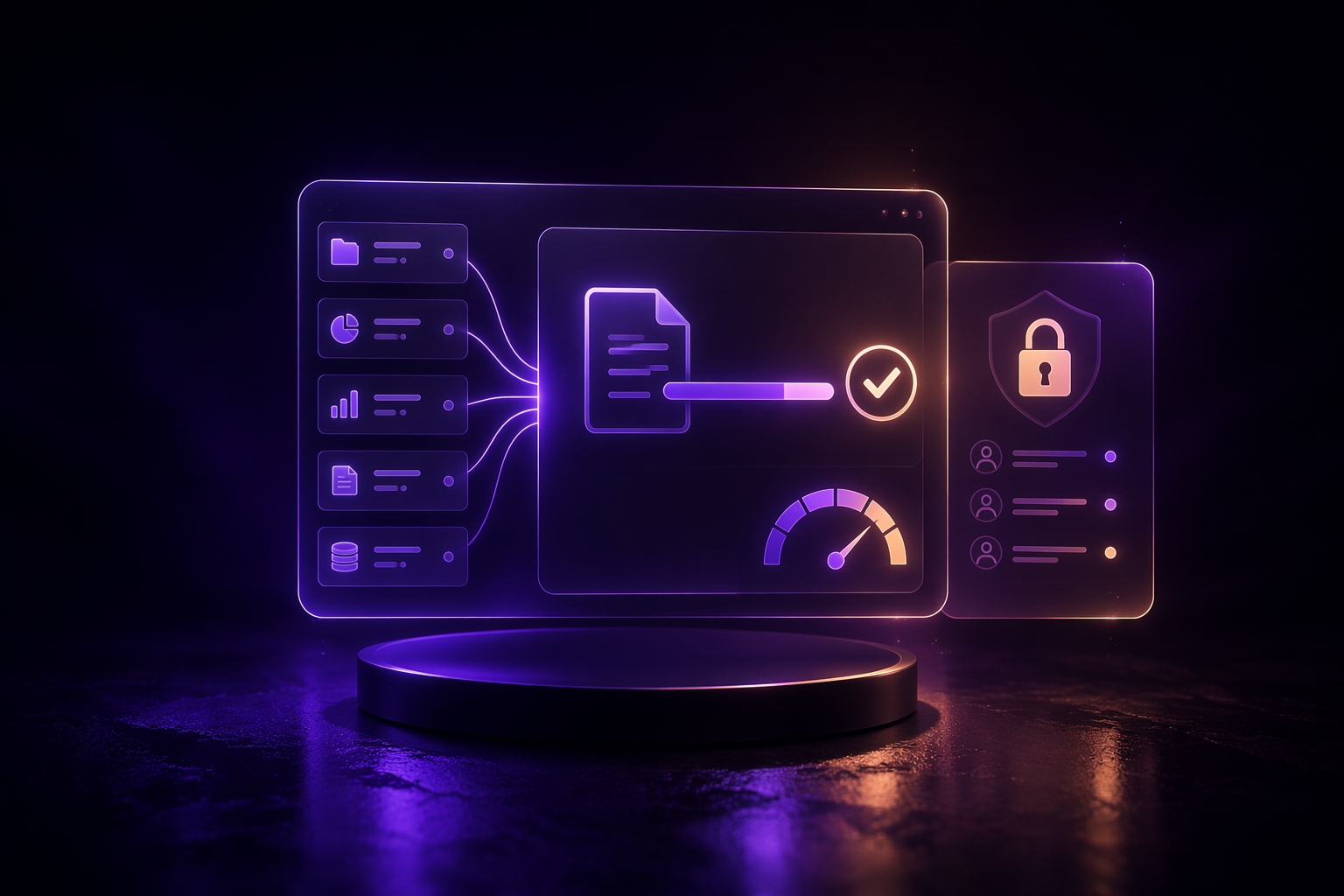
A large industrial enterprise needed to modernize its established engineering project management platform to improve project visibility, document governance, and workflow efficiency as project complexity grew. Rather than replacing the system, the client required incremental enhancements to strengthen information management and collaboration while maintaining operational continuity.
Azati modernized the enterprise project governance platform by improving information management, workflows, and access control while integrating AI-assisted engineering knowledge discovery. This created a more transparent, collaborative, and scalable foundation for future digital transformation.
The loan amendment process at this regional bank was a mess. Case officers had too much on their plates: juggling three legacy systems, with tons of manual effort every time the work changed hands. Most of their routine consisted of pulling data and double-checking details between systems, while they could actually review cases and make decisions. Add to this the restriction to automate anything without messing with the main platforms.
Azati developed AI process automation middleware that connects all three existing platforms, using APIs and RPA bridges to manage the data flow. The AI handles and packages each case from start to finish, enabling human officers to still make the final call on any regulated decisions. The team kicked off automation with one standard case type and, as the compliance team got more comfortable, rolled out support for new case types every quarter.
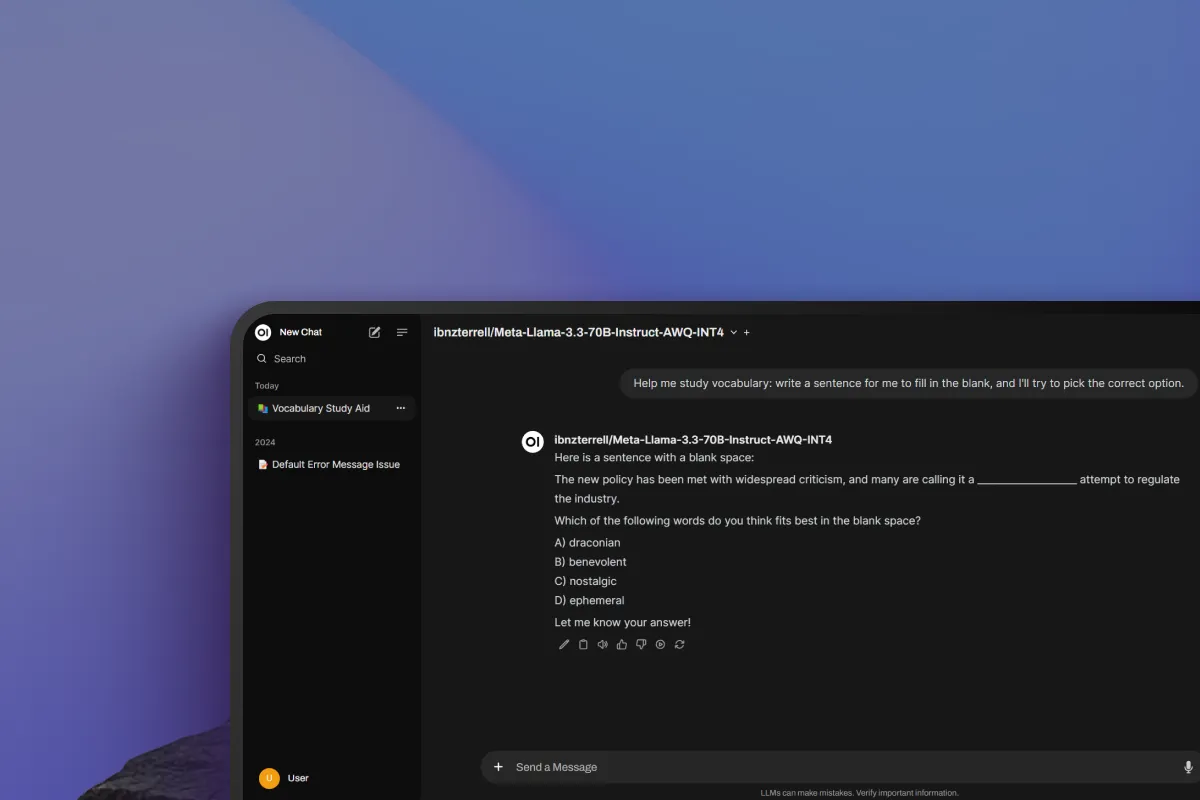
Organizations increasingly want to use generative AI to improve employee productivity, but public LLM services create security, compliance, and confidentiality concerns. The client needed an enterprise AI assistant that could securely provide employees with fast access to internal knowledge while keeping sensitive business information entirely within the corporate environment.
Azati developed a secure, locally hosted enterprise LLM platform that combines private AI infrastructure, Retrieval-Augmented Generation (RAG), and enterprise knowledge integration. The solution delivers ChatGPT-like capabilities while maintaining full control over corporate data, supporting secure information retrieval and AI-assisted knowledge sharing across the organization.

A shared mission-critical service center processed 40,000+ documents monthly, yet relied on manual review and error-prone legacy OCR. The workflows were drowned in manual effort and SLA delays. The challenge was to keep the existing SAP and document management infrastructure. No replacing, no rebuilds.
Azati crafted AI workflow automation middleware that integrates with the legacy SAP and DMS infrastructure through pre-built connectors. The project’s scope was to build and operate the solution from scratch, so Azati owns extraction accuracy, uptime SLA, and non-stop improvement as the core delivery model, not optional maintenance.
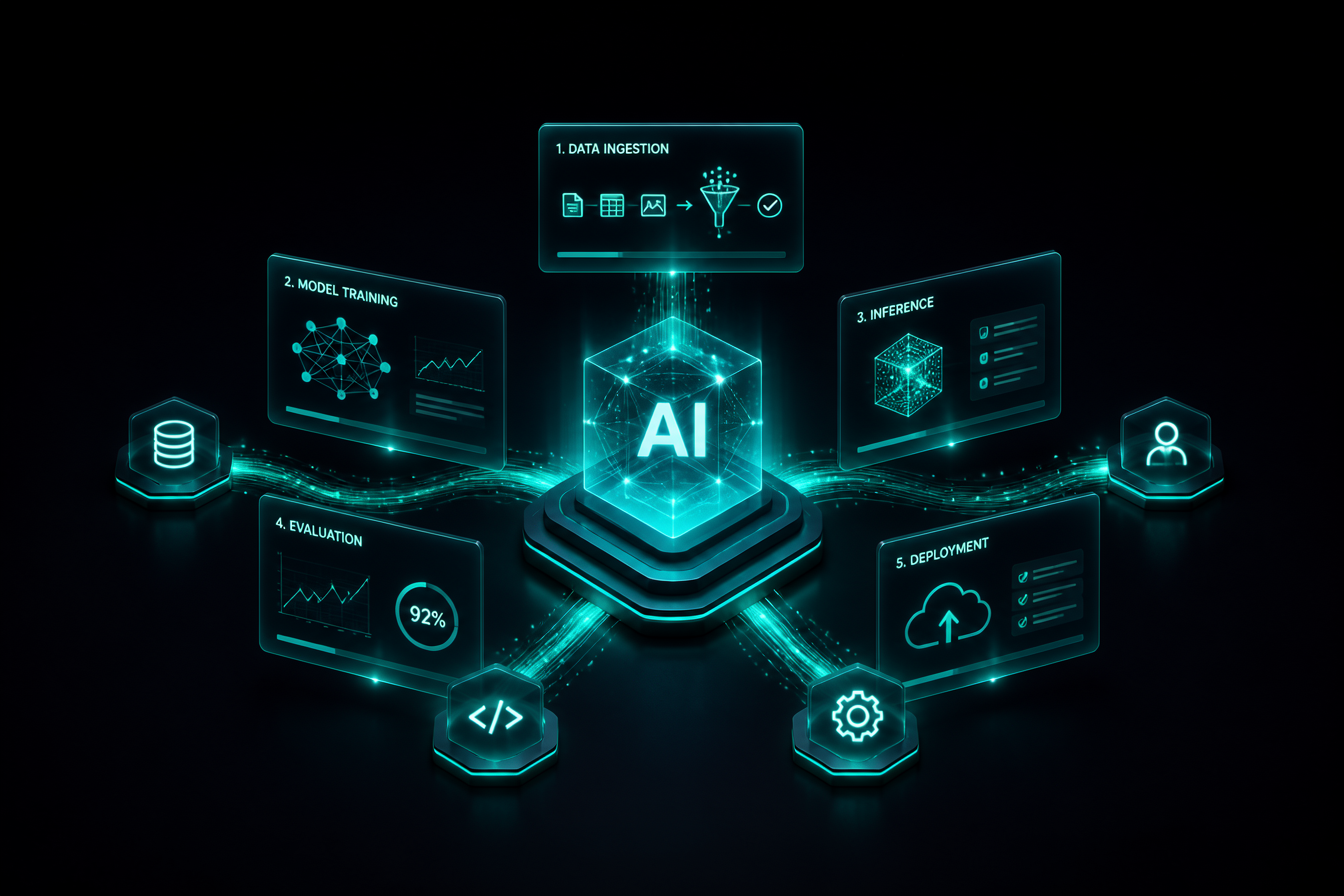
A large insurance enterprise wanted to reduce the engineering effort spent on repetitive software development tasks while maintaining the security, governance, and approval processes required in a regulated environment. The solution needed to integrate directly with existing Azure DevOps workflows, operate within the corporate infrastructure, and comply with strict information security policies.
Azati designed an enterprise AI agent ecosystem that automates routine software engineering activities across the development lifecycle. The solution combines secure LLM deployment, Azure DevOps integration, intelligent request routing, and AI-powered development assistants to improve engineering productivity without disrupting existing SDLC processes.




Last updated
