BI Performance Optimization for a Petrochemical Manufacturer
How can a petrochemical or process manufacturer speed up BI reporting without rebuilding its data warehouse?
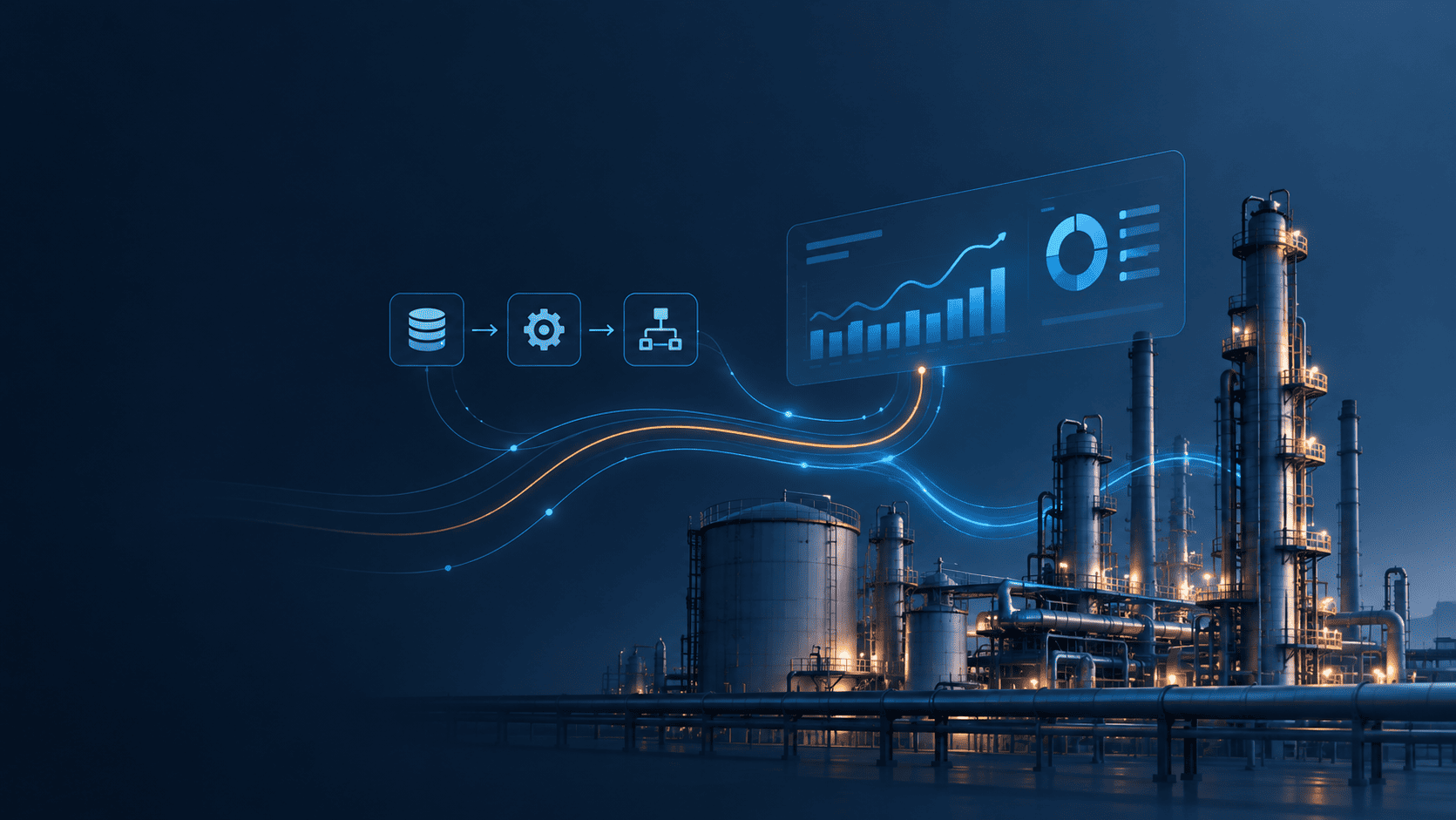
A petrochemical manufacturer's BI reporting had become progressively slower as transaction volumes grew. The underlying data platform was still fit for purpose, but every refresh recalculated the full reporting cube, including data that had not changed. Azati isolated that bottleneck and introduced selective recomputation inside the existing pipeline, improving dashboard response time without a warehouse rebuild or architectural change.
The optimization stayed inside the existing data pipeline
Technology stack
SAP
PostgreSQL
Apache Airflow
Case at a glance
One Azati AI-augmented Senior Data Engineer, three months, one measurable fix. A key plant downtime and operational analytics dashboard re-executed massive SAP-to-PostgreSQL calculations on every refresh. By implementing selective recomputation inside the existing Airflow pipeline, Azati eliminated compute bottlenecks, stabilized CPU load during peak shift changes, and cut dashboard query times down to 1.5–2.5 seconds without modifying the underlying data warehouse architecture.
The engagement was deliberately narrow: the existing architecture was sound, so the goal was to remove the unnecessary computation rather than replace the platform.
Why was the BI dashboard getting slower every quarter?
Challenge 01
The symptom
Plant management relied on an Equipment Downtime and Utilization Dashboard to track operational availability, maintenance events, and production losses. As transactional volume grew, dashboard refreshes steadily degraded, creating friction for shift supervisors and operations leads running real-time queries throughout the day.
#1
Challenge 02
The bottleneck
Source operational data flowed from SAP into a PostgreSQL (v14–16) analytical layer orchestrated via Apache Airflow. Every refresh cycle forced a full re-generation of the entire data mart, recalculating static historical maintenance logs alongside live operational parameters.
#2
Challenge 03
The real-time operational impact
The affected reporting suite tracks critical plant performance metrics, including technical readiness, equipment utilization, and unplanned downtime financial losses. Because plant managers and maintenance engineers use these dashboards to make real-time operational decisions, delayed refreshes directly impacted response times during unplanned equipment stoppages.
#3
Challenge 04
Why the bottleneck compounded quarterly
Operational data flowed continuously from SAP into PostgreSQL (v14–16) via Apache Airflow. On every refresh, the ETL engine re-pulled and re-calculated the entire historical dataset alongside live shift parameters. As transactional logs grew quarter over quarter, this redundant recomputation consumed increasing compute cycles, turning a minor database latency into a recurring operational headache.
#4
This wasn't a platform in crisis. It was a working system with one specific inefficiency. It didn't justify a re-architecture. It justified a focused performance optimization.
Is one slow report costing your team more than it should?
Not every data problem needs a platform overhaul. If a specific dashboard, report, or pipeline has been getting slower as your data grows, and nobody's had the time to find out exactly why, that's usually a sign of one fixable inefficiency, not a reason to replace the whole platform.
Azati starts with the actual bottleneck: where the time is going, whether the problem can be fixed inside your existing stack, and what the smallest viable intervention looks like. The assessment helps determine whether targeted optimization is enough or whether a larger modernization effort is justified.
How do you fix industrial pipeline performance without touching the data model?
Embedded directly into the existing data engineering workflow
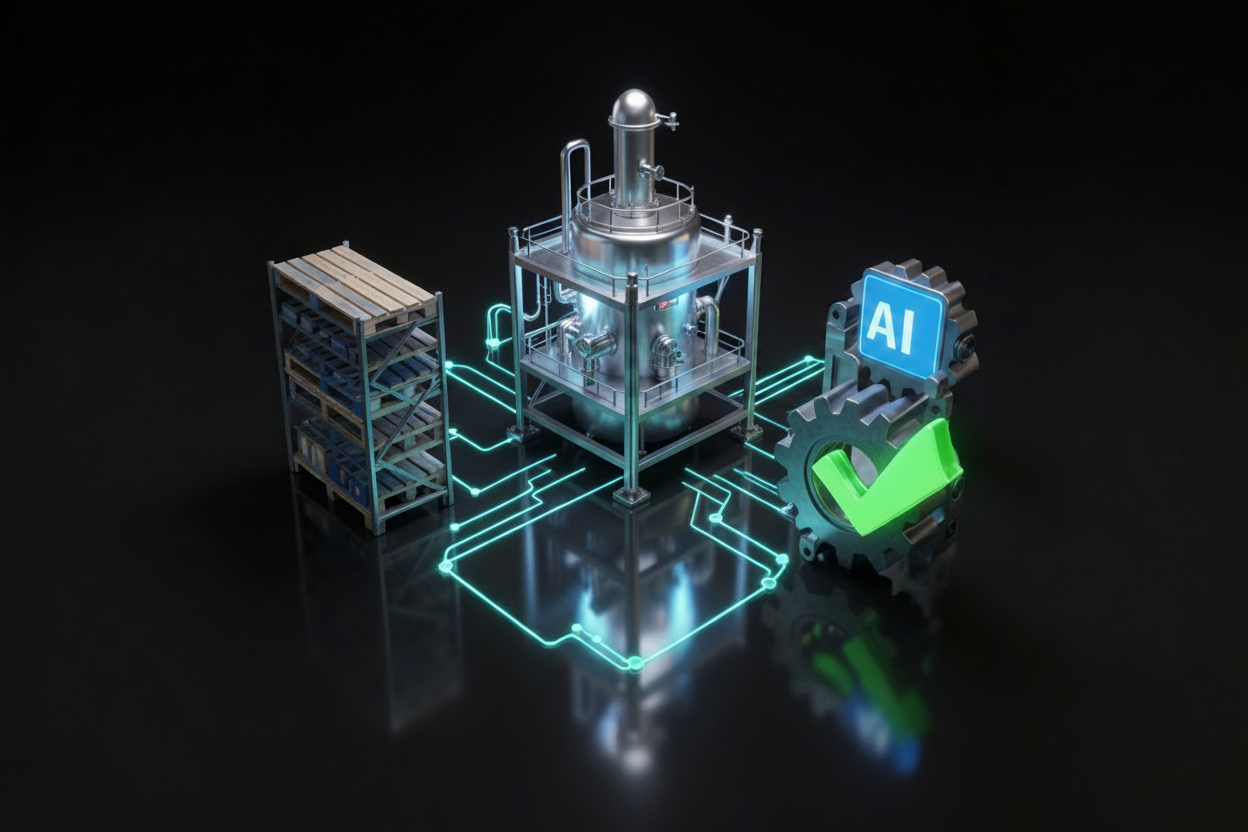
Azati joined the client’s internal data team as an embedded engineer. Rather than introducing third-party tools or parallel infrastructure, the fix was engineered entirely within their existing stack: PostgreSQL, Python, and Apache Airflow.
Isolated the calculation bottleneck in plant maintenance logs
Combining deep petrochemical software development expertise with pipeline diagnostics, Azati audited the caching logic across the SAP PM (Plant Maintenance) and ERP data flows. The analysis revealed that stable historical parameters were unnecessarily recalculated on every cycle.
Implemented selective recomputation for operational data
Azati refactored the transformation logic to separate static historical maintenance logs from volatile shift parameters. Using structured temporary tables inside PostgreSQL, static data was preserved between refreshes, ensuring only modified records underwent recalculation.
Delivered a maintainable, low-risk engineering fix
The fix required no schema modifications, external libraries, or complex custom frameworks. The result is a clean, production-grade optimization inside Apache Airflow that the client's internal team can maintain effortlessly.
What changed for the business users running this report daily?
Eliminated shift-change bottlenecks
Dashboard query response dropped from 2–3+ seconds to 1.5–2.5 seconds during peak concurrent access, specifically when plant supervisors and maintenance leads run downtime reviews simultaneously at shift handovers.
Removed database table locking
Shifting from full cube regeneration to selective incremental processing eliminated transient locks on PostgreSQL tables, allowing parallel queries from other operational systems to execute without lag.
Stabilized compute overhead as data scaled
Instead of allowing query latency and server compute costs to compound exponentially with every new SAP batch, the pipeline’s resource footprint remains flat regardless of historical transaction growth.
Zero downtime implementation
The optimization was deployed directly inside the live Apache Airflow orchestration pipeline without altering the target schema or disrupting daily plant reporting workflows.
Screenshots
When does BI performance optimization beat a platform rebuild?
When the underlying architecture is still fit for purpose, rebuilding the platform can introduce more cost and delivery risk than it removes. A targeted performance optimization is often the better first step when the bottleneck is isolated: unnecessary recomputation, inefficient queries, refresh logic, caching, or a specific pipeline stage.
The first question should therefore be where the time is actually going, not whether the platform should be replaced.
Who this engagement is relevant to
IT Leads and Data Architects in petrochemical and continuous processing: organizations managing high-frequency operational dashboards (downtime analysis, OEE, equipment availability, and maintenance tracking) fed by SAP or enterprise ERPs.
Operations and reliability analytics teams depending on frequently refreshed dashboards, including downtime tracking, equipment utilization, and production-loss reporting, where a refresh happens many times a day, not once a month, and where even small delays are repeated throughout the working day.
Teams running SAP as the source system, feeding a PostgreSQL-based data mart or warehouse layer, with Apache Airflow (or a comparable orchestrator) already handling ETL. This is the exact stack the fix lived inside, and a common combination in large industrial environments.
Teams where the mart has already been through one round of optimization, and the suspicion is the next bottleneck is narrow and fixable, not a system nobody's ever touched.
Anyone who wants to confirm a fix is small before committing to something bigger. This engagement shipped without new libraries, new infrastructure, or architectural change, and that was by design, not a limitation.
What Azati can optimize without rebuilding the platform
This engagement is representative of a broader performance-optimization approach for enterprise data and BI environments. Azati can investigate bottlenecks across data-mart refreshes, ETL/ELT pipelines, query execution, caching, orchestration, and data-processing workloads, starting with the existing architecture and changing only what the evidence shows needs to change.
BI and dashboard query optimization
Data warehouse and data-mart performance
ETL/ELT pipeline optimization
PostgreSQL and SQL performance tuning
Apache Airflow pipeline optimization
SAP-to-analytics data flows
Performance diagnostics and bottleneck analysis
Your BI platform may not need to be rebuilt
Azati helps industrial companies improve BI and data-platform performance without defaulting to a rebuild by finding the bottleneck, fixing the unnecessary work, and keeping the optimization inside the architecture that already works.
Full data-mart rebuilds are justified when the underlying architecture can't support current or future requirements. Here, the architecture was sound. The inefficiency was isolated to one recalculation pattern inside the transformation logic. Identifying that distinction, rather than defaulting to a bigger engagement than the problem required, is itself part of the engineering judgment this kind of fix depends on.
BI performance optimization improves the speed and efficiency of an existing BI environment by identifying unnecessary computation, inefficient queries, refresh bottlenecks, caching issues, or other pipeline constraints. It can be preferable to a rebuild when the underlying data architecture remains fit for purpose.
Yes. When the bottleneck is isolated to query logic, refresh processing, caching, or another specific pipeline stage, performance can often be improved within the existing architecture. In this case, Azati replaced full data-mart recomputation with selective recomputation without changing the underlying data structure.
Targeted optimization is appropriate when the existing architecture can support current requirements and the performance problem has an identifiable bottleneck. A broader modernization is more appropriate when the platform itself creates structural limitations that cannot be resolved through focused optimization.
In petrochemical manufacturing, software solutions must process high-volume operational data from plant equipment (MES, SCADA, and SAP PM). Optimizing existing data pipelines ensures real-time reporting availability for plant operators without introducing the risk or multi-million-dollar overhead of replacing enterprise data platforms.
Related petrochemical software development expertise
Explore our successful projects and see how Azati delivers measurable results for our clients.
7years of continuous dedicated team development and operation
10–30%typical inventory reduction through AI nomenclature normalization
$10M+typical savings per asset for this kind of AI-driven inventory optimization
Python
FastAPI
Flask
Kubernetes
PostgreSQL
⚡ Pain Points We Tackled
A large petrochemical operator faced high carrying, maintenance, and disposal costs from unclaimed and duplicate inventory across multiple ERP systems using different coding conventions. The same material was often tracked under different codes, making it impossible to see true inventory levels without manual reconciliation.
Our Approach
Azati ran a seven-year dedicated team engagement building and operating an on-premise inventory management platform with AI-assisted nomenclature normalization across disconnected ERP systems, covering backend development, DevOps, and test automation alongside the core product functionality.
Applied Methods and Practices
AI-assisted nomenclature normalization: ML components matching and normalizing materials coded differently across legacy ERP systems.
Inventory search and scenarios: Search across warehouse and MRO stock, custom scenario creation, and material scope definition.
Dashboard reporting: Stock level and valuation visibility without raw data access.
On-premise DevOps: Kubernetes, Helm, and Keycloak deployment on the client's infrastructure.
Test automation: Playwright, pytest, and httpx-based framework covering UI, API, and database validation.
Solution Features
Lower inventory carrying costs: AI-matched nomenclature gave the business a unified view of true inventory across previously fragmented ERP records.
Seven years without a vendor switch: This was the client's first and only outsourcing relationship for this system, reflecting sustained trust in the engagement.
Industrial inventory expertise inside Azati: Deep expertise in MRO inventory optimization, ERP normalization, and supply chain integration for the petrochemical sector.
Enterprise Data Platform Modernization, Analytical Pipeline Development
Dozensof analytical data marts and pipelines built and enhanced
Hundredsof flows within the enterprise data ecosystem
24+months of continuous embedded delivery
Python
SQL
dbt
Apache Airflow
ClickHouse
⚡ Pain Points We Tackled
A large chemical enterprise required scalable mechanisms to collect, transform, and deliver trusted analytical data across dozens of interconnected business systems. Growing analytical requirements, a complex data ecosystem with hundreds of flows and thousands of tables, and the need for reliable reporting data created ongoing engineering challenges.
Our Approach
Azati embedded specialists into the client's delivery organization, developing analytical pipelines, data marts, and orchestration workflows using SQL, Python, dbt, Apache Airflow, Apache NiFi, Greenplum, PostgreSQL, and ClickHouse. The engagement focused on continuous platform evolution over 24+ months rather than a one-time implementation.
Applied Methods and Practices
Data integration and ingestion workflows: Mechanisms for bringing data into the analytical environment from multiple enterprise systems.
Analytical data marts: Business-oriented datasets curated for reporting and self-service analytics.
Workflow orchestration: Apache Airflow and Apache NiFi-based pipelines for continuous data processing and delivery.
Performance optimization: SQL and transformation refinement as the analytical asset base expanded.