3D Digital Twin Platform for Building Scanning and Analysis

How do you turn raw scan data from a physical device into a browser-based 3D building model your team can query, annotate, and collaborate around?

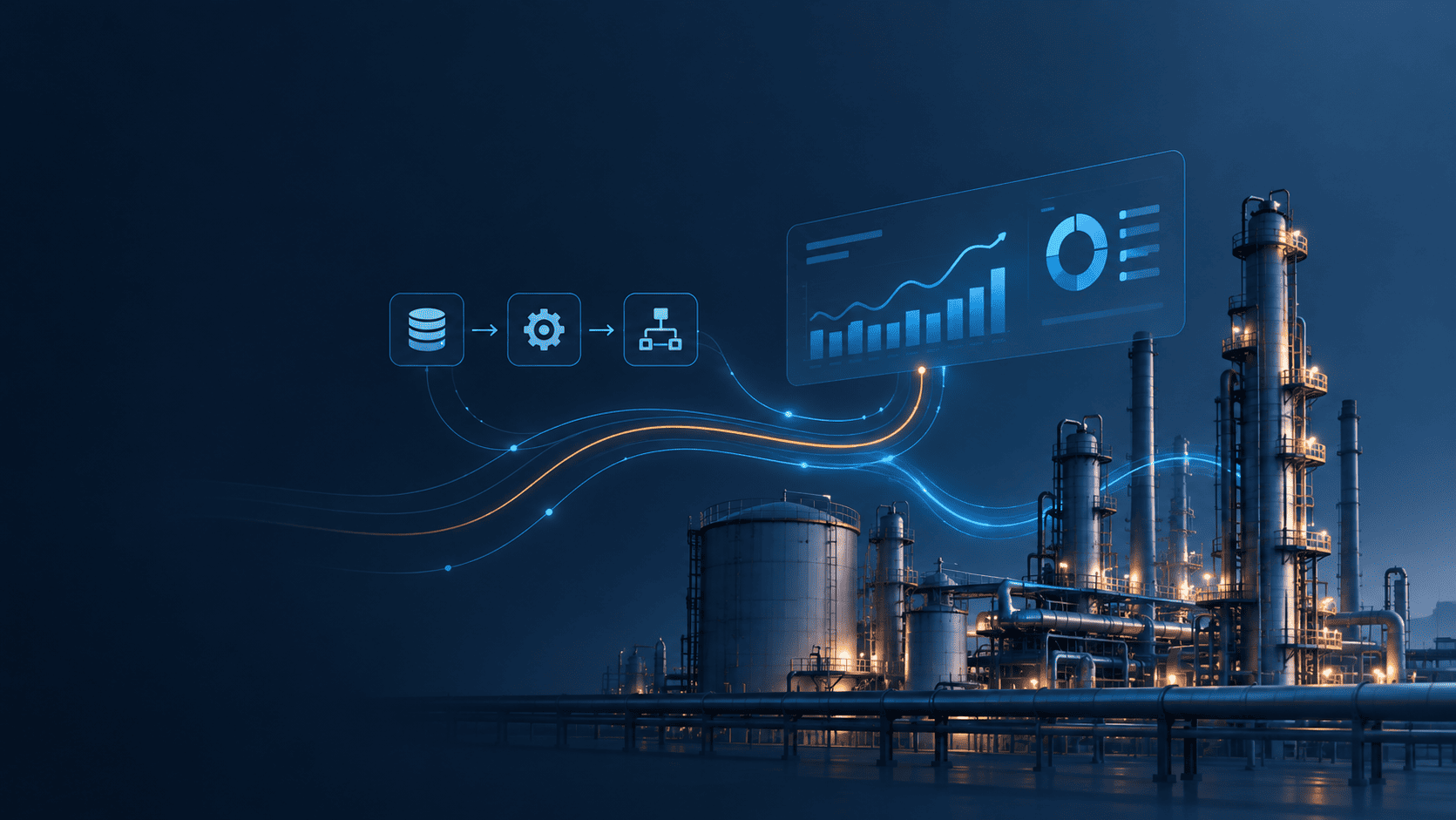
Azati provided 24 months of full-cycle engineering for a US construction tech startup's SaaS + IoT digital twin platform: browser-based 3D viewer, cloud processing pipeline for large point cloud datasets, backend microservices, real-time collaboration, and AWS infrastructure. industry: Construction & PropTech

Build my digital twin platform
24

months of full-cycle product engineering, from MVP features to production infrastructure

3

3D rendering engines integrated in one platform: Three.js, Autodesk APS Viewer, and Potree

End-to-end

scan-to-view workflow delivered: hardware device to browser-based 3D digital twin

Technologies used

TypeScript
TypeScript
Angular
Angular
NestJS
NestJS
Three.js
Three.js
Python
Python
MongoDB
MongoDB
AWS
AWS
Terraform
Terraform

Motivation

A US construction tech startup needed engineering capacity across the full stack of their SaaS + IoT digital twin platform: the browser-based 3D viewer, cloud pipeline for large point cloud datasets, backend microservices, real-time collaboration, and AWS infrastructure, all working as one coherent product.

Azati provided that capacity for 24 months, contributing to every layer: from the 3D viewer built with Autodesk APS Viewer SDK, Potree, and Three.js, to the AWS Batch processing pipeline, NestJS microservices, and Terraform-managed infrastructure. The result was a working scan-to-view workflow: scan a building, process the data in the cloud, view and collaborate on the digital twin in a browser.
Technical challenges

Challenge 01

Three different 3D rendering problems in one product

The platform needed to handle CAD/BIM-style model viewing, raw point cloud visualization from the scanning device, and custom interactive geometry in the same browser-based experience. Each required a different rendering approach and a different SDK:

  • Autodesk Forge/APS Viewer SDK with custom extensions for structured model viewing
  • Potree for large, unstructured point cloud datasets from the scanner
  • Three.js for custom 3D geometry, overlays, and interactive elements
  • All three engines needing to coexist in a single coherent user interface
#1
Challenge 02

Cloud processing of large 3D scan datasets

Raw scan output is large, computationally heavy, and needs significant processing before it becomes a viewable digital twin. Building a reliable, scalable pipeline to handle this asynchronously and at variable volumes was a core engineering challenge:

  • AWS Batch and SQS orchestrating parallel processing of large 3D datasets
  • S3 as the storage backbone for both raw and processed scan data
  • Processing jobs needing to be reliable under variable load and dataset sizes
  • CloudWatch telemetry providing visibility into pipeline health and failures
#2
Challenge 03

Infrastructure that needed to go from manual to automated

The platform started with manually managed virtual machines, and migrating to a reproducible, automated infrastructure while the product was in active development required care and a clear incremental path:

  • Migration from manually managed VMs to cloud-init and Ansible-based configuration
  • Terraform for infrastructure-as-code across VPC, ECS, S3, SQS, and Redis
  • Infrastructure changes needing to be safe to apply without disrupting active users
  • Docker and ECS containerization enabling consistent, portable deployments
#3
Challenge 04

Combining a physical device workflow with a SaaS product

The scanning hardware introduced a dimension that pure SaaS products don't have: the engineer contributing to the platform also supported requirements for the device firmware side, bridging the gap between what the hardware produced and what the software expected:

  • Firmware requirements shaped by what the cloud pipeline and viewer needed
  • Data format expectations coordinated between device and cloud processing
  • Real-time update flows needed between device upload and viewer availability
  • WebSocket and SSE-based notification layer keeping users informed during processing
#4

Why this startup chose Azati for their core engineering

A single engineer capable of spanning the full technical scope

This engagement required someone who could work across Angular frontend, NestJS backend, AWS cloud infrastructure, 3D visualization SDKs, and DevOps, all as part of one coherent product. The breadth of full-cycle engineering capability matched what a startup at this stage actually needed.

Computer graphics expertise, not just web development

Combining a CAD/BIM-style model viewer, a point cloud renderer, and custom 3D geometry in one browser-based product requires a depth of computer graphics knowledge that most web developers don't have. That specific background was a primary reason Azati was chosen for this engagement.

Willingness to figure out genuinely hard technical problems

Digital twin platforms for buildings sit at the intersection of computer graphics, cloud infrastructure, and IoT hardware in ways that no tutorial covers end to end. Many of the problems that came up during the engagement had no standard answers, and the ability to work through them without escalating or blocking was explicitly cited as a reason Azati was brought in.

Infrastructure-as-code and DevOps included, not outsourced

Azati handled the full infrastructure migration from manual VMs to Terraform-managed AWS, covering VPC, ECS, S3, SQS, Redis, and CloudWatch, as part of the same engagement, not as a separate workstream.

Building a SaaS product that needs 3D visualization and cloud processing?

Browser-based 3D viewers, large dataset processing pipelines, real-time collaboration, and AWS infrastructure are all things Azati has built together in one product. Let's talk about yours.

Launch my 3D SaaS product

What Azati built across the 24-month engagement

The platform required engineering work across six distinct technical areas, all of which had to work as an integrated product. Azati contributed to all of them.

01

Browser-based 3D viewer

The core user-facing component of the platform, the 3D viewer, was built using three different rendering technologies depending on the data type. Autodesk Forge/APS Viewer SDK with custom extensions handled structured CAD/BIM-style models. Potree handled the large, unstructured point cloud data from the scanning device. Three.js powered custom interactive geometry, overlays, and visualization features built directly into the browser.

Key capabilities:
  • Autodesk Forge/APS Viewer SDK with custom extensions
  • Potree viewer for large point cloud datasets
  • Three.js for custom 3D geometry and interactions
  • Angular and Angular Material for the surrounding UI
02

Cloud processing pipeline for large 3D datasets

Raw scan data is large and computationally heavy. An AWS Batch and SQS-based orchestrator queues and processes incoming scan datasets asynchronously, handling the parallel processing needed to turn raw device output into viewable digital twin formats. S3 stores both raw and processed data, and CloudWatch provides telemetry across the pipeline.

Key capabilities:
  • AWS Batch for parallel large-dataset processing
  • SQS for reliable processing queue management
  • S3 as storage backbone for raw and processed scan data
  • CloudWatch telemetry and monitoring
03

Backend microservices

NestJS and TypeScript microservices handled the platform's business logic, data management, and API layer. Python services contributed to the data processing and AI model components. MongoDB provided flexible document storage, and Redis handled caching and session data.

Key capabilities:
  • NestJS and TypeScript microservices
  • Python services for data processing
  • MongoDB document storage
  • Redis caching and session management
04

AI and ML components

Two custom AI models were built as part of the platform. A face blurring model automatically anonymizes people captured in building scans, protecting privacy. A point cloud to blueprint conversion model generates 2D floor plan representations from 3D scan data, making the scan output useful for workflows that work better with 2D representations.

Key capabilities:
  • Custom face blurring model for scan privacy
  • Point cloud to 2D blueprint conversion model
  • AI inference integrated into the processing pipeline
05

Real-time collaboration and notifications

Multiple stakeholders needed to work with the same building model simultaneously and be kept informed as processing completed. WebSocket and SSE-based real-time update flows notified users when scans finished processing and became available to view. Slack and Discord integrations extended collaboration into the communication tools teams were already using.

Key capabilities:
  • WebSocket-based real-time collaboration
  • SSE for scan processing status updates
  • Slack and Discord integration for team notifications
  • Real-time presence and activity updates
06

AWS infrastructure and DevOps

Azati managed the full AWS infrastructure using Terraform for infrastructure-as-code and migrated from manually managed virtual machines to a reproducible, automated setup using cloud-init and Ansible. The infrastructure covered VPC configuration, ECS containerized services, S3, SQS, Redis, and CloudWatch monitoring.

Key capabilities:
  • Terraform infrastructure-as-code for full AWS environment
  • VM migration to cloud-init and Ansible-based configuration
  • Docker and ECS containerization
  • VPC, ECS, S3, SQS, and Redis orchestration

What Azati built

AreaWhat was delivered
3D viewerAutodesk APS Viewer SDK with extensions, Potree point cloud viewer, Three.js geometry
Cloud pipelineAWS Batch + SQS processing orchestrator for large 3D scan datasets
BackendNestJS/TypeScript and Python microservices, MongoDB, Redis
AI modelsFace blurring model, point cloud to 2D blueprint conversion model
Real-time collaborationWebSocket and SSE-based updates, Slack and Discord integrations
InfrastructureTerraform-managed AWS, VM migration to cloud-init/Ansible, Docker/ECS
MonitoringCloudWatch telemetry across the processing pipeline and services
Firmware supportRequirements coordination between the scanning device and the cloud platform

Engagement & delivery

24-month T&M engagement, full-cycle product scope

Azati contributed across all major platform components for 24 months on a Time and Material basis, covering frontend, backend, cloud infrastructure and CI/CD, AI components, integrations, and ongoing product support and optimization, not just one layer of the stack.

Agile delivery across a product that evolved continuously

The platform's requirements evolved as the startup worked through the complexity of combining hardware, cloud processing, and a SaaS product. Agile delivery gave the engineering work the flexibility to absorb that evolution:

  • Feature delivery and support across active product iteration
  • Requirements coordination between device firmware team and software platform
  • Infrastructure changes made safely alongside ongoing product development
  • Ongoing optimization of viewer performance, cloud costs, and processing reliability

Results & engineering outcomes

A working scan-to-view workflow delivered end to end

From the physical scanning device through cloud processing to a browser-based 3D digital twin, the full pipeline was built and operational, which is the core product promise of the platform.

Real-time collaboration built into the viewing experience

Multiple stakeholders: construction teams, property assessors, insurers, could work inside the same building model simultaneously. Slack and Discord integrations brought notifications into the tools teams already used, reducing context switching during active projects.

Cloud infrastructure moved from manual to reproducible

The migration from manually managed VMs to Terraform-managed AWS with Ansible and cloud-init configuration established a maintainable, automatable infrastructure foundation that could grow with the product.

Domain expertise in 3D digital twin engineering now inside Azati

The engagement left Azati with real depth in browser-based digital twin products: how scan-to-view pipelines behave under real-world dataset sizes, how to extend 3D SDK viewers without breaking performance, and how to bridge hardware device workflows with cloud SaaS development, a combination that rarely exists in a single team.

Strategic wins

What this engagement demonstrates:

Browser-based 3D digital twins require computer graphics depth, not just web skills

The gap between "web developer" and "3D viewer developer" is larger than most teams expect. Viewer SDK extensions, point cloud rendering performance, and custom geometry interactions all require knowing how the GPU pipeline works, not just how the browser DOM works. That gap is where most digital twin frontend efforts stall.

Full-cycle startup engineering means owning the hard parts too

Infrastructure, AI models, real-time communication, firmware requirements, and 3D rendering don't come apart cleanly at a startup stage. The value of a full-cycle engineering contribution is that all of it gets handled without the startup having to coordinate across separate specialists for every domain.

Hardware-connected SaaS products need a different infrastructure mindset

When a physical scanning device is at one end of the pipeline and a browser viewer is at the other, the failure modes are different from a pure SaaS product. Data arrives in unpredictable volumes, at unpredictable times, in formats that change as the hardware firmware evolves. Infrastructure that works in a demo breaks in production if it wasn't designed for that reality from the start.

The described expertise is relevant for

  • 3D digital twin SaaS platform development for construction and property tech
  • Autodesk Forge and APS Viewer SDK custom extension development
  • Potree point cloud viewer integration and optimization
  • Three.js custom 3D visualization and browser-based geometry
  • AWS Batch cloud processing pipelines for large 3D datasets
  • Full-cycle startup engineering spanning frontend, backend, AI, and infrastructure
  • IoT and hardware-connected SaaS product development
  • Real-time collaboration features for multi-user platforms

Last updated

Got a job for Azati? Let’s talk business!

This site is protected by reCAPTCHA and the Google Privacy Policy and Terms of Service apply.

What's next?

  • 1. Tell Us Your Story
    Describe your project. We come back within 24 hours with team availability and a rough plan. NDA on request before the first call.
  • 2. Get Your Roadmap
    Receive a detailed proposal with scope, team composition, timeline, and costs tailored to your goals.
  • 3. Start Building
    Azati aligns on details, finalize terms, and launch your project with full transparency.