Capital Markets Platform Modernization for Live Financial Products

How Azati modernized a live capital-markets platform while preserving its financial-system integrations, configurable business rules, and production delivery

Azati supported the modernization of the platform's core services, helping move the product from its legacy web architecture to a modern Java/Spring foundation while introducing configurable competition mechanics, new financial-system integrations, and more frequent ranking processing. The work was delivered within the client's existing product, infrastructure, and security environment. Figures below are current as of September 2026. The 2026 competition season runs through December 2026.

Modernize a financial platform without parallel delivery
3

Financial markets supported

9-month

2026 competition season

15-minute

Ranking recalculation cycle

The project's specifics

Case study at a glance: Azati contributed Java engineering to the modernization of a long-running retail investment competition platform, supporting core competition services, broker registration, rankings, leagues, nominations, administration, integrations, and the migration from Java 11/Spring Boot 2 to Java 21/Spring Boot 3.

The business problem: The competition had outgrown its legacy platform. The organization needed to relaunch it as a more configurable product with leagues, nominations, tasks, partner participation, and consumer finance platform integration while continuing to work with real broker accounts and established financial-market systems.

The engineering challenge: The modernization had to happen within an existing exchange technology and security environment, with live financial integrations, changing competition rules, and a delivery team that couldn't treat the product as a greenfield build. The platform also had to evolve while the underlying business logic was still changing.

What was at stake: The organization needed more than a new technology stack. It needed a platform that could support a substantially longer competition season, more configurable participation mechanics, more frequent ranking updates, and additional partner-driven activity without breaking its connection to the existing financial ecosystem.

Technology stack

Java 21
Java 21
Spring Boot
Spring Boot
Kafka
Kafka
PostgreSQL
PostgreSQL
Kubernetes
Kubernetes
OAuth2/JWT
OAuth2/JWT

How can a financial organization modernize a live platform when the rules keep changing?

The hard part wasn't simply replacing an outdated application. The platform had to evolve inside an established financial ecosystem, while its product rules, integrations, and delivery needs continued to change.

Modernize without disconnecting from the financial ecosystem

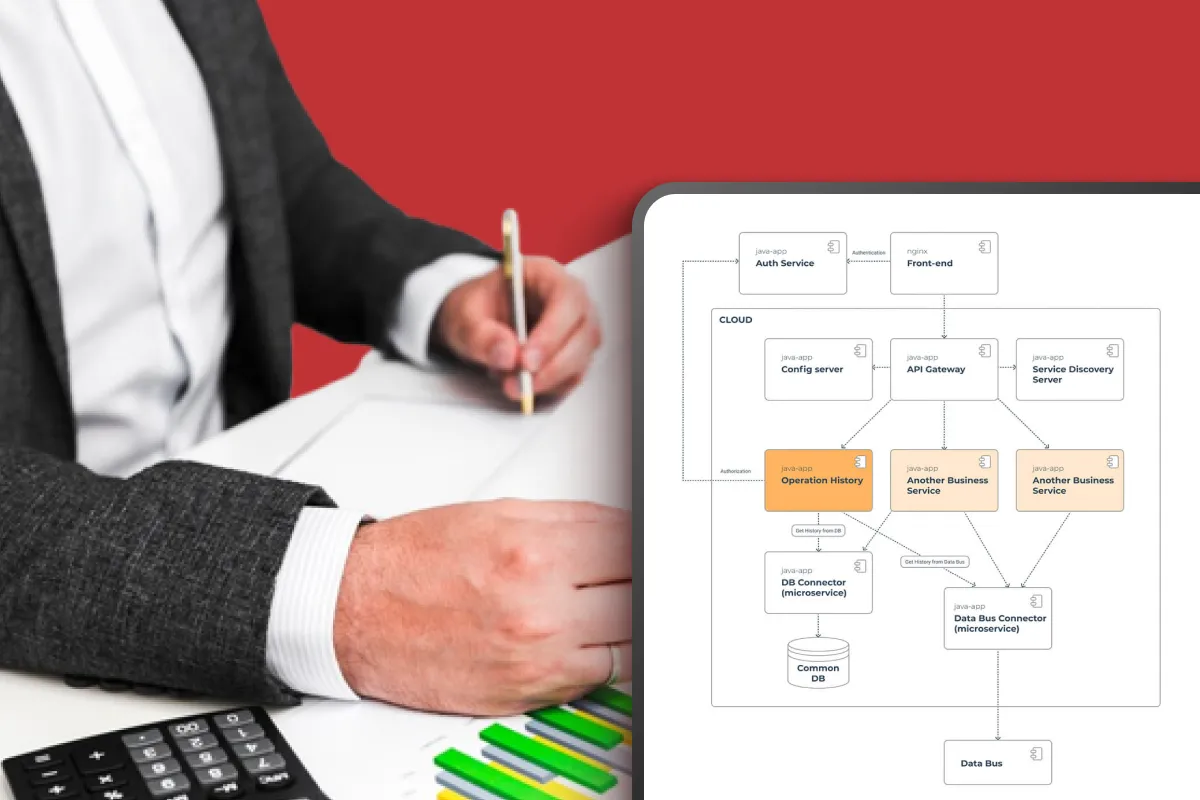
The competition depended on existing exchange and consumer finance platform infrastructure for trades, orders, positions, prices, instruments, dividends, calendars, authentication, notifications, and other operational data. The modernization therefore had to improve the application layer without replacing the surrounding financial infrastructure.

Turn changing business rules into configurable product behavior

Leagues, nominations, tasks, prizes, starting-capital rules, and other mechanics could change during the product lifecycle. Releasing code for every business-rule adjustment would have made the new platform harder to operate.

Keep modernization moving while the product continues to change

The platform could not be treated as a frozen legacy system. New leagues, nominations, tasks, prizes, participating brokers, and supported instruments continued to evolve as the product moved toward the new competition season.

Add specialist engineering capacity without creating a parallel delivery stream

The modernization had to fit the client's existing product organization, development standards, repositories, reviews, and security controls. Azati engineers worked within that environment rather than creating a separate vendor-led delivery track, allowing domain knowledge and ownership to build alongside the product team.

Modernize the platform without replacing the ecosystem

If your financial application is becoming harder to evolve but still depends on established trading, market-data, identity, or enterprise systems, modernization does not have to start with a clean-sheet rebuild.

Discuss your financial platform modernization

How Azati evolved the financial competition platform

01

A more configurable competition product

Azati evolved the platform's core competition services to support leagues, nominations, tasks, achievements, rankings, participant profiles, portfolios, transaction exports, and business reporting. This expanded the product beyond its former ranking-focused model and gave the organization a foundation for more varied competition mechanics.

Business outcome: The organization could run a substantially richer competition product without rebuilding the underlying platform around every new participation model.

Key capabilities:
  • Broker registration
  • Competition management
  • Ranking and statistics
  • Participant profiles
  • Portfolio and performance data
  • Leagues by starting capital
  • Partner nominations
  • Tasks and achievements
  • Transaction exports
  • Business reporting
  • Public competition API
02

Business rules that can evolve without repeated releases

Azati introduced configurable handling for leagues, nominations, tasks, prizes, brokers, instruments, and other competition parameters, separating frequently changing business rules from application logic.

Business outcome: Product teams gained more freedom to adapt competition mechanics as requirements changed, without turning every operational adjustment into a software release.

Key capabilities:
  • Configurable competition rules
  • League configuration
  • Nomination management
  • Task and achievement configuration
  • Prize configuration
  • Reference data management
  • Administrative operations
  • Mass recalculation
  • Role-based administration
03

Financial-system integration without ecosystem replacement

Azati developed and evolved the integration layer connecting the competition platform with exchange data, market and instrument information, data-warehouse services, corporate identity, notifications, and consumer-finance platform workflows.

Business outcome: The organization could modernize the application layer without replacing the surrounding financial infrastructure the product depended on.

Key capabilities:
  • Kafka-based financial data integration
  • Trading and portfolio data
  • Orders and positions
  • Market and instrument data
  • ISS REST API integration
  • Data warehouse integration
  • Corporate SSO
  • OAuth2 / JWT
  • Email and SMS notifications
  • Consumer finance platform integration
04

More frequent performance and ranking processing

Azati evolved calculation and performance services supporting participant rankings, portfolio performance, and statistics across three markets. The new platform moved ranking recalculation to a 15-minute cycle and introduced an external-system emulator for integration and load testing.

Business outcome: The platform gained a more frequent and controlled way to process participant performance, while the engineering team could test calculation behavior without directly depending on production financial systems.

Key capabilities:
  • Ranking calculation
  • Portfolio performance calculation
  • Statistics processing
  • 15-minute recalculation cycle
  • Load optimization
  • External-system emulation
  • Integration testing
  • Load testing
05

Java modernization without separating it from product delivery

Azati contributed to the migration from Java 11 and Spring Boot 2 to Java 21 and Spring Boot 3 while new competition functionality continued to be developed.

Business outcome: The technology foundation could evolve alongside the product instead of requiring a separate modernization freeze.

Key capabilities:
  • Java 11 → Java 21 migration
  • Spring Boot 2 → Spring Boot 3
  • Spring WebFlux
  • Spring Cloud Gateway
  • Spring Kafka
  • Spring Security
  • PostgreSQL
  • Kubernetes
  • CI/CD modernization
  • Observability with Prometheus and Grafana
06

Staff augmentation within an enterprise delivery environment

Azati's engineers worked within the client's existing development, security, and delivery environment, including GitLab, Jira, code review, VDI, VPN, and 2FA. The engagement built domain knowledge over more than a year as the platform evolved.

Business outcome: The client could introduce external specialist engineering without moving project assets outside its controlled environment or creating a separate delivery stream.

Key capabilities:
  • Embedded Java engineering
  • Financial domain onboarding
  • Scrum delivery
  • GitLab-based development
  • Jira-based planning
  • Code review
  • Automated testing
  • VDI-based development
  • VPN and 2FA
  • Enterprise security compliance

Keep the product moving while the architecture changes

Modernization gets harder when the product is live, business rules keep changing, and releases cannot simply stop. Azati helps financial organizations evolve legacy Java and enterprise applications alongside ongoing product delivery.

Discuss your Java modernization roadmap

Why use the business-configurable model?

The most interesting architectural decision wasn't simply "use microservices." It was separating changing competition rules from application releases. The business can change leagues, nominations, challenges, prizes, participating brokers, partners, supported instruments, and other competition parameters.

That matters because the product is inherently seasonal and partner-driven. Requirements don't stop changing just because the season has started.

The platform therefore needed to be able to absorb business change without repeatedly turning that change into an engineering project.

Delivery & outcomes

AreaWhat Azati contributedBusiness / operational outcome
Legacy modernizationJava/Spring modernization of core servicesModern application foundation without separating modernization from product delivery
Competition productLeagues, nominations, challenges, rankings, profiles and rewardsExpanded the product beyond the legacy ranking model
Business configurationConfigurable rules, prizes, partners, brokers and instrumentsMore flexibility to adapt the product as requirements changed
Financial integrationsMarket data, DWH, identity, notifications and consumer-finance integrationsModernized the application without replacing the surrounding financial ecosystem
Performance processingCalculation and ranking services across three markets15-minute ranking recalculation cycle
Testing infrastructureExternal-system emulator with synthetic market and participant dataIntegration and load testing without direct production dependencies
Secure deliveryEngineering inside the client's VDI and infrastructure perimeterExternal specialists capacity within the existing security model
Continuous modernizationModernization alongside live product developmentProduct evolution continued while the technology foundation changed

Business impact

The engagement accumulated domain knowledge across more than 19 months of continuous product evolution, allowing the same engineering context to carry across modernization work, new competition mechanics, financial integrations, and ongoing season changes.

More importantly, the platform became substantially more adaptable: business teams could introduce new competition mechanics while the underlying architecture continued to evolve.

The product became substantially more configurable

The new season introduced three portfolio-size leagues, 10+ nominations, partner-funded nominations, challenges, badges, and a larger reward structure compared with the earlier platform.

Ranking became more frequent

The new system recalculates rankings every 15 minutes across three markets, replacing the less frequent batch approach of the previous platform.

The platform became reusable across seasons

The new architecture provides a base for subsequent seasons rather than requiring the competition to be rebuilt around each new set of rules.

External engineering operates within the client's security model

The engagement shows that specialist external engineering can work within a tightly controlled financial infrastructure without requiring the client to move project assets into a vendor environment.

When this approach is a good fit

This modernization approach suits financial organizations with established applications that cannot simply be replaced. It is especially applicable when modernization must happen alongside live product delivery, existing financial integrations, and changing business requirements.

  • You have a valuable financial application built on an aging technology foundation
  • The surrounding financial ecosystem cannot be replaced at the same time
  • The product must continue evolving during modernization
  • Business rules change frequently and need to become more configurable
  • The platform integrates with market-data, trading, identity, DWH, or other enterprise systems
  • You need to modernize Java/Spring services incrementally
  • Security or infrastructure requirements require external engineers to work inside your environment
  • You need specialized engineering capacity without outsourcing the entire product

When this approach is not the right fit

Embedded engineering is not automatically the best delivery model. A different engagement may make more sense when:

You need a complete product built from scratch

If you don't have an established product organization, architecture, or delivery process, a dedicated product-development team may provide better coverage.

You want the vendor to own the entire delivery outcome

When the client wants one partner responsible for discovery, architecture, delivery, QA, and product execution, a project-based engagement is likely more appropriate than embedded engineers.

The problem is primarily strategic or architectural

If the organization has not yet established what to modernize, what to keep, or how the target architecture should work, an assessment or modernization roadmap should come first.

The required capacity is large and multidisciplinary

This approach is not intended to replace a multidisciplinary delivery organization when the engagement requires simultaneous frontend, backend, QA, DevOps, data, UX, and product ownership.

The product is not constrained by an existing enterprise ecosystem

For a genuinely greenfield application without legacy integrations or organizational constraints, this particular modernization model adds less value.

Who this engagement is relevant to

This case is most relevant to technology and product leaders in organizations that have valuable software they cannot simply replace. That includes:

  • CTOs and CIOs at financial institutions
  • Heads of engineering at banks and fintechs
  • Technology leaders at exchanges and market infrastructure providers
  • Product leaders responsible for established financial platforms
  • Engineering leaders modernizing Java estates
  • Organizations operating regulated applications inside controlled infrastructure

Frequently asked questions

Capital markets software modernization typically involves updating an established application architecture while preserving the financial workflows, integrations, security controls, and business logic that the organization still depends on. Depending on the platform, this can include legacy Java modernization, microservices decomposition, API and event-driven integration, database modernization, configurable business rules, performance engineering, and modernization of testing and deployment processes.

In this engagement, Azati contributed to Java and Spring modernization, financial-system integrations, configurable competition rules, calculation services, and testing infrastructure while the live product continued to evolve.

Financial platform modernization is the process of updating an established financial application so it can support current business requirements, integrations, security expectations, and operational needs without necessarily replacing the entire surrounding ecosystem.

In this engagement, the legacy competition application was rebuilt around modern Java/Spring services while retaining integrations with the client's existing financial-market systems.

A practical approach is to modernize incrementally around business-critical services rather than treating the entire application as one replacement unit.

In this engagement, selected services were migrated from Java 11/Spring Boot 2 to Java 21/Spring Boot 3 while the live product continued to evolve.

Rules that change frequently can often be represented as configurable domain data rather than hard-coded into application releases.

The competition platform uses administrative capabilities for leagues, nominations, challenges, prizes, partners, brokers, and instruments, allowing many changes to be managed without modifying application code.

Yes. The delivery model needs to be designed around the client's security requirements.

Here, the Azati engineers work through the client's VDI environment, with project assets and access remaining inside the client's controlled infrastructure.

Embedded engineering can be appropriate when the client already owns product management, architecture, and delivery but needs additional specialist capacity.

In this engagement, Azati engineers became the primary developers for several services while working directly within the client's established product team.

A modern application layer can expose or consume controlled interfaces to existing systems rather than replacing them all at once.

This project integrates with market-data services, the data warehouse, document management, notification infrastructure, corporate SSO, and broker-related workflows.

A dedicated emulator can reproduce external-system contracts and generate synthetic data for integration and load testing.

The project includes such an emulator for market-data and participant scenarios, allowing calculation services to be tested without directly loading production financial systems.

No. AI is not required to modernize a financial application.

The competition product itself uses deterministic business logic and calculations. AI is used separately as an internal development aid, not as part of the product's functionality.

Azati's relevant expertise in financial platforms modernization

Explore our successful projects and see how Azati delivers measurable results for our clients.

Banking Software Architecture Modernization

Banking Software Architecture Modernization

3-4x faster mobile app load
40-60% higher backend throughput
2-3x faster transaction history retrieval
  • D3
  • Oracle
  • WSO2
  • Java

⚡ Pain Points We Tackled

A financial institution's heavily loaded monolithic backend caused mobile app load times of around 15 seconds and limited system performance. The client needed to improve responsiveness and scalability without compromising security or regulatory requirements.

Our Approach

Azati redesigned the backend architecture by decomposing the monolith into independent microservices, optimizing SQL and data processing, and separating transaction history from the main mobile workflow. The resulting architecture improved performance, fault isolation, and scalability while providing a foundation for further development.

Applied Methods and Practices

  • Monolith-to-microservices transformation: Analyzed the existing backend and identified processing, data bus, and database bottlenecks. Azati designed independent services that could be scaled and maintained separately while reducing the impact of individual failures.
  • Architecture and infrastructure design: Evaluated infrastructure options against performance, security, and legislative requirements and designed an architecture that supported distributed processing and flexible resource allocation.
  • SQL and backend performance optimization: Refactored inefficient SQL patterns and reduced unnecessary post-processing to lower database load and improve backend response times.
  • Mobile experience optimization: Moved transaction history to a dedicated screen so the primary mobile interface could load independently of historical transaction data.
  • Performance validation and future readiness: Built and stress-tested an MVP of the redesigned architecture, validated load distribution, documented the solution, and prepared recommendations for future Spring Cloud integration.

Solution Features

  • 3-4x faster mobile app loading: Reducing load times from approximately 15 seconds to 4-6 seconds improved responsiveness of the core mobile experience.
  • 40-60% higher backend throughput: SQL and data-processing optimization increased backend throughput while reducing unnecessary database and server workload.
  • 2-3x faster transaction history retrieval: Separating transaction history from the main application flow improved the speed of accessing historical operations.
  • Greater system resilience: Independent microservices isolated failures and reduced the risk of a problem in one backend component affecting the entire system.
  • Scalable foundation for further modernization: The redesigned architecture supports horizontal scaling and provides documented integration guidance for future Spring Cloud adoption.
FinTech Payment Infrastructure Modernization

FinTech Payment Infrastructure Modernization

Lean engineering team supported by embedded platform expertise
Enterprise payment orchestration platform
Ongoing cloud platform engineering engagement
  • Cloudflare
  • AWS
  • Pulumi
  • GitHub Actions
  • Docker
  • PostgreSQL
  • Datadog
  • Grafana

⚡ Pain Points We Tackled

A UK fintech operated a payment orchestration platform with a lean engineering team responsible for product development, cloud infrastructure, and operational support. Infrastructure work and an extended search for senior DevOps expertise were diverting engineering leadership from platform architecture and payment capabilities.

Our Approach

Azati embedded platform engineering expertise into the client's existing organization, modernizing AWS infrastructure, Infrastructure as Code, CI/CD, monitoring, and operational processes without disrupting ongoing payment platform development.

Applied Methods and Practices

  • Embedded platform engineering: Integrated directly into the client's engineering organization to provide cloud operations, infrastructure support, and developer enablement alongside ongoing product development.
  • Infrastructure as Code and automation: Expanded Infrastructure as Code with Pulumi and cloud automation to make infrastructure provisioning and environment management more consistent and maintainable.
  • CI/CD modernization: Maintained and enhanced deployment pipelines across cloud environments, supporting more consistent releases as the payment platform evolved.
  • Cloud platform operations: Supported AWS infrastructure, networking, monitoring, and observability across the payment platform while maintaining operational continuity.
  • Secure platform operations: Implemented infrastructure changes within the client's established security model, including controlled access and authentication requirements.
  • Developer productivity enablement: Reduced the infrastructure support burden on product engineers and technical leadership, allowing internal teams to focus more on payment architecture and customer-facing capabilities.

Solution Features

  • Engineering leadership refocused on product architecture: With infrastructure operations and deployment support handled by Azati, technical leadership could dedicate more time to payment architecture, platform strategy, and new capabilities.
  • Additional platform engineering capacity without prolonged hiring: The client addressed a critical cloud engineering capacity gap after several months of unsuccessful recruitment for an experienced DevOps engineer.
  • More consistent infrastructure and delivery processes: Infrastructure automation and standardized deployment practices created a more maintainable foundation for evolving the payment platform.
  • Continued payment platform modernization: Cloud infrastructure, CI/CD, and platform engineering capabilities could evolve alongside new payment services without requiring the internal team to absorb the full operational workload.
  • Foundation for ongoing cloud evolution: The engagement established an embedded platform engineering model supporting continued modernization of the client's payment infrastructure and cloud environment.
Financial Workflow Automation and Banking Integration Platform
FinTech

Financial Workflow Automation and Banking Integration Platform

6 core financial platform domains enhanced
Tens of banking integrations and financial data sources supported
10+ security mechanisms maintained and strengthened
  • Ruby on Rails
  • React
  • PostgreSQL
  • OpenAI
  • Plaid
  • Financial workflow automation

⚡ Pain Points We Tackled

A Latin American FinTech needed to scale its financial automation platform—which handles banking connections, transaction synchronization, and reconciliation—while ensuring continuous delivery of new features without compromising financial accuracy. They required expertise to expand banking integrations, improve testing, and modernize the platform while maintaining operational stability.

Our Approach

Azati embedded senior Ruby on Rails engineers into the client's product team to enhance core financial workflows, improve banking integrations, strengthen security, modernize parts of the platform, and expand automated quality assurance. The engagement combined feature development with stabilization of existing functionality, enabling continuous product evolution while preserving the integrity of financial operations.

Applied Methods and Practices

  • Banking connectivity and transaction synchronization: enhanced integrations with multiple banking institutions and financial services to improve transaction synchronization, account aggregation, monitoring, and recovery of missing financial data across connected systems
  • Financial operations and reconciliation: stabilized reconciliation workflows, ledger management, transaction processing, and accounting logic to maintain financial consistency as the platform evolved and new capabilities were introduced
  • Enterprise reporting and financial visibility: improved reporting capabilities that provide organizations with centralized visibility into cash flow, financial activity, operational metrics, and exportable business reports across multiple financial institutions
  • Secure financial platform: maintained and enhanced authentication, authorization, API security, audit logging, encrypted financial data handling, and secure integration mechanisms required for enterprise financial applications
  • AI-assisted financial automation: integrated OpenAI-powered transaction categorization into existing financial workflows, combining confidence-based automation with human review to improve financial data processing efficiency while preserving operational control

Solution Features

  • More reliable financial operations: improved the stability and consistency of reconciliation, ledger management, transaction processing, and banking synchronization, strengthening the reliability of day-to-day financial operations
  • Stronger banking integration ecosystem: supported dozens of banking integrations and external financial data sources, allowing the platform to continue expanding its connectivity while maintaining synchronization quality
  • Lower delivery risk: expanded automated testing, improved documentation, and stabilized legacy components, increasing confidence when delivering enhancements to business-critical financial functionality
  • Improved financial visibility: enhanced centralized access to financial information through synchronized banking connections, reporting capabilities, and transaction management, helping organizations make better-informed financial decisions
  • Sustainable product evolution: enabled the client to continue evolving its financial automation platform through embedded engineering support, combining new feature delivery with ongoing modernization, quality improvements, and platform stabilization
Digital Banking Platform Modernization and Continuous Product Evolution
Banking & Finance

Digital Banking Platform Modernization and Continuous Product Evolution

120K+ monthly active users supported
350K+ digital banking transactions processed every month
1.5 seconds average transaction processing time
  • Java
  • Spring Boot
  • Oracle
  • Hibernate
  • Digital banking modernization

⚡ Pain Points We Tackled

A financial institution needed to continuously evolve its digital banking platform while ensuring service reliability, high transaction performance, and ongoing regulatory compliance.

Our Approach

As an embedded engineering partner, Azati enhanced and stabilized the client's digital banking platform. Through ongoing maintenance, feature development, and performance optimization, the team enabled continuous product evolution and improved reliability, supporting growing user activity and regulatory compliance without the need for large-scale replacement.

Applied Methods and Practices

  • Continuous digital banking enhancement: developed and integrated new functionality across mobile and online banking channels, expanding digital services while improving usability, customer engagement, and overall platform capabilities
  • Regulatory compliance delivery: implemented ongoing updates required by changing Central Bank regulations, helping ensure the platform remained compliant, audit-ready, and aligned with evolving financial industry requirements
  • Performance optimization: optimized Oracle database operations, query execution, and backend processing to improve transaction performance, increase responsiveness, and support growing digital banking workloads
  • Platform stabilization and production support: provided continuous maintenance, defect resolution, and SLA-driven production support to ensure uninterrupted banking services and rapid resolution of operational issues
  • Reliable enterprise delivery: worked closely with business stakeholders throughout requirements analysis, development, testing, and deployment, creating additional engineering capacity for platform evolution while maintaining API consistency and delivery quality

Solution Features

  • Enhanced digital banking experience: delivered new digital banking capabilities that improved customer experience across online and mobile channels while supporting continued growth in digital service adoption
  • Stable regulatory compliance: enabled the organization to respond quickly to changing regulatory requirements, reducing compliance risk while maintaining uninterrupted banking operations
  • Faster and more reliable transactions: database optimization and backend improvements streamlined platform performance, reduced transaction processing times, and improved responsiveness for high-volume banking operations
  • Higher operational reliability: continuous monitoring, rapid defect resolution, and proactive platform maintenance improved service stability while helping the client consistently meet SLA commitments
  • Sustainable platform modernization: established an ongoing modernization approach that allowed the bank to continuously improve its digital banking platform, balancing new feature delivery, operational stability, and regulatory compliance without disruptive system replacement

Last updated

Got a job for Azati? Let’s talk business!

This site is protected by reCAPTCHA and the Google Privacy Policy and Terms of Service apply.

What's next?

  • 1. Tell Us Your Story
    Describe your project. We come back within 24 hours with team availability and a rough plan. NDA on request before the first call.
  • 2. Get Your Roadmap
    Receive a detailed proposal with scope, team composition, timeline, and costs tailored to your goals.
  • 3. Start Building
    Azati aligns on details, finalize terms, and launch your project with full transparency.