Modernizing a Commodity Clearing System with Java Microservices

How Azati is modernizing a legacy clearing monolith with a modular Java platform while preserving the domain logic and integrations of a regulated commodity market

A large regulated commodity exchange needed to move away from a tightly coupled clearing monolith without disrupting the domain logic, integrations, and operational workflows supporting market operations. Azati is building a modular Java platform alongside the legacy system, progressively moving clearing capabilities into 40+ domain-oriented services instead of forcing a single replacement project.

Discuss a phased clearing modernization
40+ clearing services

Core clearing domains separated to support progressive modernization

Phased

Migration from the legacy clearing platform

Adapter-based

Integration with trading, accounting, CRM, and other external systems

Technology stack

Java 25
Java 25
Spring Boot 4
Spring Boot 4
Spring Security
Spring Security
Spring Cloud
Spring Cloud
Spring WebFlux
Spring WebFlux
Spring Data JPA
Spring Data JPA
R2DBC
R2DBC
Vue 2
Vue 2
Vuex
Vuex
Vuetify
Vuetify
PostgreSQL
PostgreSQL
Hibernate
Hibernate
Flyway
Flyway
Ehcache
Ehcache
RabbitMQ
RabbitMQ
Vue Router
Vue Router
OpenFeign
OpenFeign
OpenAPI Generator
OpenAPI Generator
Docker
Docker
GitLab CI/CD
GitLab CI/CD
Maven
Maven
OAuth2/JWT
OAuth2/JWT
Prometheus
Prometheus
Grafana
Grafana
Vue Router
Vue Router

The challenge: modernizing clearing logic while keeping the financial ecosystem connected

How do regulated financial organizations modernize a core clearing system when its business logic and integrations cannot simply be replaced at once?

The difficult part was not building another Java platform. It was moving clearing logic out of a business-critical monolith while keeping the surrounding financial ecosystem connected.

The legacy clearing platform had accumulated substantial domain logic around commodity-market operations, while its monolithic architecture made further changes and integrations increasingly difficult.

The transition also had to preserve the rules, controls, and operational workflows governing regulated clearing.

Three constraints therefore shaped the modernization:

  • Preserve complex clearing logic while moving away from the monolith.
  • Continue integrating with surrounding systems, including trading, delivery, accounting, CRM, and verification platforms.
  • Migrate progressively, while the legacy system remained part of the operational landscape.

How Azati is modernizing the clearing platform

The difficult part was not choosing microservices. It was deciding where the clearing domains belonged, how they should communicate, and how the new platform should coexist with the systems that still run the market.

Rather than attempting a big-bang replacement, Azati is building Catena as a modular microservices platform and progressively moving clearing capabilities into the new architecture.

The work combines domain decomposition, Java development, integration engineering, document processing, operator tooling, security, and automated delivery.

01

Clearing domain decomposition into microservices

The new platform separates major areas of clearing functionality into independently developed services rather than reproducing the legacy monolith as one large application.

More than 40 microservices have been implemented around domains including participants, registers, obligations, supply contracts, payments, clearing decisions, reporting, risk management, and gas-market operations.

The separation gives each clearing domain a defined place in the new architecture and makes it possible to move functionality progressively rather than recreate the monolith service by service.

Stack: Java 25, Spring Boot 4, Spring Data JPA, PostgreSQL

Key capabilities:
  • Clearing participant management
  • Monetary, commodity, clearing, and transport registers
  • Obligations
  • Supply contracts
  • Payments
  • Clearing decisions
  • Risk management
  • Gas-market operations
  • Regulatory reporting
02

Event-driven communication between clearing services

The new services communicate asynchronously through RabbitMQ, with synchronous APIs where direct request-response integration is more appropriate. This allows individual clearing domains to evolve as separate services while maintaining communication across the broader platform.

Stack: Spring AMQP, RabbitMQ, Spring Cloud OpenFeign.

Key capabilities:
03

Integration with the trading and enterprise systems around clearing

Azati isolated external-system dependencies behind dedicated adapters for trading, delivery, accounting, CRM, and verification systems.

The integration layer currently covers systems including the exchange's trading system, commodity delivery operator, accounting systems, CRM, and verification modules. This keeps integration-specific logic at the edge of the platform instead of spreading external-system dependencies through the core clearing domains.

The integration approach combines the Adapter pattern, OpenFeign, RabbitMQ, and XML/JSON processing.

Integration areas

Key capabilities:
  • Trading system
  • Commodity delivery operator
  • Accounting systems
  • CRM
  • Verification and checking modules
  • External APIs
04

Document processing and regulated data exchange

Clearing operations generate and consume substantial amounts of structured documentation. Processing it reliably requires validation before information reaches downstream services or storage.

Azati developed a document-processing pipeline that separates validation, processing, and storage rather than treating document handling as a single operation. A dedicated Document Storage Service uses a reactive stack based on Spring WebFlux and R2DBC to handle document persistence.

Stack: Spring WebFlux, R2DBC, Jackson XML, StAX, Apache POI

Key capabilities:
  • Document validation
  • Document processing
  • Document storage
  • XML processing
  • JSON processing
  • Structured data exchange
  • Electronic signature integration
05

Clearing operations and regulatory reporting

The new platform implements business requirements derived from the exchange's clearing rules and regulatory reporting obligations, payments, registers, and clearing decisions. The operations are validated against the applicable rules before the relevant workflows proceed.

Compliance context: exchange clearing rules, regulatory reporting, OAuth2/JWT, authentication, role-based access, electronic signatures, XML security controls.

Key capabilities:
06

Operator workspace for clearing operations

Modernizing the backend alone does not modernize the operational experience. Clearing specialists also need a consistent interface for working with the entities and processes represented by the new platform.

Azati developed a Vue-based operator workspace providing access to participants, registers, obligations, payments, documents, and reports. The interface gives operators a unified workspace across functionality that had previously been associated with the legacy clearing environment.

Key capabilities:
  • Participant management
  • Register management
  • Obligation management
  • Payment operations
  • Document handling
  • Reporting
  • Operational workflows
07

Security, testing, and controlled delivery

Azati incorporated authentication, authorization, electronic signatures, XML security controls, automated testing, and coverage checks into the delivery pipeline rather than treating them as a final release gate.

The delivery pipeline uses GitLab CI/CD, automated Maven builds, test execution, and coverage controls. Testcontainers is used to support integration testing against realistic infrastructure dependencies.

This gives the team a repeatable build, test, and deployment path on the client's infrastructure.

Stack: Spring Security, Avanpost, Docker, GitLab CI, JaCoCo, Testcontainers, Prometheus, Grafana.

Key capabilities:
  • OAuth2/JWT authentication
  • Role-based authorization
  • Electronic signatures
  • XML security / XXE protection
  • Automated testing
  • Coverage gates
  • Containerized deployment
  • CI/CD automation

Delivery & modernization outcomes

AreaWhat Azati deliveredOperational value
Clearing modernizationBuilt 40+ domain-oriented microservices covering core clearing capabilitiesEstablishes a modular foundation for progressive replacement of the legacy monolith
Phased migrationDeveloped Catena alongside the existing clearing systemAllows functionality to move progressively rather than requiring a single cutover
Domain coverageImplemented participants, registers, obligations, payments, contracts, risk management, reporting, and clearing decisionsBrings core commodity-clearing workflows into the new platform
External integrationBuilt adapters for trading, delivery, accounting, CRM, and verification systemsIsolates clearing logic from external-system dependencies
Document & data processingImplemented validation, processing, storage, XML/JSON exchange, and electronic-signature workflowsCreates a structured path for regulated document and data exchange
Operator experienceDelivered a Vue-based workspace for participants, registers, obligations, payments, documents, and reportsGives operators a unified interface across key clearing workflows
Controlled delivery & securityImplemented OAuth2/JWT, role-based access, XML security controls, automated testing, coverage gates, and GitLab CI/CDMakes security, quality verification, and deployment controls repeatable

Modernizing a business-critical financial platform?

Discuss your legacy architecture, domain constraints, and migration options with an engineering team experienced in regulated financial systems.

Discuss your modernization project

Why this modernization approach matters for regulated financial platforms

Modernizing a clearing system is less about introducing newer technology than about changing the architecture without losing the domain knowledge embedded in the existing platform.

The result is not a claim that modernization becomes risk-free. It is a more controlled path away from a business-critical monolith, where established clearing logic and operational dependencies can be migrated rather than discarded.

In this engagement, three decisions make the transition more controlled:

Domain separation

Keeps clearing capabilities from becoming another tightly coupled application.

Integration adapters

Isolate the new platform from the protocols and dependencies of surrounding systems.

Phased migration

Allows new capabilities to be introduced while the legacy platform remains part of the transition.

Who this modernization model is best suited for

This approach is most relevant to regulated financial organizations that need to modernize business-critical platforms without discarding established domain logic or forcing a single high-risk replacement.

It is a strong fit when the organization:

  • Operates clearing, settlement, trading, or transaction-processing infrastructure
  • Has a monolithic or tightly coupled legacy platform
  • Needs to preserve established financial-domain rules and workflows
  • Depends on multiple trading, ERP, accounting, CRM, or regulatory integrations
  • Needs to modernize incrementally while production operations continue
  • Is considering Java/Spring modernization but needs domain decomposition and a migration strategy, not just development capacity

Frequently asked questions

A clearing system processes the obligations created by market transactions, including determining what participants owe, maintaining relevant registers, managing collateral and payments, and producing clearing decisions and reports.

For a commodity exchange, the system also has to reflect the specific rules governing commodity contracts, delivery obligations, trading sessions, and related market operations. Catena implements these domains for a regulated commodity-market environment.

Legacy clearing platforms can become difficult to scale, maintain, integrate, and change as market infrastructure and regulatory requirements evolve. Their architecture may also make each new integration or functional change increasingly dependent on the existing monolith.

A phased modernization can separate business domains, introduce modern interfaces and integration patterns, and transition legacy components without requiring the entire system to be rewritten at once.

In this engagement, the legacy clearing system is being progressively replaced by Catena, a platform built around 40+ Java microservices.

Microservices can separate complex financial-domain capabilities into independently developed components, making large systems easier to evolve when their domains have sufficiently clear boundaries.

The architecture also allows integration, deployment, and modernization decisions to be made at the service level rather than across one monolithic application.

Catena currently includes 40+ services covering areas such as participants, registers, obligations, payments, documents, reporting, and risk management.

A phased migration keeps the legacy platform in the transition architecture while individual capabilities are developed and moved to Catena.

The critical requirements are clear domain boundaries, controlled interfaces between old and new components, data consistency, and a migration sequence that reflects business dependencies.

Catena uses domain-separated microservices and dedicated adapters to support this migration model while the legacy clearing platform remains part of the transition.

The modern platform can use dedicated adapters to isolate its core business logic from the protocols and implementation details of surrounding systems.

This means the clearing domain does not need to directly absorb every legacy interface, reducing coupling between the new architecture and existing enterprise systems.

In this engagement, Azati implemented adapters for the trading system, commodity delivery operator, accounting systems, CRM, and verification modules.

Modern clearing platforms typically combine transactional data management, domain-oriented services, asynchronous messaging, API integration, security controls, and automated delivery. The exact stack depends on the existing infrastructure, integration landscape, regulatory requirements, and migration strategy.

For Catena, the stack includes Java 25, Spring Boot 4, Spring Cloud, PostgreSQL, RabbitMQ, Vue, Docker, and GitLab CI/CD, with OAuth2/JWT security and Prometheus/Grafana observability.

Regulated financial modernization has to account for domain rules, security controls, testing, integrations, operational continuity, and regulatory reporting at the architecture level rather than treating them as separate compliance activities.

A practical modernization approach therefore combines incremental architecture changes with controlled access, explicit validation, secure data processing, automated quality checks, and a migration sequence that reflects business dependencies.

In the Catena engagement, Azati works with commodity-clearing rules, bank reporting requirements, electronic signatures, OAuth2/JWT authentication, role-based access, and XML security controls as part of the platform implementation.

Azati's related financial systems modernization expertise

Azati modernizes regulated financial systems where legacy architecture, complex integrations, domain-heavy logic, and uninterrupted operations all have to be handled at the same time.
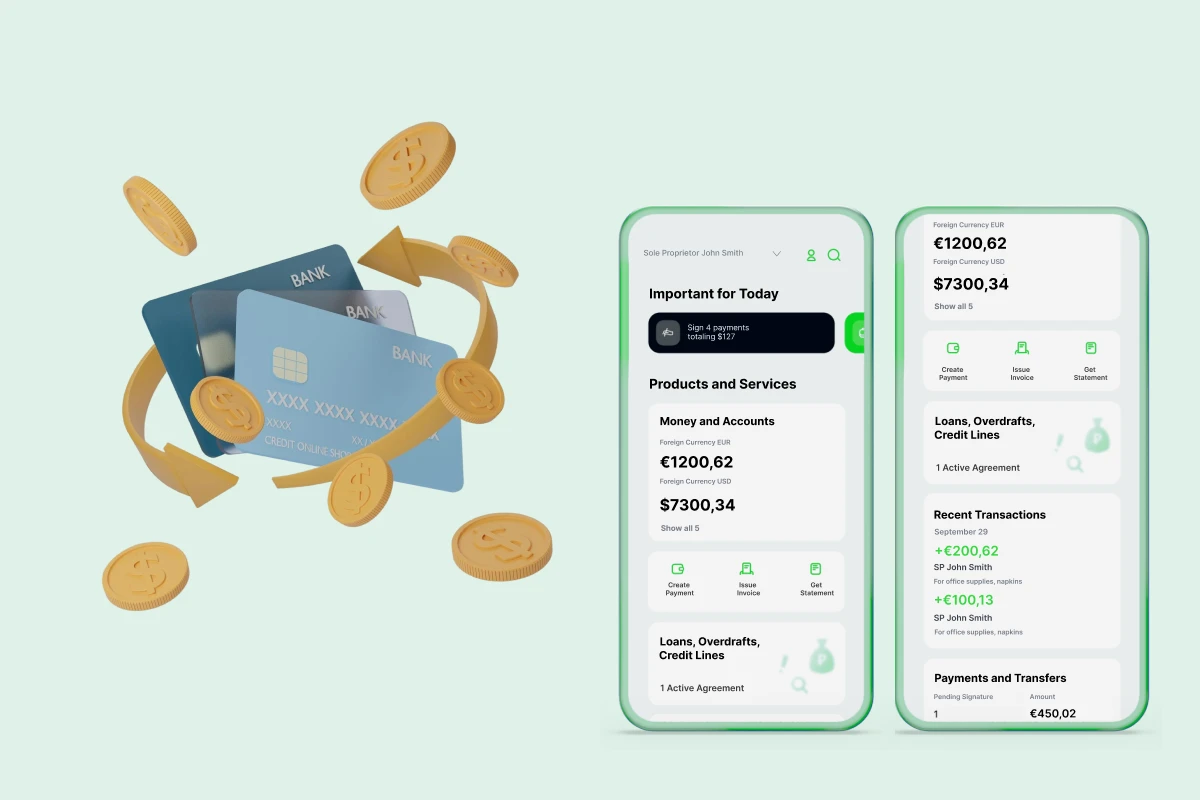
Enterprise Banking Platform Modernization for SME Digital Banking
Banking & Finance

Enterprise Banking Platform Modernization for SME Digital Banking

3x faster SME payment settlement
1M+ payments processed daily after platform scaling
94% reduction in manual payment processing errors
  • Java
  • Kotlin
  • Spring Boot
  • Apache Kafka
  • OpenShift
  • Microservices modernization

⚡ Pain Points We Tackled

A financial institution needed to modernize its monolithic SME banking platform to resolve scalability and performance bottlenecks, ensuring the system could support high transaction volumes and enable rapid digital evolution.

Our Approach

Azati modernized the enterprise banking platform through microservices adoption, payment optimization, and automated delivery. This transformation delivered a scalable, reliable system that significantly increased payment processing capacity and operational efficiency for SME banking.
Applied Methods and Practices

  • Enterprise payment platform modernization: developed and enhanced core payment services supporting multiple payment channels, account operations, transaction processing, and financial reporting, enabling faster and more reliable banking services for SME customers
  • Microservices architecture transformation: supported the migration from a legacy monolithic platform to a modern microservices architecture, improving scalability, service isolation, deployment flexibility, and long-term maintainability while enabling continuous platform evolution
  • High-volume transaction processing: optimized platform performance and implemented event-driven processing using distributed messaging technologies to support rapidly growing payment volumes while maintaining low latency, platform reliability, and operational resilience
  • Platform stability and operational resilience: established engineering practices focused on high availability, production monitoring, incident response, and performance validation, ensuring uninterrupted banking services during periods of peak transaction activity
  • Embedded engineering leadership: provided technical leadership throughout the engagement, coordinating cross-functional development activities, guiding architectural decisions, maintaining code quality, and supporting continuous collaboration with client stakeholders

Solution Features

  • Massively increased transaction capacity: scaled the platform from processing approximately 10,000 payments per month to supporting more than one million payment transactions per day, providing the foundation for continued business growth
  • Faster digital banking operations: accelerated SME payment processing and settlement while reducing manual intervention, enabling faster financial operations for business customers
  • Higher platform reliability: improved system resilience and operational stability, ensuring continuous availability of critical banking services during high-demand periods such as tax seasons and payment peaks
  • Scalable modernization foundation: established a modern microservices architecture that enables faster feature delivery, independent service evolution, and simpler long-term maintenance without disrupting business operations
  • Long-term enterprise platform evolution: supported the client's ongoing digital transformation through continuous modernization, technology upgrades, architectural improvements, and embedded engineering expertise, creating a sustainable foundation for future banking innovation
Enterprise Equipment Leasing Platform Modernization for Benelux Markets
Banking & Finance

Enterprise Equipment Leasing Platform Modernization for Benelux Markets

5x sales growth in the Netherlands following platform rollout
10+ third-party integrations across KYC, AML, credit bureaus, ERP, and e-signature services
2 European markets launched with country-specific compliance workflows
  • Java
  • Spring Boot
  • Apache Kafka
  • AWS
  • Terraform
  • GraphQL
  • Financial platform engineering

⚡ Pain Points We Tackled

A European equipment leasing provider needed to scale its digital platform into the Netherlands and Belgium while navigating complex, country-specific regulatory requirements. The company's original monolithic architecture hindered scalability and slowed the integration of essential processes, including identity verification, AML screening, credit scoring, and contract generation, which prevented the rapid development needed for market expansion.

Our Approach

Azati partnered to modernize the leasing platform (monolith to microservices) and automate the lifecycle, resulting in a scalable solution for European market expansion.

Applied Methods and Practices

  • Workflow-driven loan and leasing automation: implemented a workflow engine that orchestrates customer onboarding, KYC, AML, credit scoring, company verification, and approval processes, enabling consistent execution of complex leasing workflows across different customer types and jurisdictions
  • Regulatory and financial integrations: delivered integrations with identity verification providers, credit bureaus, company registries, ERP systems, supplier platforms, payment services, and electronic signature providers, creating an end-to-end automated leasing process
  • Microservices platform modernization: migrated the platform from a monolithic architecture to microservices, improving scalability, maintainability, and the ability to introduce new products, integrations, and country-specific capabilities without disrupting ongoing operations
  • Automated contract lifecycle management: developed automated generation of leasing agreements, payment schedules, invoices, and legally compliant document packages with qualified electronic signatures and secure cloud storage, significantly reducing manual processing
  • Scalable cloud infrastructure: built and maintained AWS infrastructure, infrastructure-as-code, monitoring, and secure service communication, ensuring reliable platform operations while supporting continuous product evolution and rapid releases

Solution Features

  • Accelerated business growth: supported rapid commercial expansion, contributing to a 5x increase in sales in the Netherlands while enabling successful rollout into the Belgian market through scalable platform capabilities
  • Fully automated leasing lifecycle: replaced fragmented manual processes with an end-to-end digital workflow covering onboarding, compliance verification, contract generation, payment planning, invoicing, and document management
  • Scalable regulatory foundation: established a platform architecture capable of supporting country-specific compliance requirements, allowing expansion into multiple European markets without fundamental architectural redesign
  • Streamlined operational efficiency: reduced operational complexity by integrating more than ten external services into a unified leasing workflow, eliminating manual coordination across disconnected systems
  • Long-term platform evolution: created a maintainable microservices architecture with embedded engineering support, enabling continuous delivery of new functionality, integrations, and regulatory capabilities as the business continues to grow
Enterprise Payment Infrastructure Modernization

Enterprise Payment Infrastructure Modernization

Lean engineering team Platform operations delegated
Enterprise Payment orchestration platform
Engineering leadership Refocused on product architecture
  • PostgreSQL
  • Datadog
  • Grafana
  • Cloudflare
  • AWS
  • Pulumi
  • GitHub Actions
  • Docker

⚡ Pain Points We Tackled

A UK fintech company operating a payment orchestration platform had a lean engineering team responsible for both product development and cloud operations. Infrastructure maintenance, CI/CD support, and developer assistance were consuming senior engineering capacity and slowing platform modernization and payment product development.

Our Approach

Azati incrementally modernized the client's AWS infrastructure, expanded Infrastructure as Code, improved CI/CD, and took ownership of day-to-day platform operations. The engagement strengthened cloud reliability and developer enablement without disrupting the production payment platform.

Applied Methods and Practices

  • Infrastructure as Code and cloud automation: Expanded Infrastructure as Code with Pulumi and automated AWS resource management to make infrastructure changes more consistent and easier to maintain.
  • CI/CD modernization: Maintained and enhanced GitHub Actions and AWS CodePipeline workflows, supporting reliable continuous delivery as the payment platform evolved.
  • Platform engineering and developer enablement: Provided ongoing infrastructure support, troubleshooting, and platform tooling so product engineers could spend less time resolving operational issues.
  • Cloud operations and observability: Supported production infrastructure across AWS, Cloudflare, Datadog, Grafana, Route53, and IAM, improving operational visibility and consistency.
  • Secure platform operations: Implemented infrastructure changes within the client's existing security model, including MFA, YubiKey, Netskope, and controlled access management.
  • Incremental platform modernization: Modernized the operational foundation alongside ongoing payment platform development, avoiding disruptive changes to production services.

Solution Features

  • Engineering leadership refocused on product development: By taking responsibility for infrastructure operations and deployment support, Azati reduced the operational burden on the client's lean engineering organization and allowed leadership to focus more on platform architecture and payment capabilities.
  • Cloud infrastructure modernized without disrupting delivery: Infrastructure and deployment processes evolved incrementally while the payment orchestration platform remained in active production.
  • Greater infrastructure automation: Expanded Infrastructure as Code and automated AWS resource management improved consistency across cloud environments and reduced manual operational work.
  • More efficient developer support: Infrastructure-related requests and troubleshooting were handled through the platform engineering engagement, reducing interruptions for product engineers.
  • Stronger foundation for payment platform growth: Standardized cloud operations, CI/CD, observability, and infrastructure management created a more sustainable foundation for continued platform modernization and new payment capabilities.
Digital Banking Platform Modernization and Continuous Product Evolution
Banking & Finance

Digital Banking Platform Modernization and Continuous Product Evolution

120K+ monthly active users supported
350K+ digital banking transactions processed every month
1.5 seconds average transaction processing time
  • Java
  • Spring Boot
  • Oracle
  • Hibernate
  • Digital banking modernization

⚡ Pain Points We Tackled

A financial institution needed to continuously evolve its digital banking platform while ensuring service reliability, high transaction performance, and ongoing regulatory compliance.

Our Approach

As an embedded engineering partner, Azati enhanced and stabilized the client's digital banking platform. Through ongoing maintenance, feature development, and performance optimization, the team enabled continuous product evolution and improved reliability, supporting growing user activity and regulatory compliance without the need for large-scale replacement.

Applied Methods and Practices

  • Continuous digital banking enhancement: developed and integrated new functionality across mobile and online banking channels, expanding digital services while improving usability, customer engagement, and overall platform capabilities
  • Regulatory compliance delivery: implemented ongoing updates required by changing Central Bank regulations, helping ensure the platform remained compliant, audit-ready, and aligned with evolving financial industry requirements
  • Performance optimization: optimized Oracle database operations, query execution, and backend processing to improve transaction performance, increase responsiveness, and support growing digital banking workloads
  • Platform stabilization and production support: provided continuous maintenance, defect resolution, and SLA-driven production support to ensure uninterrupted banking services and rapid resolution of operational issues
  • Reliable enterprise delivery: worked closely with business stakeholders throughout requirements analysis, development, testing, and deployment, creating additional engineering capacity for platform evolution while maintaining API consistency and delivery quality

Solution Features

  • Enhanced digital banking experience: delivered new digital banking capabilities that improved customer experience across online and mobile channels while supporting continued growth in digital service adoption
  • Stable regulatory compliance: enabled the organization to respond quickly to changing regulatory requirements, reducing compliance risk while maintaining uninterrupted banking operations
  • Faster and more reliable transactions: database optimization and backend improvements streamlined platform performance, reduced transaction processing times, and improved responsiveness for high-volume banking operations
  • Higher operational reliability: continuous monitoring, rapid defect resolution, and proactive platform maintenance improved service stability while helping the client consistently meet SLA commitments
  • Sustainable platform modernization: established an ongoing modernization approach that allowed the bank to continuously improve its digital banking platform, balancing new feature delivery, operational stability, and regulatory compliance without disruptive system replacement
Financial Workflow Automation and Banking Integration Platform
FinTech

Financial Workflow Automation and Banking Integration Platform

6 core financial platform domains enhanced
Tens of banking integrations and financial data sources supported
10+ security mechanisms maintained and strengthened
  • Ruby on Rails
  • React
  • PostgreSQL
  • OpenAI
  • Plaid
  • Financial workflow automation

⚡ Pain Points We Tackled

A Latin American FinTech needed to scale its financial automation platform—which handles banking connections, transaction synchronization, and reconciliation—while ensuring continuous delivery of new features without compromising financial accuracy. They required expertise to expand banking integrations, improve testing, and modernize the platform while maintaining operational stability.

Our Approach

Azati embedded senior Ruby on Rails engineers into the client's product team to enhance core financial workflows, improve banking integrations, strengthen security, modernize parts of the platform, and expand automated quality assurance. The engagement combined feature development with stabilization of existing functionality, enabling continuous product evolution while preserving the integrity of financial operations.

Applied Methods and Practices

  • Banking connectivity and transaction synchronization: enhanced integrations with multiple banking institutions and financial services to improve transaction synchronization, account aggregation, monitoring, and recovery of missing financial data across connected systems
  • Financial operations and reconciliation: stabilized reconciliation workflows, ledger management, transaction processing, and accounting logic to maintain financial consistency as the platform evolved and new capabilities were introduced
  • Enterprise reporting and financial visibility: improved reporting capabilities that provide organizations with centralized visibility into cash flow, financial activity, operational metrics, and exportable business reports across multiple financial institutions
  • Secure financial platform: maintained and enhanced authentication, authorization, API security, audit logging, encrypted financial data handling, and secure integration mechanisms required for enterprise financial applications
  • AI-assisted financial automation: integrated OpenAI-powered transaction categorization into existing financial workflows, combining confidence-based automation with human review to improve financial data processing efficiency while preserving operational control

Solution Features

  • More reliable financial operations: improved the stability and consistency of reconciliation, ledger management, transaction processing, and banking synchronization, strengthening the reliability of day-to-day financial operations
  • Stronger banking integration ecosystem: supported dozens of banking integrations and external financial data sources, allowing the platform to continue expanding its connectivity while maintaining synchronization quality
  • Lower delivery risk: expanded automated testing, improved documentation, and stabilized legacy components, increasing confidence when delivering enhancements to business-critical financial functionality
  • Improved financial visibility: enhanced centralized access to financial information through synchronized banking connections, reporting capabilities, and transaction management, helping organizations make better-informed financial decisions
  • Sustainable product evolution: enabled the client to continue evolving its financial automation platform through embedded engineering support, combining new feature delivery with ongoing modernization, quality improvements, and platform stabilization

Last updated

Got a job for Azati? Let’s talk business!

This site is protected by reCAPTCHA and the Google Privacy Policy and Terms of Service apply.

What's next?

  • 1. Tell Us Your Story
    Describe your project. We come back within 24 hours with team availability and a rough plan. NDA on request before the first call.
  • 2. Get Your Roadmap
    Receive a detailed proposal with scope, team composition, timeline, and costs tailored to your goals.
  • 3. Start Building
    Azati aligns on details, finalize terms, and launch your project with full transparency.