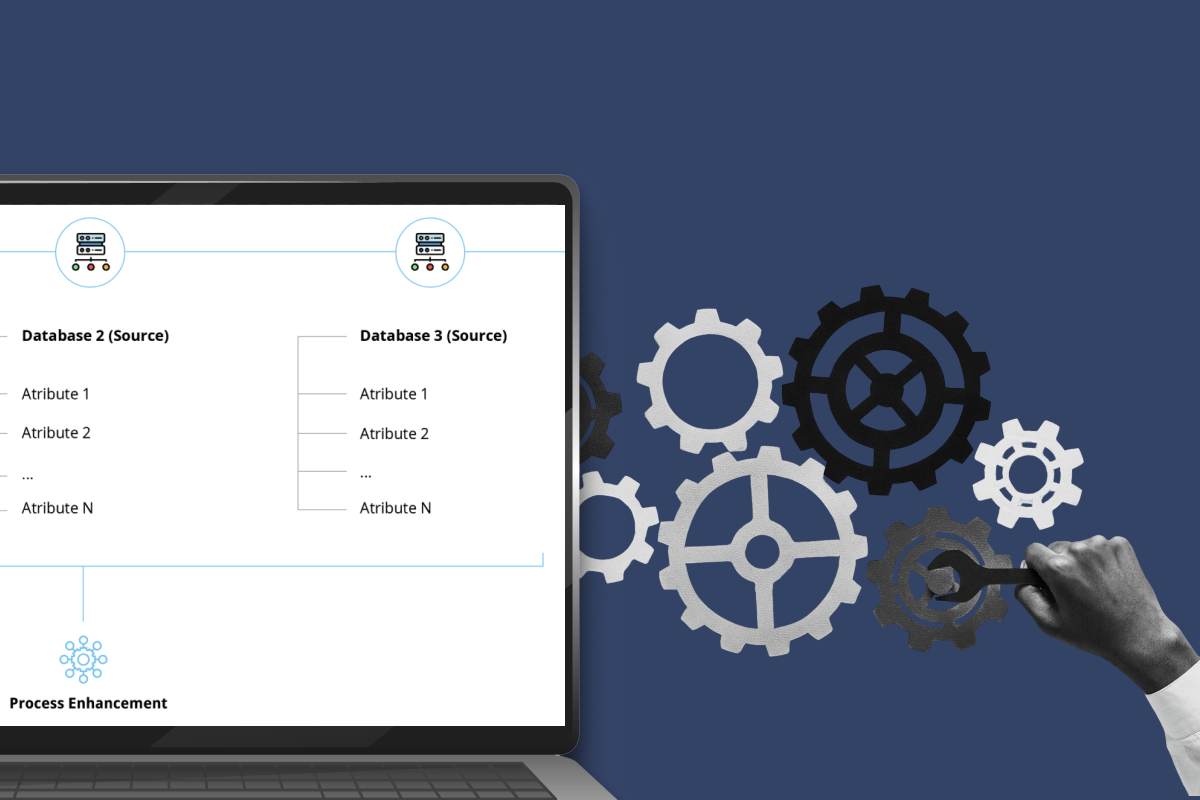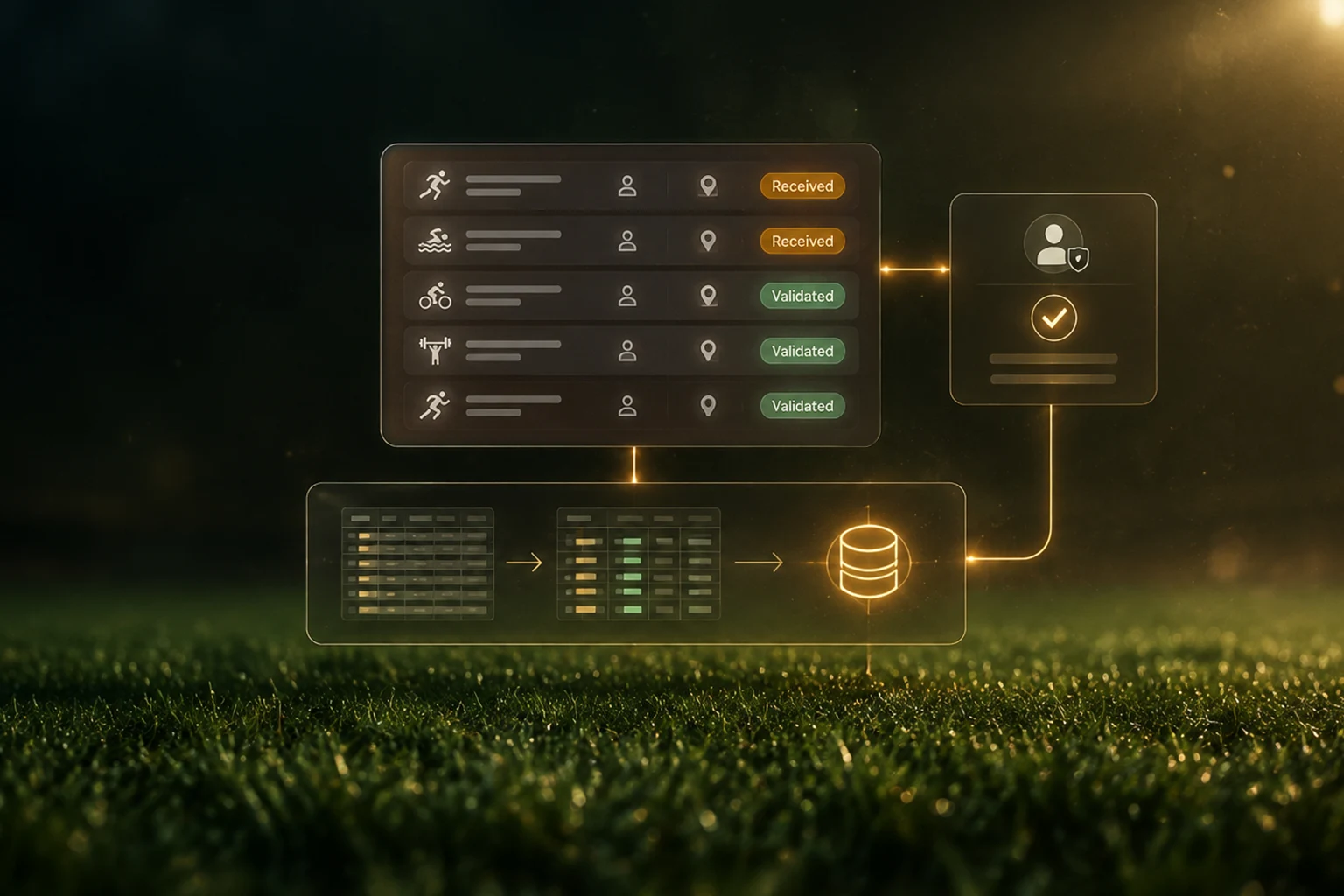
Azati approached the engagement as workflow modernization rather than application replacement. The team mapped how data entered the process, who could create or modify records, how information moved through validation stages, what structure the receiving repository required, and how approved data was delivered.
The project's specifics
Case study at a glance: Azati developed a centralized sports data platform that connected source ingestion, event and participant data management, role-based validation, transformation, repository delivery, and reporting.
The business problem: Spreadsheet-based coordination and manual handoffs made it difficult to maintain a consistent process across users and systems.
The engineering challenge: The workflow had to satisfy existing source and destination requirements while remaining simple enough for users accustomed to Excel-based processes.
What was at stake: The organization needed a controlled path from incoming information to validated, repository-ready data, not simply another interface for entering records.
Technology stack

Angular

TypeScript

Java

Spring Boot

.NET

MySQL

Alibaba Cloud

Docker

Kubernetes

Jenkins

Datadog

Selenium

Cucumber

JMeter
How can sports organizations modernize complex data workflows without disrupting the existing systems and processes?
The organization relied on multiple steps and participants to collect, review, structure, and deliver sports event and participant data. Without a common workspace, employees had to coordinate information across fragmented workflows, while data still needed to meet the structural requirements of downstream systems.
This became particularly challenging as users were accustomed to simple Excel- and printout-based processes, while the underlying data workflow required defined statuses, role-dependent validation, transformation, and controlled delivery to a centralized sports statistics repository.
Challenge 01
Replacing spreadsheet-based coordination with a controlled workflow
Teams needed a common way to collect, view, edit, and exchange sports data without relying on disconnected files and manual coordination.
#1
Challenge 02
Making validation and approval responsibilities explicit
Different users handled different stages of the process, creating a need for clear data statuses, role-dependent validation, and controlled progression toward delivery.
#2
Challenge 03
Introducing structure without making the workflow harder for users
The data structure required by downstream systems didn't always match familiar spreadsheet-based workflows, making usability and process adoption as important as technical requirements.
#3
Why Azati for complex data workflow modernization?
The difficult part was not building another application. It was making the entire path from source data to repository delivery understandable, controlled, and usable.
The result was a centralized operational workflow connecting source ingestion, data management, role-based validation, transformation, repository delivery, and reporting. Azati also applied prior experience with sports-event data structures, data-formation processes, and vendor interactions to make the workflow practical for nontechnical users.
Modernize a complex data workflow without replacing everything around it
Still coordinating operational data through spreadsheets, manual validation, or disconnected systems? Azati can help assess the existing workflow and identify where application development, integration, or targeted modernization can remove the biggest points of friction.
Assess your data workflowHow Azati solved the data workflow challenge
01
Centralized sports event and participant data management
Azati developed a centralized sports data management application for ingesting information from source systems and managing event and participant records in one operational workspace.
Business outcome: Teams gained one operational workspace for managing sports event and participant data instead of coordinating primarily through fragmented Excel files and printed materials.
Key capabilities:
- Sports event data management
- Participant data management
- Source-system ingestion
- Record creation and maintenance
- Search and filtering
- Data visualization
- Controlled record updates
02
Role-based sports data validation and approval workflows
Azati implemented role-based sports data validation and approval workflows in which each user could view, edit, validate, or approve information according to their responsibilities. Status-based controls made the progression from unverified source data to approved repository data visible and manageable.
Business outcome: Data review became a defined operational step, with clearer responsibility for checking, approving, and progressing information before delivery.
Key capabilities:
- Role-based access
- Sports data validation
- Approval workflows
- Status-based progression
- Permission management
- Controlled data processing
03
Sports data transformation and repository integration
The application transformed collected and validated information into the structure required by the receiving system before delivery to the central sports statistics repository. This allowed users to work in an operational workflow suited to their responsibilities while the platform handled the system-specific data structure required downstream.
Business outcome: Validated data could move into a consistent destination format without requiring users to manage system-specific transformation manually outside the application.
Key capabilities:
- Sports data transformation and repository integration
- Data structuring
- Source-to-repository workflows
- Centralized data delivery
- Sports statistics integration
- Structured data processing
04
Controlled sports data delivery and reporting
Azati implemented controlled data submission and on-demand export to support different downstream integration and reporting requirements.
Business outcome: The organization gained more flexibility in how validated information is delivered and subsequently used for reporting.
Key capabilities:
- Controlled data submission
- Authorized data delivery
- On-demand export
- Parameter-based reporting
- Downstream data distribution
05
User-centered operational data workflow for non-technical teams
The application interface was designed for users who had previously worked primarily with Excel and printed materials, while still reflecting the multi-step requirements of the underlying data architecture.
Business outcome: The organization could introduce a structured data platform without exposing users to unnecessary complexity from the source and receiving systems.
Key capabilities:
- User-centered operational data workflow
- Multi-step process design
- Role-specific interfaces
- Search and visualization
- Workflow-oriented UX
06
An operational platform designed for continued use
The solution was deployed in a clustered environment with application monitoring, automated testing, load testing, and continuous delivery practices.
Business value: The platform became an operational system for sports data collection and reporting rather than a one-off data-entry application. It was designed to support continued use, with Azati providing ongoing support and further development.
Key capabilities:
- Production-ready and monitored application environment
- Clustered application environment
- Kubernetes
- Docker
- Application monitoring
- Automated testing
- Load testing
- Continuous delivery
Why replacing the spreadsheet was not enough
Replacing spreadsheets with a new interface would not have solved the underlying problem. The workflow still had to account for source-system structures, destination requirements, user responsibilities, validation states, and reporting needs.
Azati therefore treated the project as workflow modernization rather than interface replacement: one controlled path for collecting, managing, validating, transforming, distributing, and reporting on sports data.
The result was not simply a new interface for entering data. It was a defined operational path from incoming information to validated, repository-ready data.
Modernize the workflow around your existing systems
Bring us your current processes, source systems, validation rules, and delivery constraints. We will help identify whether application development, data integration, or workflow modernization is the right next step.
Discuss your data workflowDelivery & outcomes
| Area | Azati contribution | Business outcome |
|---|---|---|
| Data collection | Source ingestion and centralized record management | One operational workspace for sports data |
| Validation | Role-based permissions, statuses, and approval workflows | Clearer ownership of data review |
| Transformation | Systematic preparation for receiving-system requirements | Reduced the need for users to manage destination-specific formatting manually |
| Distribution | Controlled submission and on-demand export | More predictable and flexible data delivery |
| Reporting | Parameter-based reporting | Data available in a consistent reporting workflow |
| User experience | Interface designed around existing Excel-oriented habits | Structured workflow without unnecessary user complexity |
| Operations | Testing, monitoring, and clustered deployment | Platform designed for continued operational use |
Business impact
One operational workspace
Teams gained a shared environment to collect, manage, validate, and distribute sports data instead of coordinating primarily through spreadsheets and printed materials.
Clearer ownership of data review
Role-based permissions, statuses, and approval steps made responsibilities visible across the data lifecycle.
Less manual handling of destination formats
The platform prepared data for downstream system requirements within the workflow, reducing the need for users to manage system-specific formatting manually.
Modernization without replacing the ecosystem
The application worked with existing source, repository, and reporting requirements rather than requiring a clean-sheet replacement.
Designed for continued operational use
The platform supports sports data collection and reporting, with Azati providing ongoing support and further development.
Who this approach is for
This approach is relevant to organizations where operational data moves through multiple users, source systems, validation stages, and downstream repositories.
It is particularly relevant to sports organizations, sports data providers, broadcasters, and other enterprises that:
- Rely heavily on spreadsheets or manual coordination
- Receive information from multiple sources
- Need different users to review, validate, or approve data
- Must transform information before it reaches a central repository
- Need to work within existing source and destination system constraints
- Want to modernize the workflow without replacing the surrounding systems
When this approach is not the right fit
This approach is not designed for clean-sheet analytics or AI projects with no existing operational workflow to preserve.
It is also not the strongest fit when:
- The primary requirement is a standalone BI dashboard
- The project is mainly about building an ML model
- There are no meaningful source/target system constraints
- The organization only needs a simple CRUD application
- There is no need for controlled data validation, transformation, or distribution
The value of this type of engagement comes from working within an existing operational and data ecosystem, rather than building an isolated application from scratch.
Frequently asked questions
Yes. A data platform can be introduced around existing source and destination systems instead of requiring them to be replaced. The platform can manage data collection, validation, transformation, and delivery while preserving the requirements of the surrounding systems. In this engagement, Azati built the workflow around existing source systems and a central sports statistics repository, transforming information into the structure required downstream.
A sports data platform provides a controlled environment for collecting, managing, validating, transforming, distributing, and reporting on sports data. It can connect operational users, source systems, repositories, and downstream workflows. In this sports data workflow modernization engagement, Azati's contribution covered this full operational path for event and participant data, from source ingestion and record management through validation, transformation, repository delivery, and reporting.
The most effective approach is usually to replace fragmented file-based coordination with a shared workflow while preserving the business rules users already rely on. This means moving collection, editing, validation, approval, and delivery into one controlled environment rather than simply recreating a spreadsheet interface. Azati designed the platform for users accustomed to Excel and printed materials while introducing role-based validation, status controls, transformation, and controlled delivery.
Data validation can be built directly into the operational workflow through defined roles, permissions, statuses, and approval steps. This makes responsibility for reviewing and approving information explicit before it reaches downstream systems. In this engagement, Azati implemented role-based validation and status-based progression from incoming information toward approved delivery to the central sports statistics repository.
Integration requires understanding both sides of the workflow: how information enters the platform and what structure the receiving system requires. The platform can then transform and prepare data before controlled delivery. Azati's solution ingested source information, managed it through validation and editing, transformed it into the required structure, and delivered it to the existing central sports statistics repository.
The user experience should simplify the operational process without hiding the controls required by the underlying data workflow. Familiar interaction patterns can be retained while validation, permissions, statuses, and system-specific requirements are handled by the application. For this engagement, Azati designed the UI around users familiar with Excel and printed materials while preserving the multi-step workflow required by the source and destination systems.
Yes. Role-based access can control which users can view, edit, validate, approve, or distribute information at different stages of a workflow. This is particularly useful when data passes through several teams before reaching a downstream repository. Azati implemented role-based access and validation in the sports data platform, so different participants could perform the actions appropriate to their responsibilities.
A targeted workflow modernization can introduce a new operational layer around existing systems rather than forcing a clean-sheet replacement. The new application can coordinate users, validation rules, data transformation, and delivery while respecting existing interfaces and repository requirements. That was the approach in this engagement: Azati modernized the workflow around existing source and destination requirements rather than replacing the surrounding ecosystem.
There is no reliable universal timeline because complexity depends on the number of source and destination systems, data structures, workflow roles, validation rules, reporting requirements, and integration constraints. This engagement illustrates why discovery is important: the complexity came not only from the application itself but from fitting the workflow between existing data sources, users, validation stages, and the central repository.
Cost depends primarily on integration complexity and workflow requirements rather than the number of screens in the application. Important factors include source and destination systems, data structures, user roles, validation rules, reporting, deployment requirements, and ongoing support. This engagement involved source ingestion, role-based validation, transformation, controlled repository delivery, reporting, clustered deployment, testing, and ongoing support, illustrating why these requirements need to be assessed before estimating a project.
Sports data platform development can include source-system integration, event and participant data management, role-based validation, approval workflows, data transformation, repository delivery, reporting, monitoring, and ongoing application support. The scope depends on the number of systems, workflow roles, data structures, and downstream requirements involved.
In this engagement, Azati developed the operational workflow connecting source ingestion, data management, validation, transformation, repository delivery, and reporting.