Reconstructing how the back office works today
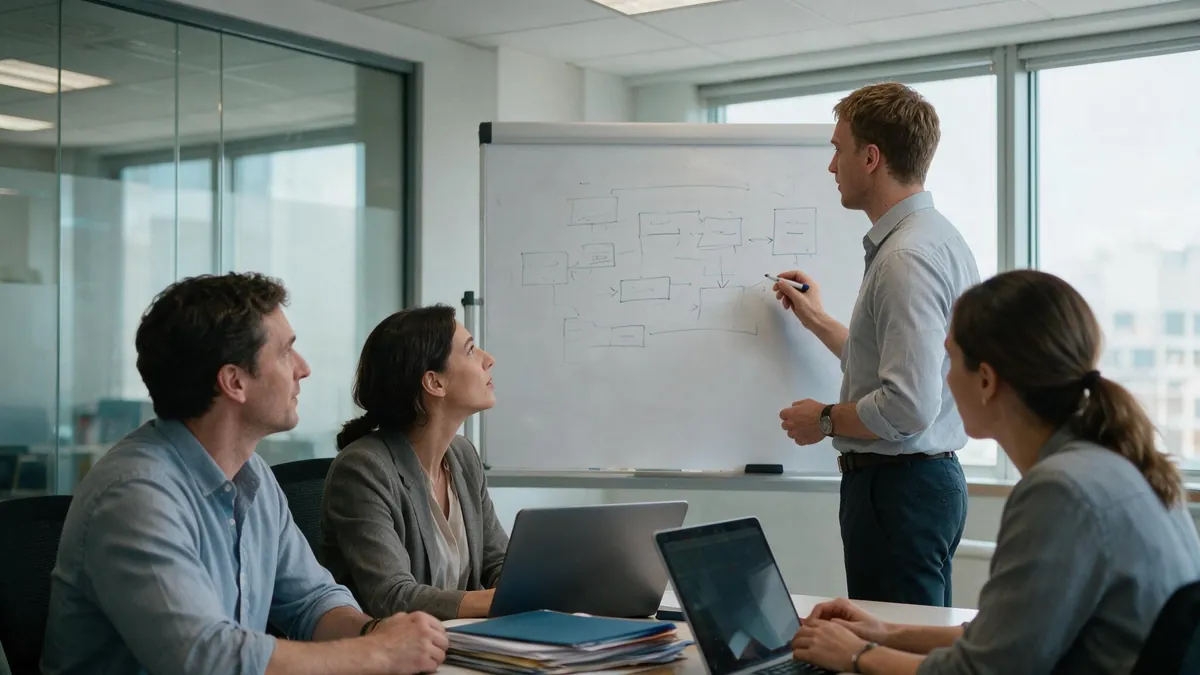
Azati's business analyst studied the current state of the back office and produced a full as-is description of how it worked.
How do you migrate a mobile bank's back office when its documentation is missing?
Azati's analysts documented a Mexican mobile bank's back office as-is and to-be, drew BPMN and sequence diagrams, and supported card product migration to a new vendor platform. The client's work with the vendor drew on those materials. Explore our banking software engineering work.
business and systems analysts embedded in a bank's back-office and card product migration
full descriptions of the bank's back office, current state and target state
diagrams of the main customer processes and of frontend and backend interaction
The legacy system was not built for card products, and moving to a new platform needed a shared, written picture of how the bank actually worked.
The client is a Mexican fintech with a mobile bank, 100-200 employees, and individuals as its main customers. Retail credit cards are part of what it offers. Its legacy system was not designed for card products, so the bank was moving its backend business processes and its back office from one platform to another, owned by an outside vendor.
The back office covered customers, applications, cards, technical support, and administration. The client had tried to analyze it before, but its business analysts changed often, and nobody could carry the work from start to finish.
Azati joined as outstaffed analysts: a business analyst first, a systems analyst later, on a time-and-materials basis. According to the project team, the client chose Azati after interviews and found the rates attractive. This was the first engagement between the two companies.


A back-office and backend migration to a new vendor platform for a Mexican mobile bank, with Azati providing business analysis first and systems analysis and integration work later.
| Parameter | Detail |
|---|---|
| Client | A Mexican fintech with a mobile bank, 100-200 employees |
| Customers | Individuals, including retail credit card holders |
| Business pain | The legacy system was not designed for card products, and the bank was moving to another backend platform |
| What moved | Backend business processes, the back office, and card products |
| Azati role | Outstaffed business analyst, then systems analyst, on time and materials |
| Method | Agile and Kanban |
| Back-office modules | Five: customers, applications, cards, technical support, administration |
| Diagram types | BPMN process diagrams and sequence diagrams |
| Stack | C#, PostgreSQL |
Five things got in the way: a system not built for cards, missing documentation, a shifting architecture, many departments with uneven requirements, and a client team whose analysts kept changing.
The old platform could not support the bank's card business, which is why the move happened at all:
The project lacked documentation, so the current state had to be established first:
The target architecture was not fixed during the project:
A back office touches many teams, and they did not always agree:
Earlier attempts to describe the work stalled because ownership kept moving:
They wrote down the current back office first, described the target second, and turned the main processes into diagrams that the client and its platform vendor could work from.
Azati's business analyst studied the current state of the back office and produced a full as-is description of how it worked.
A to-be description followed, covering how the back office should work after the move to the new platform.
BPMN and sequence diagrams covered the main business processes: what customers do in the mobile app, and how the frontend and backend interact.
The client's interaction with the vendor that owns the new platform was built in part on these diagrams and descriptions.
When a systems analyst joined, the work extended to integrations for migrating card products, on C# and PostgreSQL.
Bring what you have, even if it is a few screenshots and a lot of tribal knowledge. We will tell you what an as-is and to-be analysis would need to cover.
Talk about your migration analysisFour pieces of work: an as-is description, a to-be description, BPMN and sequence diagrams, and systems analysis with integration work for card product migration.
Azati's business analyst studied the current state of the bank's back office and produced a full description of how it worked.
Azati also described how the back office should work after the move to the new vendor's platform.
Azati prepared BPMN process diagrams for the main business processes a customer goes through in the mobile app, and UML-style sequence diagrams for how the frontend and backend interact.
When a systems analyst joined, the work moved toward integrations for migrating retail credit card products off the legacy system, on C# and PostgreSQL.
The client ended up with a written current state, a written target state, and diagrams of its main processes, which its work with the new platform's vendor drew on.
| Deliverable | What it covers |
|---|---|
| As-is description | How the back office worked before the migration |
| To-be description | How the back office should work on the new platform |
| BPMN diagrams | Main business processes in the mobile app |
| Sequence diagrams | Frontend and backend interaction |
| Integration analysis | Migration of card products |
It gave the client and the platform vendor written, diagrammed descriptions to base their work on.
The client did not share numeric results, so the effect is described in work products and in how they were used.
Where documentation was missing, the as-is description became the record of how the back office worked.
The process of working with the vendor that owns the new platform was built in part on Azati's diagrams and descriptions.
BPMN diagrams made the customer's path through the mobile app explicit, and sequence diagrams did the same for frontend and backend.
A systems analyst joined to work on integrations for migrating retail credit cards.
The analysts came out of the project with a working understanding of a mobile bank's back office and its business processes.
Three lessons: write the current state before designing the target, treat a diagram as an agreement between teams, and expect conflicting inputs when many departments are involved.
With documentation missing, a written as-is description is the baseline for what the new platform has to replace.
A BPMN process model gives the client and the vendor one version of a process to point at.
Many departments and inconsistent requirements made conflicting inputs part of the work. This is how organization shapes system design in practice: a system reflects the communication of the teams around it.
A platform migration needs four artifacts first: an as-is description, a to-be description, a process model, and an interaction model. This project produced all four.
| Artifact | Question it answers | Format used here |
|---|---|---|
| As-is description | What does the current system actually do? | Written description of the back office |
| To-be description | What should the new system do? | Written description of the target state |
| Process model | Who does what, and in what order? | BPMN diagrams |
| Interaction model | What do the app and the backend exchange at each step? | Sequence diagrams |
Azati worked as an outstaffed analytical team embedded in the client's migration.
Azati joined the client's team through a time-and-materials engagement, starting with a business analyst and adding a systems analyst later.
The engagement ran in Agile, and the business analysis work used a Kanban flow.
The project involved many client departments and several architecture changes, and it started without complete documentation.
It fits banks and fintechs that are moving to a new backend platform and need the current and target states written down before the move.
If you're the one who has to justify paying for analysis before any code gets written on a platform migration, this FAQ is written for that conversation.
A back-office migration moves a bank's customer, application, card, and support processes to a new platform.
On this project, Azati described the current back office, described the target state, and diagrammed the main processes the new platform had to support.
Azati supplied business and systems analysts to a Mexican mobile bank migrating its back office to a new vendor's platform.
The work, which also covered the banking app backend, produced an as-is description, a to-be description, BPMN and sequence diagrams, and integration work for card product migration on C# and PostgreSQL.
An as-is description shows what the old system does today, which is the baseline for the new platform.
Here the documentation was missing, so the current state had to be written down before the target state could be described.
BPMN diagrams show who does what and in which order, and sequence diagrams show what the app and backend exchange.
Azati prepared both for the mobile bank's main customer processes, and the client's work with the new platform's vendor was built in part on them.
Plan the integrations between old and new systems around the gap: the legacy system was not designed for card products.
On this project, Azati's systems analysis and development work covered integrations for retail credit card migration, using C# and PostgreSQL.
Treat analysis as the way to create missing documentation, and write down the current state before designing the target.
Azati's business analyst produced a full as-is description of the back office, so the later to-be description and diagrams rested on written facts.
Yes, analysts can join a migration as outstaffed specialists on a time-and-materials basis, and this engagement worked that way.
Azati started with a business analyst, added a systems analyst later, and the team worked in Agile.
The architecture changed several times, many departments had to coordinate, and their requirements were not always consistent.
The documentation was also missing, so the current state of the back office had to be established before the target state could be described.
Tell us what you are moving and what is documented today. We will outline the as-is, to-be, and integration work it needs.
Book a call with our expertsExplore our successful projects and see how Azati delivers measurable results for our clients.

One of Europe's largest state-owned banks was running an outdated deposit system that lacked key features and needed major architectural changes. Manual steps and fragmented components slowed back-office work, raised the risk of errors, and made regulatory compliance harder.
Azati worked in Scrum sprints with weekly iterations and two-week demos, collaborated closely with the in-house team, and delivered a modular solution that plugs into the existing banking ecosystem.

A bank wanted to automate loan issuance, remove paperwork, and reduce manual errors while letting customers apply in malls and bank offices. Long counter waits, manual verification delays, and error-prone work across several internal systems made this hard to scale nationwide.
Azati ran Scrum with two-week sprints, first building a mobile app for real-time loan applications with QR codes, SMS confirmation, and digital signatures, then a unified bank-office system on a microservices architecture of 37 services.
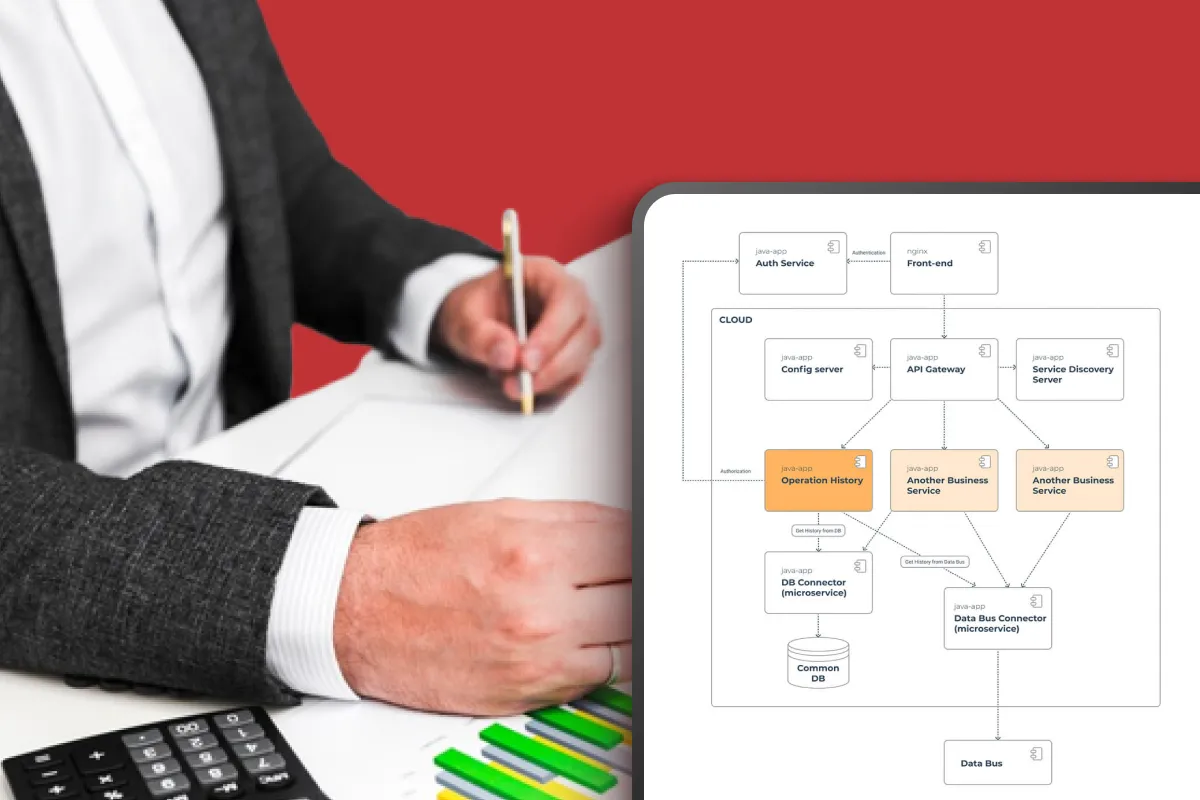
A financial institution's heavily loaded monolithic backend caused mobile app load times of around 15 seconds and limited system performance. The client needed to improve responsiveness and scalability without compromising security or regulatory requirements.
Azati redesigned the backend architecture by decomposing the monolith into independent microservices, optimizing SQL and data processing, and separating transaction history from the main mobile workflow. The resulting architecture improved performance, fault isolation, and scalability while providing a foundation for further development.

A UK fintech operated a payment orchestration platform with a lean engineering team responsible for product development, cloud infrastructure, and operational support. Infrastructure work and an extended search for senior DevOps expertise were diverting engineering leadership from platform architecture and payment capabilities.
Azati embedded platform engineering expertise into the client's existing organization, modernizing AWS infrastructure, Infrastructure as Code, CI/CD, monitoring, and operational processes without disrupting ongoing payment platform development.
Last updated