
Proof of Concept Delivered
Successfully demonstrated automated detection of road defects, validating the feasibility of AI-assisted road maintenance.
Azati Labs developed a proof-of-concept prototype using machine learning and computer vision to detect road defects from images and videos. The solution can assist municipal governments in automating road defect detection and repair cost estimation while also helping automotive manufacturers reduce maintenance costs for smart vehicles.
accuracy of pothole and road defect detection on annotated datasets
reduction in manual inspection time when using the prototype
success rate of video frame processing without loss of defect detection quality


Manual inspection of roads is time-consuming, inconsistent, and prone to errors. The system was developed to automatically detect potholes and other road surface defects from images and videos, reducing inspection effort, improving accuracy in defect identification, and enabling more efficient maintenance planning.
No publicly available datasets existed with sufficient images of potholes or road defects. Using open-source images yielded poor model performance, so the team collected live data from their home city's roads, which required significant planning and fieldwork.
Captured videos and images had variations in lighting, weather, and camera angles, causing inconsistencies. Each frame had to be manually mapped and validated to ensure usable data for training, making the process labor-intensive.
Many video clips were recorded in low resolution or poor quality. These had to be filtered out, as using them would distort model training. Handling high frame-rate videos required splitting them into keyframes and individually labeling each frame, adding complexity and time to the process.
The team collected road footage from various vehicles to gather real-world images and videos, ensuring diverse environmental conditions for robust model training.
Videos were split into keyframes, each manually mapped to accurately identify potholes and other defects, creating a high-quality training dataset.
A specialized object detection model was trained from scratch using the curated dataset, optimized for road defect detection.
The prototype processes images or video clips, outlines detected defects with bounding boxes, and outputs annotated images or videos. Videos are reassembled after frame-by-frame analysis.
Bring your complexity. We'll bring the plan. Tell us about your project and we'll get back within one business day.
Inquire for more infoThe prototype processes both images and videos, splitting videos into individual frames to analyze each for potential road defects. This ensures no defect is missed, even in moving footage, and enables accurate detection across different conditions.
A custom-trained object detection model identifies potholes and other road defects from images and video frames. The model is optimized for road surface variations and varying lighting conditions, providing high accuracy in defect detection.
To ensure high model accuracy, collected footage is manually mapped and annotated. This process allows the model to learn correct classifications, even in challenging conditions such as varying angles, shadows, or partial defects.
The system outputs annotated images or reconstructed videos with detected defects highlighted. This visualization helps engineers and maintenance teams quickly identify problem areas and plan repair work effectively.
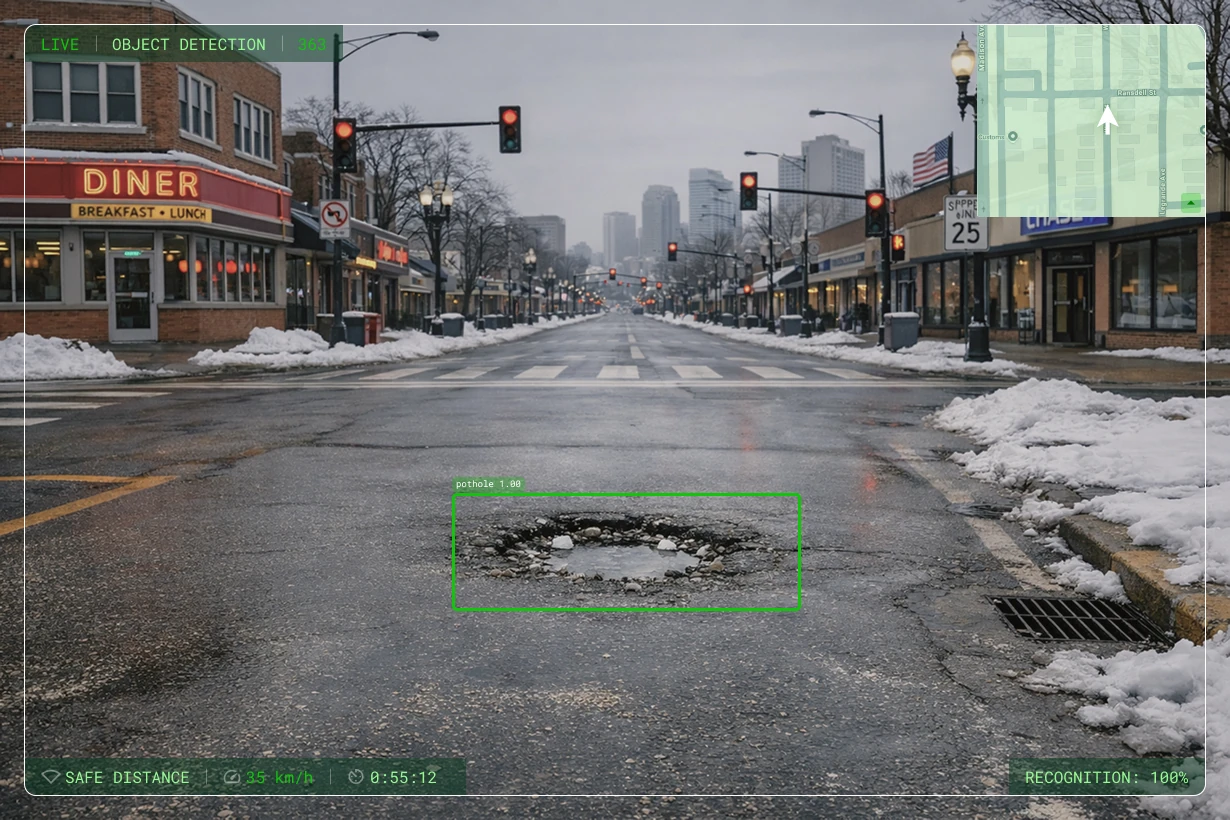
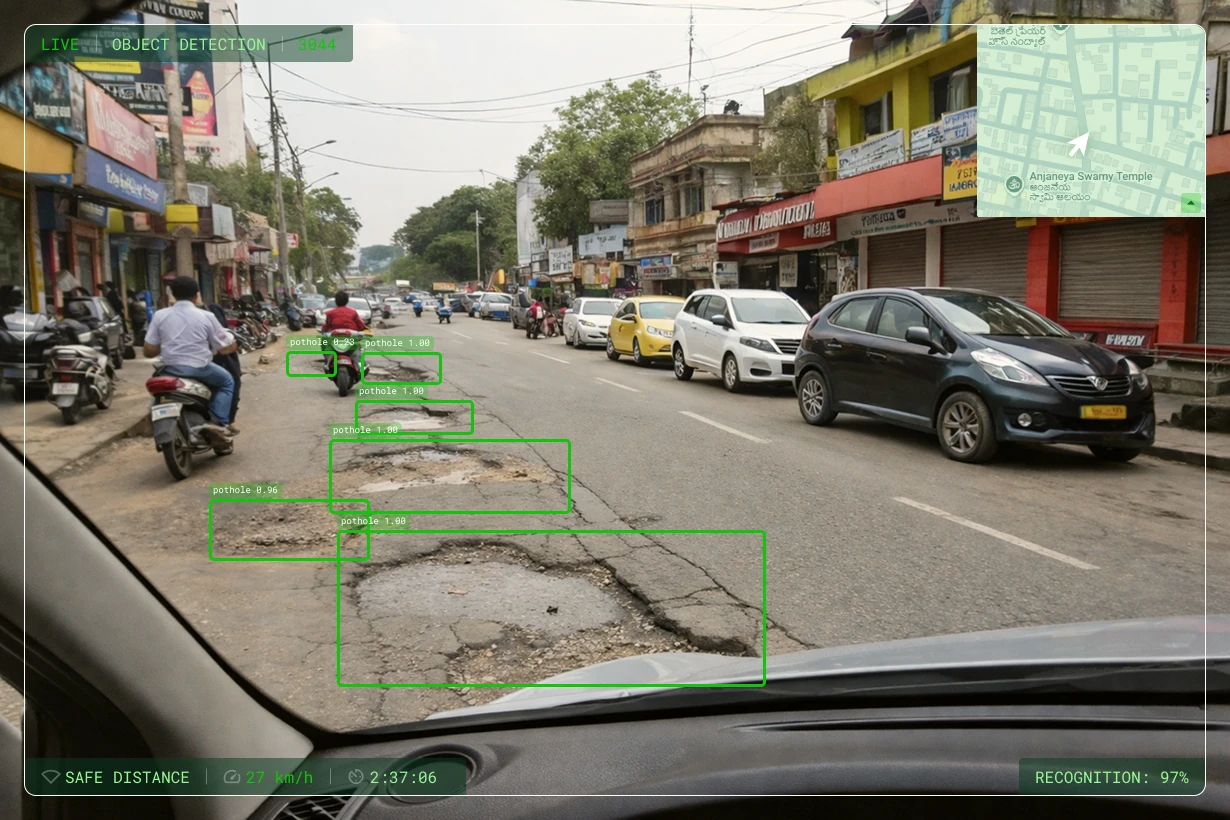
Successfully demonstrated automated detection of road defects, validating the feasibility of AI-assisted road maintenance.
High-quality, manually mapped data enhanced the model's detection precision, establishing a baseline for further optimization.
Prototype enables municipalities and automotive companies to automate defect detection, reduce maintenance costs, and support strategic planning for repairs.
Provides a platform for iterative improvements in computer vision models applied to infrastructure monitoring.

3D building digital twin SaaS: 24-month full-cycle engagement covering browser-based 3D viewer, cloud processing pipeline, AI models, and real-time collaboration.

Azati delivered a production-grade real estate catalog platform at 3х speed using AI coding agents with complete senior-engineer ownership from architecture to deployment.
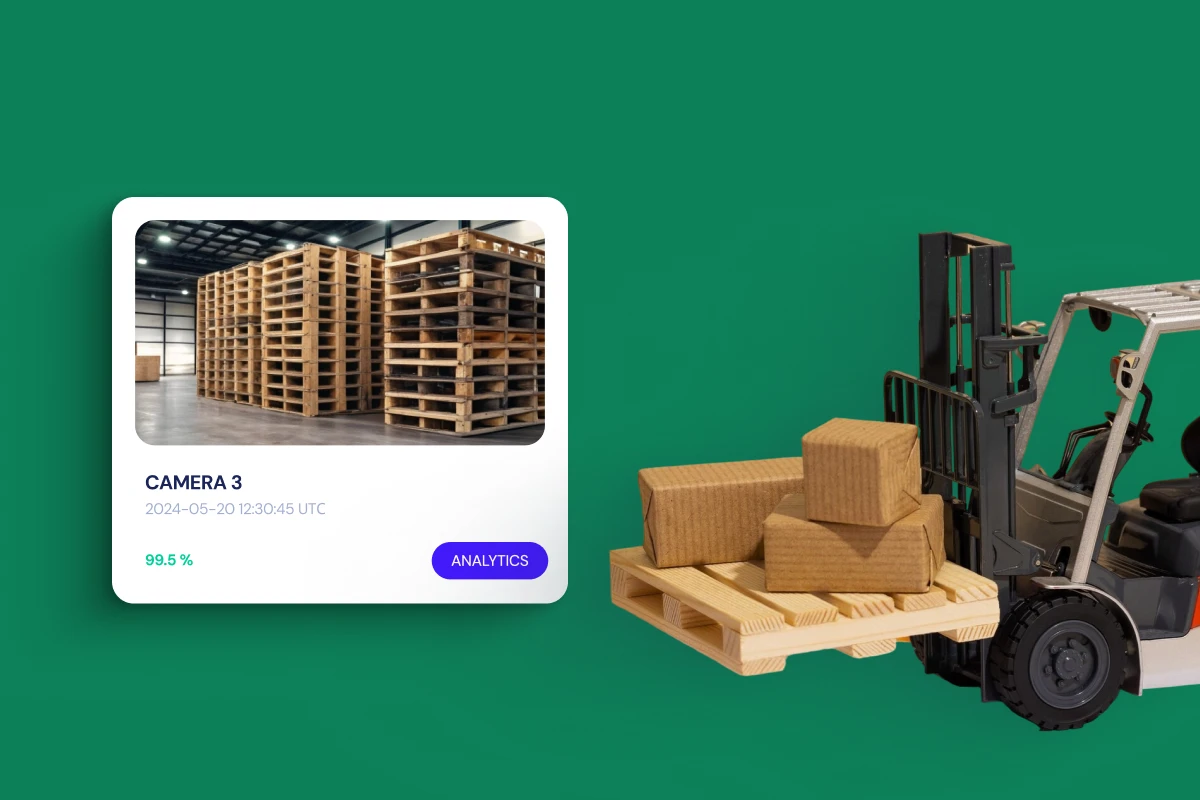
Offline computer vision system for automated pallet counting using edge AI.

Large-scale ECM system for online property auction marketplace.

Progressive web scraping platform compiling customer data dashboard.

Cross-platform mobile app for on-site inspections with geolocation tracking.
Last updated
