Document Management & Workflow QA for the Energy Sector

A large energy sector operator needed to replace a fragmented, paper-heavy document approval process spanning multiple facilities with a single web platform, backed by an AI assistant that let teams query thousands of pages of regulatory documentation instead of waiting hours for an analyst's answer. Azati's QA engineer joined the client's testing team to validate complex document lifecycles, an extensive role-based access model, and the AI documentation assistant itself.

Test my document workflow
20+

volumes of technical and regulatory documentation underpinning the system's requirements

10

distinct user roles a single document could pass through across its full lifecycle

6-8

months of testing across functional, regression, and requirements coverage

Technologies used

RabbitMQ
RabbitMQ
Jira
Jira
Slack
Slack
Zoom
Zoom

Motivation

Large energy sector operators running multiple facility types, generation plants, central engineering units, thermal stations, generate an enormous volume of bureaucratic process: document approvals, deadline assignments, routing tasks to the right executor, tracking who is responsible for what at every stage. At the scale this client operates, that process had been running largely on paper and across disconnected systems, and it was buckling under its own volume.

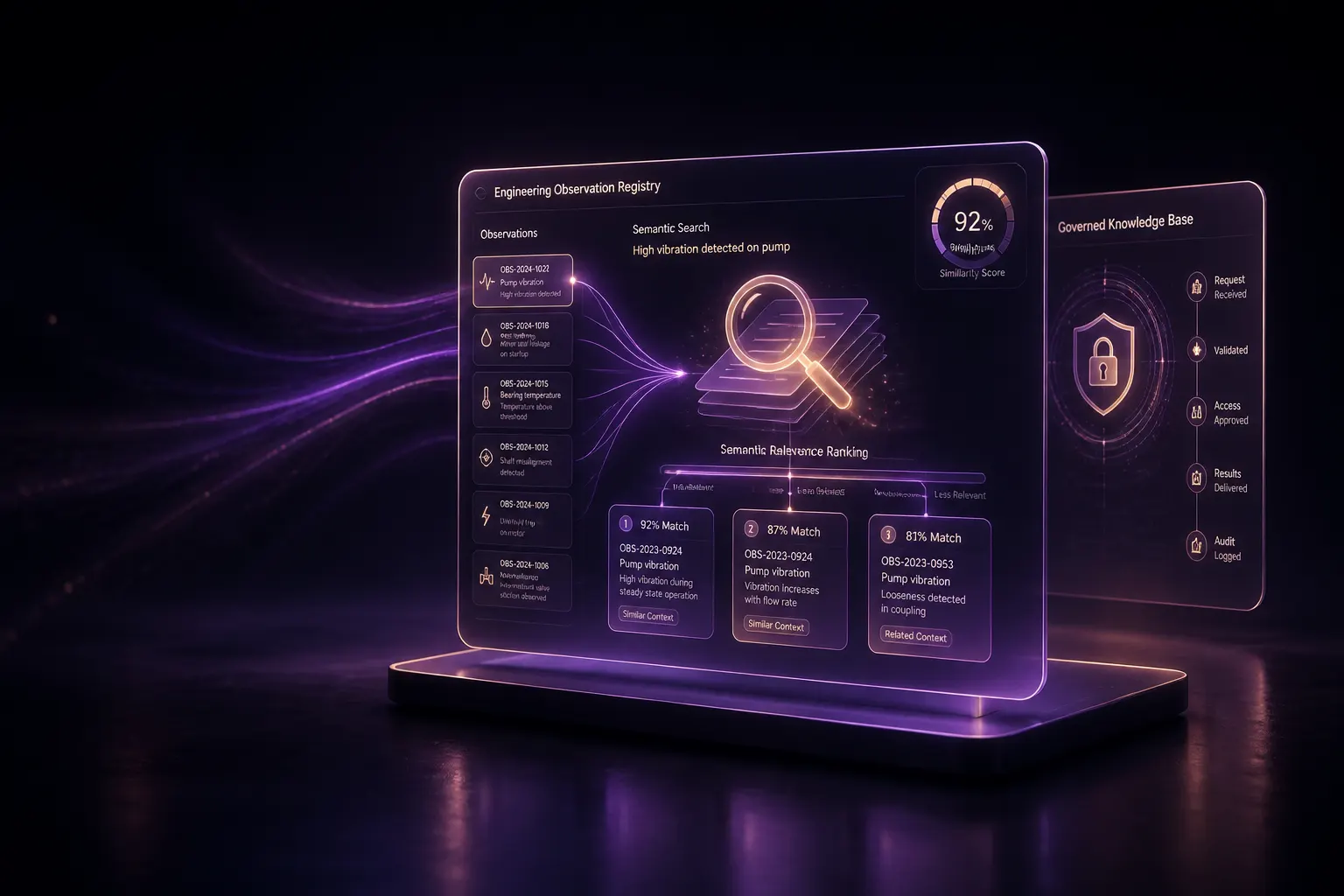
The fix was to move documentation and the processes around it into a single web platform. Alongside that core system, the client also built a companion tool, closer to an AI agent than a simple chatbot, that let teams query the project's documentation directly instead of routing every question through an analyst. With more than 20 volumes of technical and regulatory documentation underpinning the system's requirements, that assistant solved a real bottleneck: a question that used to mean a two-hour wait for an analyst's reply could now get answered immediately.

Business challenges

Challenge 01

An access model large enough to be its own testing discipline

The platform's role-based access model was unusually extensive for a system of this kind. Entire sections of the requirements documentation were dedicated to roles alone, and testing had to go well beyond checking that a feature worked:

  • Verifying every user type against its defined access level
  • Checking permitted actions per role, not just visibility
  • Cross-referencing role definitions against the underlying requirements documentation
  • Catching cases where a role's permissions interacted unexpectedly with another role's
#1
Challenge 02

Document lifecycles that touched up to ten different users

A single document moving from creation to archival could require action from roughly ten different users in sequence, each responsible for a specific step according to their role. Validating that flow meant understanding not just the immediate task, but the document's entire journey:

  • Multi-stage approval flows with role-specific actions at each step
  • Status-dependent behavior that changed what actions were available
  • Documents in a given status sometimes linked to other documents
  • Verifying a change required tracing its effect through adjacent functionality
#2
Challenge 03

Navigating a requirements base of more than 20 documentation volumes

Effective testing depended on real fluency with the underlying documentation, not just the application itself. Knowing where to look for a specific requirement, and noticing when a document had been revised, was a skill in itself given the scale involved:

  • More than 20 volumes of technical and regulatory documentation
  • Frequent updates requiring active tracking of what had changed
  • Requirements-based test case design grounded in specific document sections
  • Test scenarios that needed to reflect real regulatory and procedural detail
#3

Why Azati?

Comfortable operating inside someone else's large testing organization

This engagement placed a single Azati QA engineer directly inside a testing team of roughly 10 to 15 testers plus a test lead, working alongside a development team of around 10 engineers and two further test leads for backend and frontend, plus a separate analyst group. Integrating productively into a structure that size, rather than working as an isolated contributor, was itself part of the value delivered.

Genuine fluency with dense technical documentation

Testing a system backed by more than 20 documentation volumes is not primarily a tooling challenge, it is a comprehension challenge. Azati's QA engineer built real working knowledge of the requirements base, including how to track revisions, which mattered as much as any test script for catching defects rooted in a missed documentation update.

Patience and precision with complex role-based access testing

Verifying an access model with this many roles, permission combinations, and edge cases requires methodical, unglamorous work that is easy to under-scope. Azati treated the role model as a first-class testing target in its own right, not an afterthought to functional coverage.

Comfortable with regulated, high-stakes industrial software

Document control systems in heavily regulated industrial environments carry real consequences when something is missed. Azati's QA engineer approached document lifecycle testing with the rigor that a regulated, multi-facility operational context demands, the same discipline behind Azati's other enterprise document and portal work in the energy sector.

Need QA depth for a complex, document-heavy enterprise system?

Extensive role-based access models, multi-stage document workflows, and dense regulatory requirements all need a tester who can keep up with the documentation, not just click through the UI. Let's talk about your platform.

Stress-test my document workflow

Solution

01

Document lifecycle and workflow testing

Azati tested the full document lifecycle, from creation through every approval stage to archival, validating that each of the roughly ten users involved in a typical flow could perform their assigned actions correctly, in the right sequence, with the right status transitions. Where one document's status affected a linked document, testing covered both sides of that relationship.

Key capabilities:
  • Multi-stage approval flow validation
  • Status transition testing across the full document lifecycle
  • Cross-document dependency verification
  • Role-specific action validation at each lifecycle stage
02

Role-based access model testing

With an unusually large number of distinct user roles, Azati systematically verified each role's access level, visibility, and permitted actions against the requirements documentation. This included checking for permission gaps, overlaps, and edge cases where a role's behavior depended on document status or context.

Key capabilities:
  • Per-role access level and permission verification
  • Action-level permission testing, not just page-level visibility
  • Requirements traceability for each role definition
  • Edge case testing for context-dependent permission behavior
03

Requirements-based and regression testing

Test cases were built directly from the project's technical and regulatory documentation rather than from the interface alone, with active tracking of documentation updates to keep coverage current. Regression testing protected previously validated functionality as the platform continued to evolve across its full development cycle.

Key capabilities:
  • Requirements-based test case design from source documentation
  • Active tracking of documentation revisions
  • Regression testing across releases
  • Acceptance test documentation production
04

AI documentation assistant testing

Azati's QA engineer tested the internal AI assistant built to help the project team query the documentation base directly, verifying that responses reflected the actual content and intent of the underlying volumes rather than producing plausible-sounding but inaccurate answers, an important distinction in a documentation set this dense and consequential.

Key capabilities:
  • Response accuracy verification against source documentation
  • Coverage testing across documentation topics
  • Usability testing for the team-facing query interface

What Azati did

AreaAzati contribution
Document workflowTested multi-stage approval flows spanning roughly ten user roles per document lifecycle
Access controlVerified an extensive role-based permission model against requirements documentation
Test designBuilt requirements-based test cases from 20+ volumes of technical documentation
Regression coverageMaintained regression testing across ongoing releases
AI toolingTested the team's internal documentation assistant for response accuracy
DocumentationProduced acceptance test documentation for delivered functionality

Security

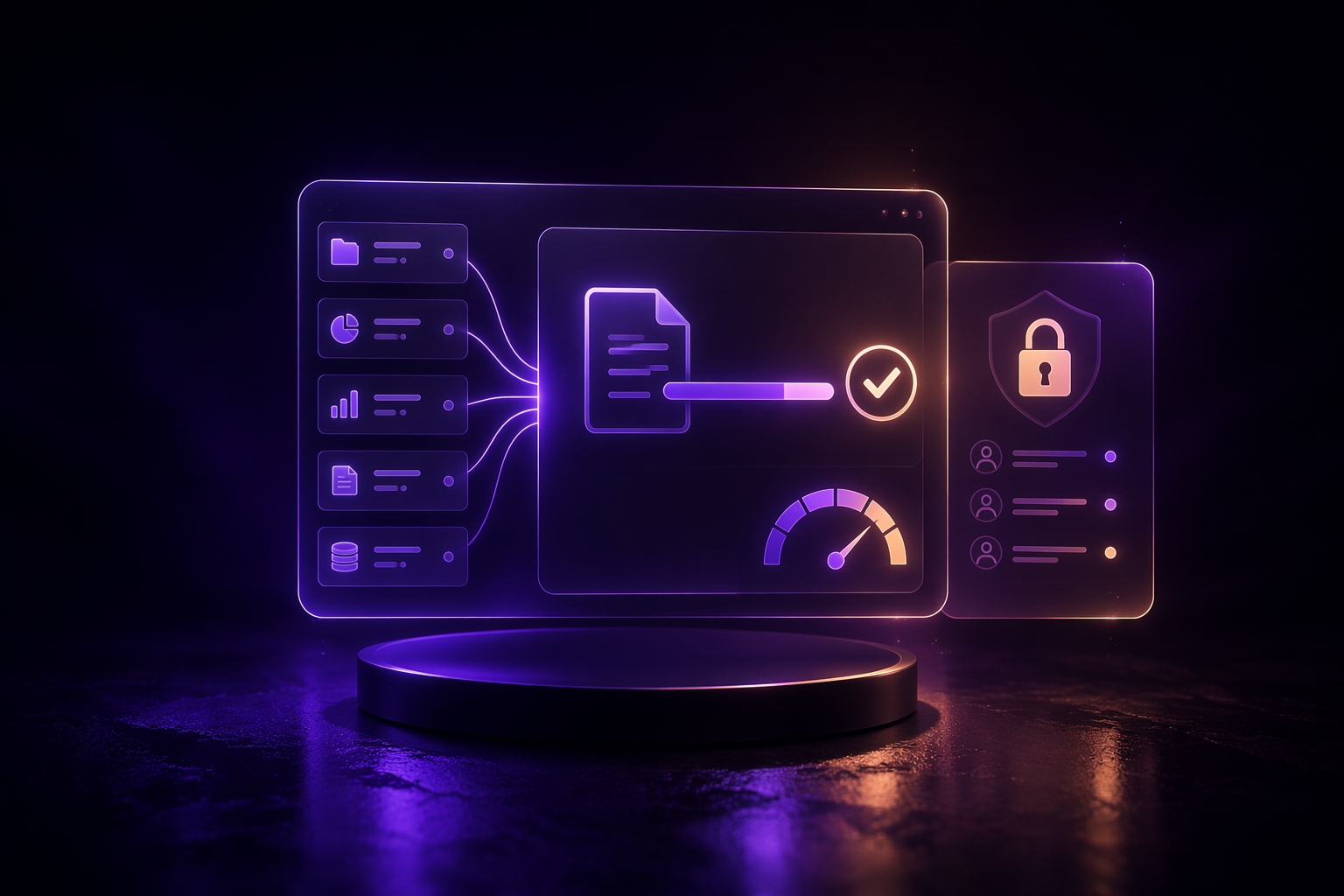
The platform operates in a heavily regulated industrial environment where document control, access traceability, and procedural correctness carry direct operational consequences. Role-based access control governed who could view, edit, or progress each document, with permissions tied closely to documented procedural responsibilities. Testing treated the access model itself as a security-relevant surface, verifying that no role could act outside its documented scope.

Engagement & delivery

One Azati engineer inside a large client-led testing team

Azati provided a single senior QA engineer who worked entirely within the client's own testing organization rather than as part of a separate Azati delivery team. The broader project included a testing team of 10 to 15 testers plus a test lead, a development team of around 10 engineers with two additional test leads for backend and frontend, an analyst group of 4 to 5 people, and project management.

Mixed Agile delivery over 6 to 8 months

The engagement ran for roughly 6 to 8 months and concluded naturally once the full scope of work was completed. Delivery followed a blended methodology:

  • Sprint-based delivery with daily standups and other Agile rituals
  • A Kanban board used alongside sprint planning
  • Manual functional testing performed directly against documented requirements
  • Test environment updates maintained throughout the engagement

Got a document-heavy system with a role model nobody fully tested?

Azati's QA engineers are comfortable inside dense regulatory documentation and large access control models, not just clicking through a UI.

Talk to a QA engineer

Results & business impact

Bureaucratic processes consolidated into a single platform

Document approvals, deadline tracking, and executor assignment across multiple facility types moved from a fragmented, largely paper-based process into one coherent web platform, with testing ensuring that consolidation held up under the platform's full operational complexity.

Analyst response time cut by an AI documentation assistant

A question that previously meant a wait of around two hours for an analyst's response could be answered immediately through the project's internal AI assistant, freeing analyst time for higher-value work and keeping the broader team unblocked.

A verified, audit-ready role-based access model

Systematic testing of an unusually large access model gave the client confidence that user permissions matched documented procedural responsibilities precisely, a meaningful assurance in a regulated, multi-facility operational context.

Full scope delivered and project closed on completion

The engagement concluded because the complete scope of testing work was finished, not because of a fixed calendar deadline, a marker of a well-defined engagement executed to completion.

Strategic wins

What stands out about this engagement beyond the testing scope itself:

Treating role-based access as its own testing workstream

Most QA scopes treat permissions as a secondary check layered onto functional testing. Here, the access model was large and consequential enough to warrant its own dedicated testing discipline, complete with its own slice of the requirements documentation. Recognizing that distinction, rather than folding access checks into generic functional test cases, is what catches the permission gaps that matter.

Documentation fluency as a core QA skill, not a side requirement

On a system with 20-plus volumes of source documentation, the tester who can navigate that material directly, and notice when it has changed, finds defects that a tester working purely from the UI never will. That fluency is a deliberate capability, not an incidental byproduct of time on the project.

An internal AI assistant as a practical bottleneck fix

Feeding a large documentation base into an internal AI assistant turned a recurring two-hour wait into an immediate answer. It is a small-scope build next to the core platform, but it is exactly the kind of targeted AI application that removes a specific, measurable friction point rather than chasing a broader automation narrative.

The described expertise is relevant for

  • Document management and workflow automation platforms in regulated industries
  • Complex role-based access control testing at enterprise scale
  • Requirements-based testing grounded in dense technical documentation
  • Multi-stage document lifecycle and approval flow validation
  • QA engineers embedding inside large, client-led testing organizations
  • AI documentation assistants for teams working against heavy regulatory volumes

Last updated

Got a job for Azati? Let’s talk business!

This site is protected by reCAPTCHA and the Google Privacy Policy and Terms of Service apply.

What's next?

  • 1. Tell Us Your Story
    Describe your project. We come back within 24 hours with team availability and a rough plan. NDA on request before the first call.
  • 2. Get Your Roadmap
    Receive a detailed proposal with scope, team composition, timeline, and costs tailored to your goals.
  • 3. Start Building
    Azati aligns on details, finalize terms, and launch your project with full transparency.